



Intel: "AI Development Possible Anywhere"
 Published2023.09.21 15:15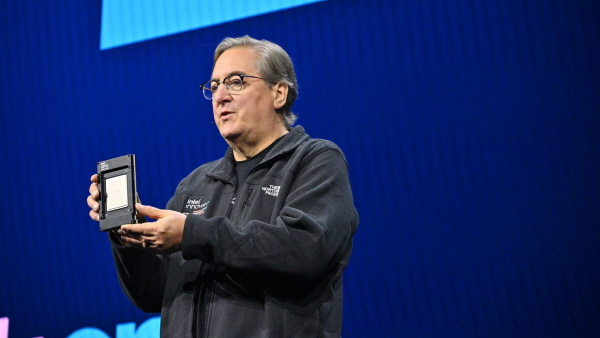
▲Intel CTO Greg Lavender introduces Intel data center GPU processors.
Support for developers in partnership with major software companies such as Red Hat, Canonical, and SUSE.
Intel announced that it will support developers with the tools they need to more easily utilize AI and implement AI anywhere, so that they can fully access the opportunities that AI offers.
Intel announced on the 21st that on the second day of Intel Innovation 2023, Intel's annual developer event, Intel Chief Technology Officer (CTO) Greg Lavender gave a detailed introduction to how Intel's developer-centric, open ecosystem philosophy helps everyone access the opportunities provided by artificial intelligence.
Developers seeking to leverage AI face challenges that hinder the widespread deployment of solutions across PCs and edge computing, data centers, and the cloud. To overcome these obstacles, Intel is embracing a software-defined, silicon-accelerated approach built on openness, choice, trust, and security.
Intel provides developers with the tools they need to more easily leverage AI and deploy it anywhere, simplifying the development of secure AI applications and reducing the investment required to maintain and scale those solutions.
“The developer community will serve as a catalyst to help industries leverage AI to meet the diverse needs they face today and in the future,” said Lavender CTO. “AI should be responsibly accessible to everyone. “If AI remains the domain of only a small number of experts, the social value it can provide will be very limited,” he said.
In his keynote address on the second day of Intel Innovation, CTO Lavender unveiled Intel solutions for end-to-end security, including Intel® Transparent Supply Chain to verify the trustworthiness of hardware and Confidential Computing to protect sensitive data in use.
The service, codenamed Project Amber, is the first in a new portfolio of security software and services called Intel® Trust Authority, which provides comprehensive, independent assessment of trusted execution environment (TEE) integrity and policy compliance.
Intel Confidential Computing is available wherever it is deployed: multi-cloud, hybrid cloud, on-premises, and at the edge.
As the Intel Trust Authority software and services portfolio continues to grow, the Intel® Trust Platform serves as the foundation for a secure distributed ledger.
Intel is also working to create an open ecosystem that can be easily built on multiple architectures.
This includes joining the Linux Foundation's Unified Acceleration Foundation (UXL). UXL, an industry-wide group, is dedicated to providing an open accelerator programming model that simplifies application development for cross-platform deployment. UXL is an evolution of the oneAPI initiative. Intel's oneAPI programming model allows code to be written once and deployed across multiple computing architectures, including CPUs, GPUs, FPGAs, and accelerators. Intel will contribute the oneAPI specification to the UXL Foundation to facilitate cross-platform development across architectures.
Intel is also collaborating with leading software companies Red Hat, Canonical, and SUSE to provide Intel-optimized upstream distributions of their enterprise software releases, delivering performance optimized for the latest Intel architecture.
In this announcement, Lavender, along with Gunnar Hellekson, vice president and general manager of Red Hat Enterprise Linux, announced an expanded collaboration where Intel will provide upstream support for the Red Hat Enterprise Linux (RHEL) ecosystem using CentOS Stream.
Intel also continues to contribute to AI and machine learning tools and frameworks, including PyTorch and TensorFlow.
To enable developers to scale performance more quickly and easily, Intel Granulate adds autopilot for Kubernetes pod resource authorization. This capacity optimization tool provides Kubernetes users with automatic, continuous capacity management recommendations. This reduces the investment required to meet cost-performance metrics for container environments.
Additionally, Intel Granulate adds autonomous orchestration capabilities for Databricks workloads, enabling an average of 30% cost savings and 23% faster processing times without any code changes.
Addressing the need to protect AI models, data, and platforms from manipulation, tampering, and theft, Intel announced that it is developing an application-specific integrated circuit (ASIC) accelerator to reduce the million-fold performance overhead associated with software-only FHE approaches.
We will also be releasing a beta version of a cryptographic computing software toolkit that will enable researchers, developers, and the community to learn and experiment with FHE coding. The toolkit, scheduled for general availability later this year as part of the Intel Developer Cloud, includes a set of interoperable interfaces for FHE software development, translation tools, and sample simulators for hardware accelerators.

Comments
Related news
Intel Expands FPGA Portfolio
Intel is expanding its Intel Agilexⓡ FPGA portfolio through 2030 and broadening its Programmable Solutions Group (PSG) product family to meet requirements such as customized workloads and enhanced AI capabilities, while delivering lower total cost of ownership (TCO) and complete solutions.
2023.09.15by 배종인 기자

Intel Unveils Next-Generation Packaging 'Glass Substrate' Technology
The semiconductor industry is seeking answers in next-generation advanced packaging to achieve Moore's Law. Intel has found a clue in 'glass' materials that can offer greater scalability.
2023.09.19by 명세환 기자
Intel: “The Next Step After Moore’s Law Is Multi-Chiplet Packaging”
Intel held its third annual Intel Innovation developer event in San Jose, California, and unveiled a variety of technologies designed to enhance accessibility and usability of artificial intelligence across all workloads spanning clients, edge, network, and cloud.
2023.09.20by 배종인 기자
[e4ds Tech Day 2026 ⑨] Sim Sang-gyu, Autocrypt CTO: "In the Physical AI Era, Automotive Security Must Extend Beyond the Vehicle"
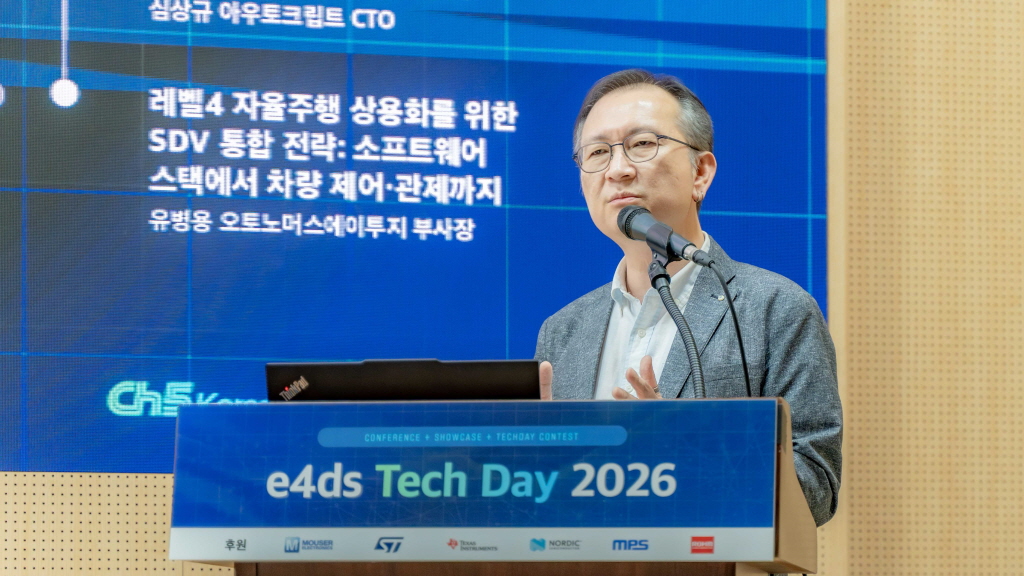
At e4ds Tech Day 2026, Sim Sang-gyu, CTO of Autocrypt, explained automotive cybersecurity strategies in the era of Physical AI and SDV (Software-Defined Vehicle). Automobiles are evolving as part of an ecosystem connected to AI, cloud, chargers, IoT, and robots, and he emphasized that the scope of security must expand beyond the vehicle interior to the entire connected environment. In particular, AI model tampering, adversarial attacks, OTA updates, and EV charger hacking were identified as major threats. He explained that response measures require zero trust, AI model integrity protection, intrusion detection, Security by Design and Default, and full lifecycle security management, and that proactive security system establishment beyond regulatory compliance is critical for securing future mobility competitiveness.
2026.10.12by 배종인 기자
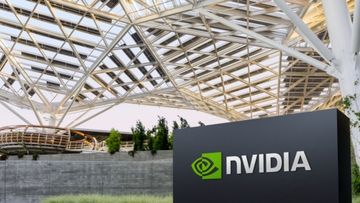
NVIDIA to Invest $1 Billion in U.S. Science Over Next Five Years
NVIDIA has announced plans to invest $1 billion over the next five years to strengthen U.S. scientific and technological competitiveness. The company will enhance cutting-edge artificial intelligence research and development capabilities in key areas including quantum computing, healthcare, and energy security, while expanding support for higher education research institutions and cloud service providers. NVIDIA is participating as a major industry partner in the White House Office of Science and Technology Policy's Genesis Mission, and is promoting supercomputer construction in collaboration with national laboratories including Argonne and Los Alamos.
2026.10.12by 배종인 기자











