



The Minister of Trade, Industry and Energy urged the auto industry to spearhead the shift to export-plus growth.
 Published2023.09.26 12:04
Discussion of support measures, including preferential trade insurance limits for parts companies.
As the first step toward achieving an early export-plus turnaround in the second half of the year, Minister of Trade, Industry and Energy Bang Moon-kyu visited Hyundai Motor Company's Asan plant on the 26th and held the inaugural launch ceremony of the 'Export Site Visiting Group.'
The Export Field Visiting Group (hereinafter referred to as the Visiting Group) is a program in which the Ministry of Trade, Industry and Energy, which oversees export policy, communicates with large, small, and medium-sized enterprises and industry-specific associations and organizations to identify export difficulties and resolve export difficulties on-site as a single team with support organizations in each field, such as finance, marketing, and certification.
The delegation plans to visit key industries such as secondary batteries and OLEDs, as well as promising small and medium-sized enterprises across the country, starting with the automobile sector, to address and manage export challenges.
At the launching ceremony held that day, various support measures were discussed, including: △developing the ASEAN market by utilizing ODA projects such as electric vehicle pilot distribution and charger construction; △securing additional car carriers to resolve the port saturation problem; and △providing preferential trade insurance limits for auto parts companies.
Minister Bang said, “Automobile exports have served as a strong support for our exports, recording double-digit growth rates for 14 consecutive months even during difficult times,” adding, “In particular, electric vehicle exports recorded $9.4 billion as of August, a 94% increase year-on-year, and are emerging as a new export engine.” He added, “We hope that this trend will continue and that we will become a leader in the export-plus transformation in the second half of the year.”
He also emphasized, “The eco-friendly market will continue to grow thanks to the global carbon-neutral trend, such as the US IRA and the EU’s phase-out of internal combustion engine vehicles,” and “Among them, the electric vehicle industry is a key industry that creates demand for various cutting-edge industries, such as secondary batteries and semiconductors.”
The Ministry of Trade, Industry and Energy plans to spare no support to foster electric vehicles as a key export engine in the future.
First, we will expand eco-friendly vehicle export bases to Northern Europe, Japan, and other countries to support the integration of small and medium-sized electric vehicle parts companies into the global supply chain.
In addition, to support the domestic automobile industry's timely transition to future vehicles, we plan to invest 2 trillion won in R&D in the automobile sector over the next five years to secure core technologies to strengthen the future vehicle sector, while proactively providing 9.1 trillion won in future vehicle transition financing and smoothly promoting the enactment of a special law on future vehicle parts.
Comments
Related news

[e4ds Tech Day 2026 ⑨] Sim Sang-gyu, Autocrypt CTO: "In the Physical AI Era, Automotive Security Must Extend Beyond the Vehicle"
At e4ds Tech Day 2026, Sim Sang-gyu, CTO of Autocrypt, explained automotive cybersecurity strategies in the era of Physical AI and SDV (Software-Defined Vehicle). Automobiles are evolving as part of an ecosystem connected to AI, cloud, chargers, IoT, and robots, and he emphasized that the scope of security must expand beyond the vehicle interior to the entire connected environment. In particular, AI model tampering, adversarial attacks, OTA updates, and EV charger hacking were identified as major threats. He explained that response measures require zero trust, AI model integrity protection, intrusion detection, Security by Design and Default, and full lifecycle security management, and that proactive security system establishment beyond regulatory compliance is critical for securing future mobility competitiveness.
2026.10.12by 배종인 기자
Practical HIL Construction Strategy for Automotive and Off-Highway Controller Validation
As vehicle E/E architecture transitions to zonal structures and shifts to software-defined vehicles (SDV), the number of controllers (ECUs) requiring validation and software complexity are surging dramatically. Meanwhile, real vehicle testing cannot provide repeated verification under identical conditions and entails lead time and safety concerns. This white paper explains the principles of HIL (Hardware-in-the-Loop) validation and the structure of the NI platform composed of PXI, SLSC, and VeriStand, and through two actual implementation cases—Camera Record & Replay HIL for In-Cabin Monitoring Controller (ICMU) and Forklift Controller (VCU) HILS—describes how controller-level regression testing becomes possible. Additionally, it explicitly states application boundaries and limitations, such as lack of A2B support.
2026.10.12by 편집부
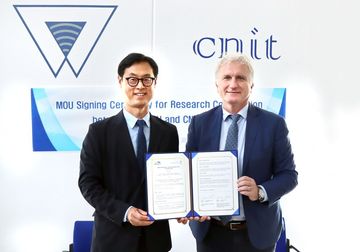
Korea Automotive Research Institute Signs MOU with Italy National Institute for Wireless Communications
The Korea Automotive Research Institute will sign an MOU with Italy's National Institute for Wireless Communications and launch joint research on next-generation mobility technologies based on 6G, V2X, and connected vehicles. The two organizations will conduct research to apply advanced wireless communication technologies to vehicles and discover international joint projects to advance next-generation connected vehicle technology development.
2026.10.12by 배종인 기자
Color Accuracy Issues in Vehicle Interior Ambient Lighting and Intelligent LED Drivers
Vehicle interior ambient lighting is spreading across all price segments, and the level of color accuracy required of lighting designers is rising accordingly. This white paper quantitatively addresses why temperature drift and individual variations of RGB LEDs cannot be corrected by standard constant-current drivers, and explains an intelligent LED driver approach that integrates an MCU, calibration data, and a LIN network interface into the driver. It covers implementation details of the LITIX Interior TLD4020-3ET currently in production, portfolio roadmap, and evaluation/development environments, and clarifies application boundaries including lack of 48V support, lack of RGBi/ISELED support, and absence of direct optical degradation diagnostics.
2026.10.08by 명세환 기자
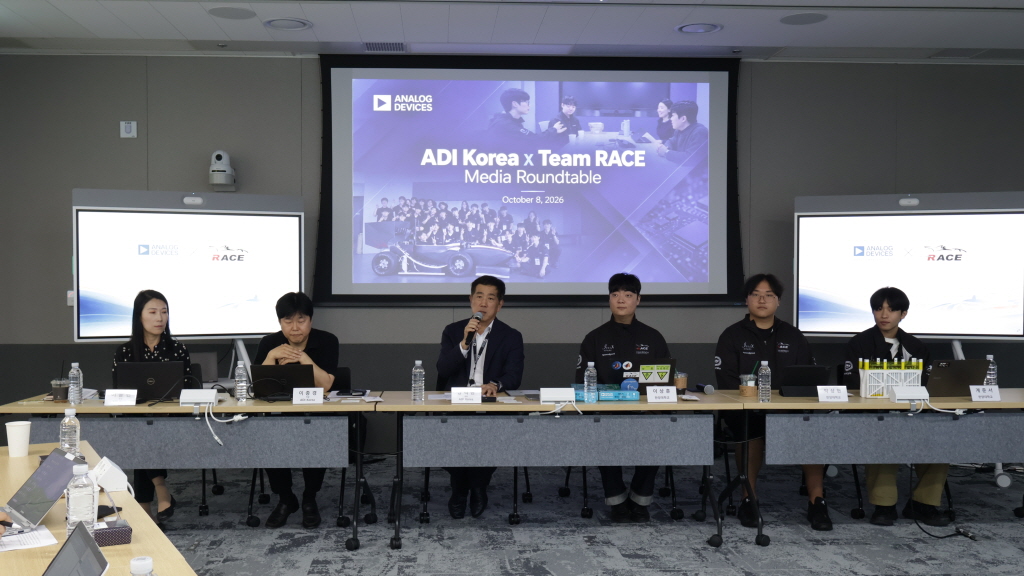
ADI, "Fostering Future Engineers Beyond Component Support"
Global semiconductor company Analog Devices (ADI) is drawing attention for moving beyond simply sponsoring university student car projects to serve as a partner in nurturing future engineers. Over the past three years, ADI has collaborated with Hanyang University's automotive research club Team RACE to support electric formula vehicle development, and recently has been providing technical consultation and semiconductor solutions to enable students to directly develop battery management systems (BMS), creating a model case of industry-academic cooperation.
2026.10.08by 배종인 기자











