



41 non-metropolitan areas selected for a KRW 1.5 trillion preliminary feasibility study.
 Published2023.10.31 09:00
Building a core industry ecosystem and strengthening corporate capabilities by 2030
The Regional Specialized Industry Promotion 3.0 (R&D) project, which supports small and medium-sized enterprises (SMEs) in 41 non-metropolitan areas, has been selected for a preliminary feasibility study, raising expectations for the establishment of a cooperative ecosystem and revitalization of key industries.
The Ministry of SMEs and Startups (Minister Lee Young) announced on the 30th that the Regional Specialized Industry Promotion 3.0 (R&D) project was selected as a preliminary feasibility study target project at the '2023 12th National Research and Development Project Evaluation General Committee' hosted by the Ministry of Science and ICT.
This project supports joint technology development among small and medium-sized enterprises (SMEs) that promote key regional industries, and is also a key implementation task for the Yoon Seok-yeol administration to realize its "local era."
The project is expected to cost a total of KRW 1.5003 trillion by 2030, including KRW 787.6 billion from the national budget, KRW 337.6 billion from local government funds, and KRW 375.1 billion from the private sector. It has been reflected in the 5th Basic Plan for Science and Technology and the 6th Comprehensive Plan for the Promotion of Local Science and Technology.
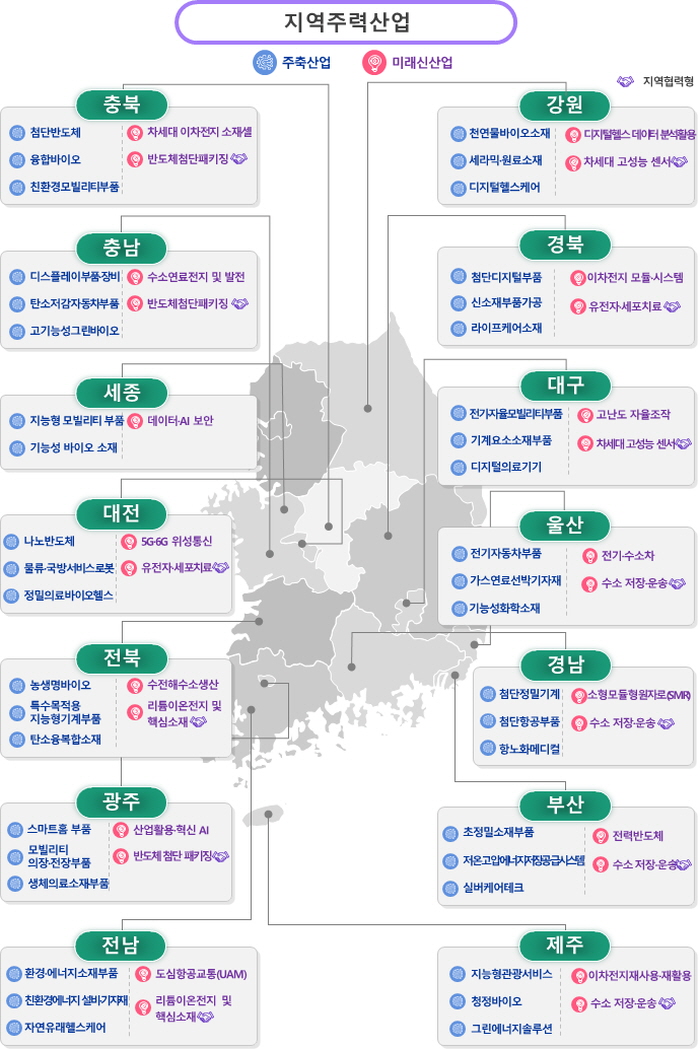
The Ministry of SMEs and Startups has conducted a preliminary feasibility study with 14 cities and provinces to establish a regional key industry ecosystem, including a comprehensive reorganization (by February 2023) of the existing 48 regional key industries into 41 regional key industries and 19 future new industries, starting in September 2022.
In addition, after efforts such as preparing a planning report with 14 cities and provinces outside the metropolitan area, regional techno parks, and holding several working-level consultations with financial authorities, the Regional Specialized Industry Promotion 3.0 (R&D) project was selected as a project subject to a preliminary feasibility study.
The key regional industries in Chungbuk are △advanced semiconductors △convergence bio △friendlyEnvironmental mobility components, next-generation secondary battery material cells, and advanced semiconductor packaging, and in South Chungcheong Province, display components and equipment, carbon reduction automobile components, high-functionality green bio, hydrogen fuel cells and power generation, and advanced semiconductor packaging.
In Sejong, these include intelligent mobility components, functional biomaterials, data and AI security, and in Daejeon, these include nano-semiconductors, logistics and defense service robots, precision medical bio-health, 5G and 6G satellite communications, and gene and cell therapy.
In Jeollabuk-do, these include △agricultural life sciences and biotechnology, △special-purpose intelligent machine parts, △carbon composite materials, △electrolytic hydrogen production, △lithium-ion batteries and core materials, etc., and in Jeollanam-do, these include △environmental and energy material parts, △eco-friendly energy facilities and equipment, △natural healthcare, △urban air transportation, △lithium-ion batteries and core materials, etc.
In Gangwon, these include natural biomaterials, ceramic raw materials, digital healthcare, digital health data analysis, and next-generation high-performance sensors, while in Gyeongbuk, these include advanced digital components, new material component processing, life care materials, secondary battery modules and systems, and gene and cell therapy.
Daegu's areas include electric autonomous mobility components, mechanical element materials, digital medical devices, high-difficulty autonomous operation, and next-generation high-performance sensors, while Ulsan's areas include electric vehicle components, gas fuel ship equipment, functional chemical materials, electric hydrogen vehicles, and hydrogen storage and transportation.
Gyeongnam's areas include advanced precision machinery, advanced aircraft parts, anti-aging medical, small modular reactors, and hydrogen storage and transportation, while Busan's areas include ultra-precision materials and parts, low-temperature and high-pressure energy storage and supply systems, silver care technology, power semiconductors, and hydrogen storage and transportation.
Gwangju's areas include smart home components, mobility equipment components, biomedical material components, industrial AI innovation, and advanced semiconductor packaging, while Jeju's areas include intelligent tourism services, clean bio, green air solutions, secondary battery reuse and recycling, and hydrogen storage and transportation.
Science and Technology Policy Institute (STEPI)The preliminary feasibility study scheduled to be conducted in the region will comprehensively evaluate the economic feasibility analysis, policy analysis, and regional balanced development analysis of the Regional Specialized Industry Promotion 3.0 (R&D) project. If the feasibility is recognized, the project will be fully implemented from 2025 to 2030.
Kim Woo-joong, Director General of Regional Enterprise Policy at the Ministry of SMEs and Startups, said, “Through the Regional Specialized Industry Promotion 3.0 (R&D) project, we will be able to cooperate with the region to contribute to strengthening the regional key industry ecosystem and creating local jobs,” and added, “We will do our best to pass the preliminary feasibility study.”

Comments
Related news
The Ministry of SMEs and Startups is expanding recruitment of companies participating in Free Tips.
Recruitment has begun for companies interested in participating in the Pre-TIPS program, which discovers startups with high growth potential, nurtures them as prospective TIPS startups, and promotes angel investment to support the revitalization of the regional startup ecosystem.
2023.02.27by 명세환 기자
.jpg)
250 software companies worth 100 billion won will be created, with 563 billion won invested in software promotion.
The government will invest 563 billion won in software promotion strategy-related projects this year and will proceed to foster 250 domestic software companies with sales of 100 billion won by 2027, as well as over 10,000 Software-as-a-Service (SaaS) companies.
2023.04.21by 배종인 기자
Fabless and Small Business Development 'Semiconductor Ecosystem Fund' 300 billion won raised
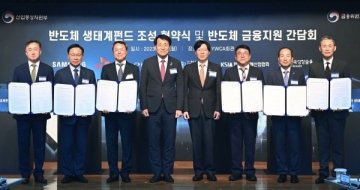
A semiconductor ecosystem fund worth 300 billion won will be established to foster domestic semiconductor materials, parts, and equipment suppliers as well as fabless companies.
2023.06.26by 배종인 기자
13 National Advanced Strategic Industry and Small Business Specialized Complexes Designated at 620 Trillion Won
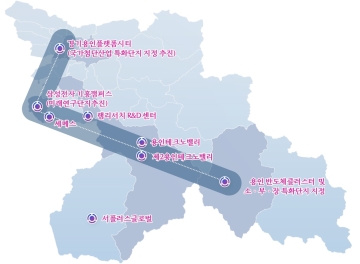
The creation of national advanced strategic industry specialized zones and specialized complexes for parts, materials, and equipment (SME parts and materials) that will serve as a foundation for the development and fostering of advanced industries including semiconductors, electric vehicles, and secondary batteries is entering full-scale implementation. Seven national advanced strategic industry specialized zones and five SME parts and materials specialized complexes, selected after intense competition for attraction, have been announced, with local governments and related industries expressing welcoming positions.
2023.07.21by 명세환 기자
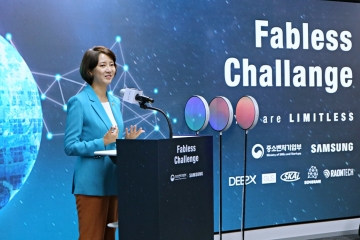
The Ministry of Trade, Industry and Energy is actively fostering star fabless companies, with a large number of global and rising Korean fabless companies participating.
As the importance of the system semiconductor industry has begun to gain attention, government agencies are also directing efforts toward fostering related ecosystems and strengthening corporate competitiveness.
2023.08.28by 명세환 기자











