



Method Found to Manufacture Ultra-Superpowerful Lasers Beyond Superpowerful
 Published2023.11.15 16:35
▲ (From left) Professor Hee-Yong Suk of GIST, Professor Min-Seop Huh of UNIST, and Professor Strasclyde Yaroszinski
A method has been found to create a laser more powerful than the world's highest output laser. It is expected to be used in various fields, such as applying it to laser nuclear fusion research to solve energy-related problems or utilizing it to experimentally verify predictions in advanced theoretical physics.
A team led by Professor Min-seop Hur of the Department of Physics at UNIST (President Yong-hoon Lee), a team led by Professor Hee-yong Suk of GIST (President Ki-chul Lim), and a team led by Professor Jaroszynski of the University of Strathclyde in the UK presented an idea to create laser pulses more than 1,000 times stronger than existing ones through joint research and proved it through computer simulations.
Professor Min-seop Huh of UNIST emphasized, “This research presents a method to overcome the limitations of the ideas of Professor Mourou, who won the 2018 Nobel Prize in Physics, and can be utilized not only in basic sciences such as cutting-edge astrophysics but also in industrial and energy research such as semiconductor lithography and laser nuclear fusion.”
Chirped-pulse amplification (CPA) technology, invented by Professor Morrow in 1985, is a technology that can dramatically increase laser intensity. Currently, utilizing this, it is possible to achieve laser outputs of up to several petawatts (1,000 trillion watts). Considering that the output of sunlight reaching the entire surface of the Earth is only about tens of petawatts, you can understand how powerful a petawatt laser is. However, the scientific community is discussing the need for exawatts, which are more than 1,000 times more powerful, or zettawatts, which are even more powerful.
The ability to produce ultra-high-output lasers, comparable to the output of sunlight reaching the Earth's surface, is achieved by concentrating energy into a narrow space the size of a micron (0.001 mm) while simultaneously compressing it temporally into extremely short pulses of femtoseconds (10⁻¹⁵ seconds). However, if the laser energy exceeds a certain level, the 'diffraction mirrors' used for compression break. The diffraction mirrors required to generate a petawatt laser are approximately 1 meter in size. Conversely, generating lasers of exawat or higher requires diffraction mirrors hundreds of meters in size, which are virtually impossible to manufacture.
The research team solved the problem of laser pulse compression by using plasma instead of diffraction mirrors. Plasma refers to a gaseous state separated into electrons and ions at high temperatures, similar to a lightning flash. Since plasma is an ionized state and is already damaged material, no further damage occurs even when a powerful laser is applied. It also possesses the property of optically dispersing light. In other words, by utilizing plasma in a manner similar to a diffraction mirror, it becomes possible to compress it into a much stronger laser pulse.
"Plasma can act like a conventional diffraction mirror and, as it is a material that is no longer damaged, it can compensate for the shortcomings of existing CPA technology," said Professor Hee-Yong Seok of GIST. "Even plasma only a few centimeters in size could be utilized for ultra-powerful lasers of exawat or higher."
Professor Yaroszinski of the University of Strasclyde stated, “Ultra-high power lasers are an important tool for finding answers to fundamental questions about the nature of the universe, matter, and space-time.”
The results of this study are expected to be used to realize various phenomena predicted in cutting-edge theoretical physics and astrophysics in the laboratory. It can also be applied to laser nuclear fusion research, and is expected to serve as a cornerstone in solving the energy problems facing humanity. The study was published online on November 13 in the globally renowned journal Nature Photonics, and was conducted with support from the Ministry of Science and ICT/National Research Foundation of Korea, the Industrial Innovation Talent Growth Support Program of the UNIST Semiconductor Graduate School, and the UKRI/UK Research Institute for Science and Engineering.

Comments
Related news
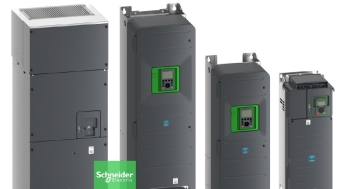
Schneider Aims for Building Energy Savings and Operational Stability with Next-Generation HVAC Drives
Schneider Electric has unveiled its next-generation HVAC drive product line 'Altivar HVAC'. The new product line's key features center on enhanced energy savings, system operational stability, and building management system integration. The products are divided into 'ATH200' for OEM and small equipment applications, and 'ATH600' for environments requiring continuous operation and advanced control. The company plans to expand the application scope from commercial buildings to facilities where HVAC system stability is critical, such as hospitals, airports, and data centers. The announcement includes over 30% energy savings, operation from -10°C to +60°C, Modbus and BACnet support, and compatibility with low global warming potential refrigerants.
2026.03.26by 명세환 기자

Ecolab Expands AI Data Center Cooling Business Through Acquisition of CoolIT
Ecolab has agreed to acquire CoolIT Systems, a liquid cooling company for AI data centers, for approximately $4.75 billion. The transaction is expected to close by Q3 2026, subject to regulatory approvals. CoolIT has been supplying direct-to-chip cooling-based coolant distribution units, cold plates, and manifolds, serving hyperscale data centers and colocation operators as customers. This acquisition is a measure to address the high-heat and high-density server environments created by AI proliferation. Ecolab plans to combine its water management and digital monitoring capabilities with CoolIT's hardware technology to expand its data center cooling business.
2026.03.26by 명세환 기자

AI Semiconductor Era, Key is 'Materials Technology'… KIEC Holds Seminar on High-Performance Semiconductor Materials
With rapid growth in the global semiconductor market driven by expanded AI data center investments and increased demand for high-bandwidth memory (HBM), a specialized seminar examining next-generation semiconductor materials and packaging technologies will be held. The Korea Chemical Industry Institute will host a "High-Performance Semiconductor Materials Technology Seminar" on April 24 at the FKI Tower of the Korea Economic Association in Yeouido, Seoul. Applications to participate in the seminar are being accepted on a first-come, first-served basis through the Korea Chemical Industry Institute's official website, with early bird discounts available until March 27 and advance registration open until April 22.
2026.03.25by 배종인 기자
.jpg)
KIMS Shares Techniques for Industrial Application of Casting Technology
The Korea Institute of Materials Science held a casting technology seminar at its headquarters in Changwon, South Gyeongsang Province, and introduced core process technologies utilized in industrial applications. The seminar covered fundamental principles of casting processes and defect control methods, lightweight-oriented die-casting technology, and trends in aluminum casting alloys for mobility applications. At the conclusion of the event, consultations on industrial technical challenges were also conducted, providing an opportunity to expand the interface between research institutions and industry.
2026.03.25by 명세환 기자
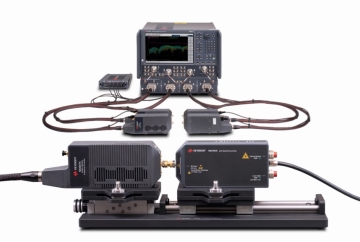
Keysight Launches 220GHz Optical Component Analyzer… Aims at Verifying Next-Generation Optical Transceivers
Keysight Technologies has introduced the N4378A optical wave component analyzer, which can measure the characteristics of opto-electronic conversion components up to 220GHz. This equipment is targeted at the rapidly advancing data center optical interconnection market driven by AI and cloud expansion, and supports single-sweep broadband measurements at 1310nm and 1550nm wavelengths. The device focuses on enhancing measurement accuracy and design verification efficiency in the development process of next-generation 1.6T and 3.2T class optical transceivers through optical modulator and photodetector verification, differential measurements for dual-drive optical modulators, and 0.5mm coaxial connector protection structures. Keysight demonstrated this equipment for the first time at OFC 2026.
2026.03.25by 명세환 기자











