


2024 ICT: Recovery in IT & Semiconductors, Stagnant Home Appliances
 Published2023.11.21 09:15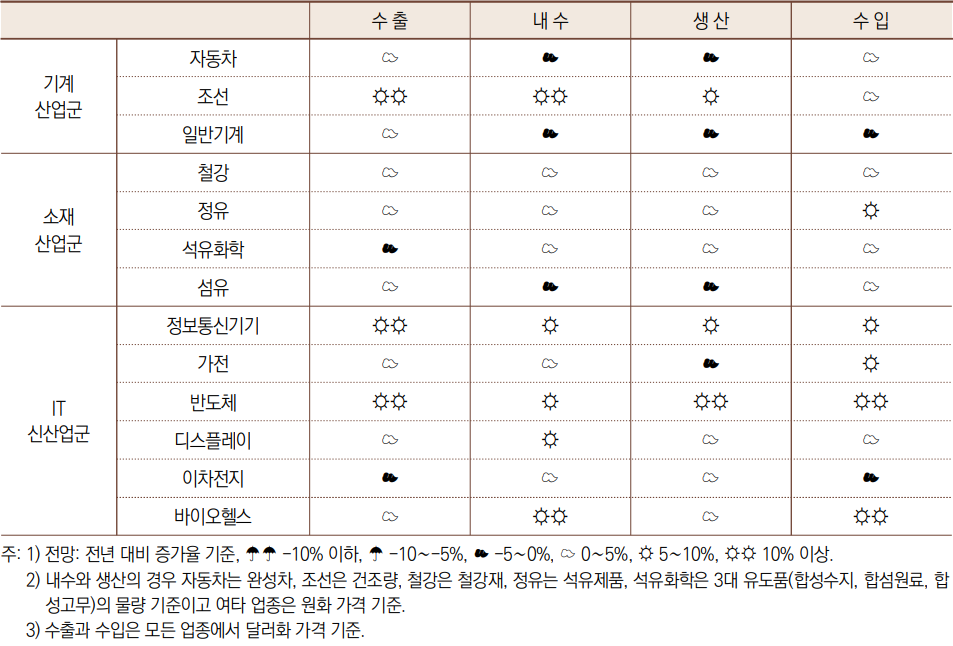
Must be wary of reduced domestic production due to expanded overseas production
In 2024, the ICT market was projected to see an overall recovery in demand due to increased investment in AI servers and data centers, despite geopolitical risks, high interest rates and inflation, and a reduction in domestic production volume resulting from the expansion of overseas production.
The Korea Institute for Industrial Economics and Trade announced the '2024 Economic and Industrial Outlook' on the 20th.
According to this, the global economy in 2024 is expected to grow with limited momentum as major countries are likely to maintain high interest rates due to inflationary pressures resulting from deglobalization amidst persistent geopolitical uncertainty, whereas global trade is projected to rebound due to base effects from the recession in 2023.
Despite the turnaround in exports and capital investment driven by the moderate recovery of the IT sector, the domestic economy is expected to grow at a moderate rate of 2.0% year-on-year due to a slowdown in consumption growth and a contraction in construction investment resulting from the full-scale negative impact of high inflation and high interest rates.
Capital investment in 2024 is expected to return to a slight upward trend, driven by the moderate recovery of the semiconductor market, the execution of planned investments by major companies, and base effects, while the automotive sector is expected to expand investment to meet the robust demand for eco-friendly vehicles.
Exports are expected to increase by 5.6% year-on-year amidst improving semiconductor market conditions, the maintenance of solid automobile export volumes, the base effect from the previous year, and a moderate recovery in world trade.
Imports are expected to decrease by 0.7% compared to the previous year due to the combined effects of increased imports of intermediate goods resulting from improved export conditions and falling oil prices, while the trade balance is expected to record an annual surplus of $26.5 billion as export volume expands and imports decrease compared to the previous year.
Looking at changes in domestic and international conditions and their impact on industries in 2024, the recovery in global ICT demand that has been observed since the fourth quarter of 2023 is expected to continue in 2024. Additionally, while the expansion of demand for high-performance products driven by digital transformation and eco-friendly trends, as well as related infrastructure investment, are expected to maintain a favorable trend, it is analyzed that monetary tightening and uncertainty in international affairs will constrain the recovery of demand.
Global ICT demand is projected to recover due to increased investment in AI servers and data centers, as well as replacement demand for key products. The materials market is growing, driven by eco-friendly and premium products, while global demand for the bio-industry is also expected to expand due to the impact of innovative new drugs. While there is accumulated pent-up demand for finished vehicles, the growth of electric vehicles is expected to slow due to reduced subsidies.
Looking at domestic demand conditions, factors dampening private consumer sentiment, such as high interest rates and inflation, are expected to constrain the demand for final goods including automobiles, information and communication devices, home appliances, and textiles and clothing.
On the other hand, the increasing demand for digital transformation, such as cloud computing and data centers, and the trend of preferring eco-friendly and high-performance products are positive factors for the growth of domestic demand.
Regarding supply capacity conditions, an increase in capacity is expected in the chemical, display, secondary battery, and bio-health sectors due to the expansion of production facilities, while increased investment is anticipated in the shipbuilding, steel, textile, and semiconductor fields to respond to growing demand for eco-friendly products and strengthen market share.
On the other hand, the reduction in domestic production volume due to the expansion of overseas production was analyzed as a negative factor.
Looking at major product categories, while there is a potential for corporate investment contraction and consumer sentiment to decline in the information and communication equipment sector due to geopolitical uncertainties such as the Russo-American War and the Israeli crisis, as well as global economic uncertainty, demand in the global smartphone market centered on premium products is expected to improve. Furthermore, driven by projected improvements in global PC demand and a surge in demand for mega-scale AI, global corporate investment in data centers and servers is expected to recover, the AI server market is projected to grow, and demand for consumer SSDs is also expected to rebound.
Despite positive factors such as the recovery of consumer sentiment in major countries like the U.S., China, and the EU, robust economic growth in emerging markets, and increased demand for premium products led by domestic companies, the outlook for the home appliance sector has been somewhat darkened by a slight slowdown in economic growth centered on developed nations and the persistence of high oil prices and inflation caused by the Russo-American War and the situation in Israel.
The outlook for semiconductors was dominated by positive factors, such as the recovery of consumption in major demand industries, the easing of global inflation, and increased demand driven by the expansion of AI services.
While the display sector has a positive outlook due to expanding replacement demand as major products enter their replacement cycles and increased demand for electronic products driven by the global economic recovery, growing uncertainty stemming from instability in international affairs was cited as a negative factor.
Despite the continued global trend toward eco-friendliness in the economy and industry, the outlook for secondary batteries has been darkened by factors such as the slowdown in market growth in demand sectors like electric vehicles and changes in EV subsidy policies in major foreign countries.
Despite the contraction in investment activity caused by rising exchange rates and interest rates, the bio-health sector is expected to be positively impacted by the intensifying competition among innovative new drugs and biosimilars, as well as a surge in global demand for obesity treatments.

Comments
Related news
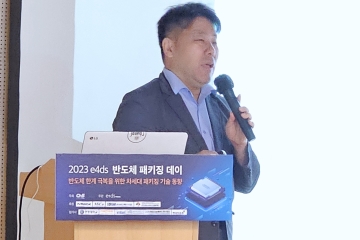
Semiconductor Market Recovery Remains Question Mark This Year… Focus on AI Semiconductors
At the 2023 e4ds Semiconductor Packaging Day, there were forecasts suggesting that the semiconductor market this year may not recover easily.
2023.07.03by 명세환 기자
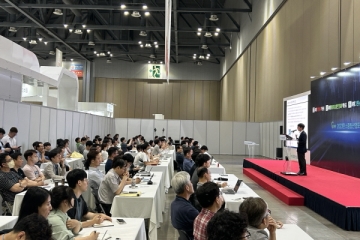
“K-Battery, 60% US Market Share by 2025”
Following the IRA, there is potential for increased sales of Korean batteries in the U.S. market, and Goldman Sachs forecasted that K-battery's U.S. market share will reach approximately 60% by 2025, followed by a projection that Korea will account for 77% of total battery production capacity in the United States.
2023.07.04by 성유창 기자
.jpg)
“Collaborative robots to grow to $9.2 billion by 2028”
Collaborative robots have recently emerged as the primary focus in domestic and international robotics industry trends. According to Markets and Markets, collaborative robots are projected to grow at a compound annual rate of 41.5%, expanding from $1.1 billion in 2022 to reach a market size of $9.2 billion by 2028. Doosan Robotics is preparing to launch 'DART Suite,' a software platform that enables easy design of collaborative robot functions.
2023.07.10by 김예지 기자
AI Chip Market to Jump from 70 Trillion Won This Year to 90 Trillion Won Next Year
While demand is expected to weaken significantly in other sets and general servers, the semiconductor market centered on artificial intelligence is growing rapidly. Against the backdrop of a strong AI boom in the semiconductor industry, high-performance GPUs are currently serving as AI chips in the short term, but it is anticipated that cost-effective AI chips will gain prominence in the medium to long term.
2023.08.23by 명세환 기자

[Planning] Semiconductor Exports Decline for 14th Month… “No Year-End Bonus Expectations”
According to recent reports from the semiconductor industry, there are observations that the overall semiconductor market recovery could be delayed beyond expectations due to sluggish demand recovery and delayed improvements in finished product inventory buildup at some customers. These observations are attributed to uncertainties stemming from dampened consumer sentiment, encompassing the broader market situation resulting from inflation and economic downturn.
2023.09.12by 명세환 기자











