


IBM Launches Next-Generation Quantum Processors and Systems
 Published2023.12.05 09:38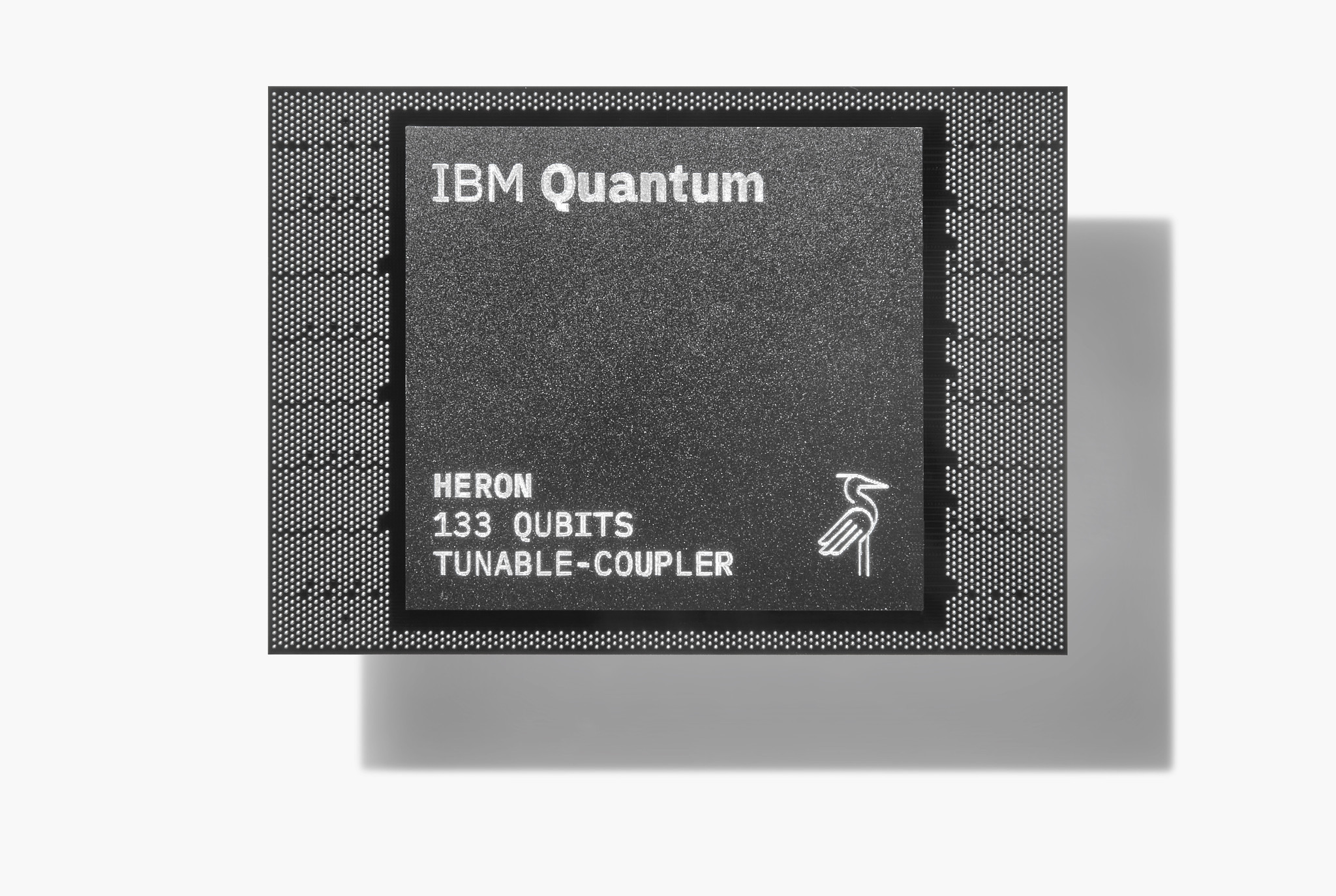
▲IBM 퀀텀 헤론 (IBM Quantum Heron) 프로세서(사진:IBM)
양자 유용성 시대 앞당기는 로드맵 확장 발표

IBM은 지난 4일 뉴욕에서 열린 IBM 퀀텀 서밋(Quantum Summit) 연례 행사에서 유틸리티(utility) 스케일의 성능을 제공하는 새로운 양자 프로세서 시리즈 중 첫 번째 제품인 'IBM 퀀텀 헤론 (IBM Quantum Heron)'을 선보였다.
설계하는 데만 4년이 걸린 IBM퀀텀 헤론 프로세서는 지금까지 출시된 IBM 양자 프로세서 가운데 가장 높은 성능과 가장 낮은 오류율을 제공하는 아키텍처를 가지고 있는 것으로 전해졌다.
IBM은 최초의 모듈형 양자 컴퓨터이자, 양자 중심 슈퍼컴퓨팅 아키텍처의 초석인 IBM 퀀텀 시스템 투 (IBM Quantum System Two)도 공개했다. 뉴욕 요크타운 하이츠에 설치된 첫 번째 IBM 퀀텀 시스템 투는 3개의 IBM 헤론 프로세서와 이를 지원하는 전자 제어 장치로 가동을 시작했다.
다리오 길(Dario Gil) IBM 수석부사장 겸 리서치 책임자는 “우리는 양자 컴퓨터가 과학의 새로운 지평을 탐구하는 도구로 활용되는 시대를 맞이하고 있다”라며, “IBM은 모듈형 아키텍처를 통해 양자 시스템을 확장하고 가치를 제공하는 방법을 계속 발전시키면서, 유틸리티 스케일의 양자 기술 스택의 품질을 더욱 높일 것”이라고 말했다.
IBM은 화학, 물리학, 재료 분야 등 유틸리티 스케일 문제를 탐구하는 과학적 도구로 양자 컴퓨터를 활용할 수 있는 것으로 전했다. 이미 미국 에너지부 아르곤 국립연구소, 하버드대, 버클리대, 국제물리학센터 등 과학계 및 연구계에선 유틸리티 스케일의 양자 컴퓨팅을 시연해 그 가치를 확인하고 있는 상황이다.
그 가운데 IBM이 현재 클라우드를 통해 사용자에게 제공하고 있는 새로운 IBM 퀀텀 헤론 133큐비트 프로세서에서 이미 실행 중인 실험들도 포함되는 것으로 전해진다. IBM 헤론은 오류율을 크게 개선한 고성능 프로세서 클래스 중 첫 번째 제품으로 내년 중 업계를 선도하는 IBM의 유틸리티 스케일 시스템 제품군에 추가될 예정이다.
■ IBM 퀀텀 시스템 투와 확장된 IBM 퀀텀 개발 로드맵

▲IBM 퀀텀 시스템 투(사진:IBM)
IBM 퀀텀 시스템 투는 IBM의 차세대 퀀텀 컴퓨팅 시스템 아키텍처의 기반이다. 이 시스템은 확장 가능한 극저온 인프라와 전통적인 런타임 서버를 모듈식 큐비트 전자 제어 장치와 결합해 만들어졌다.
이 새로운 시스템은 양자 중심 슈퍼컴퓨팅이라는 IBM의 비전을 위한 중요한 요소이다. 이 아키텍처는 기존 컴퓨팅 리소스의 지원을 받아 양자 통신과 컴퓨팅을 결합하고, 미들웨어 계층을 활용해 양자 및 전통적인 컴퓨팅 워크플로우를 통합할 것으로 기대된다.
새롭게 확장된 10개년 IBM 퀀텀 개발 로드맵의 일환으로 이 시스템에 IBM의 차세대 퀀텀 프로세서도 탑재될 계획이다. 또한, 이 미래형 프로세서는 처리할 수 있는 워크로드의 복잡성과 규모를 크게 확장하기 위해 실행 가능한 작업의 품질을 점진적으로 개선할 예정인 것으로 알려졌다.
■ 퀴스킷(Qiskit)과 생성형 AI
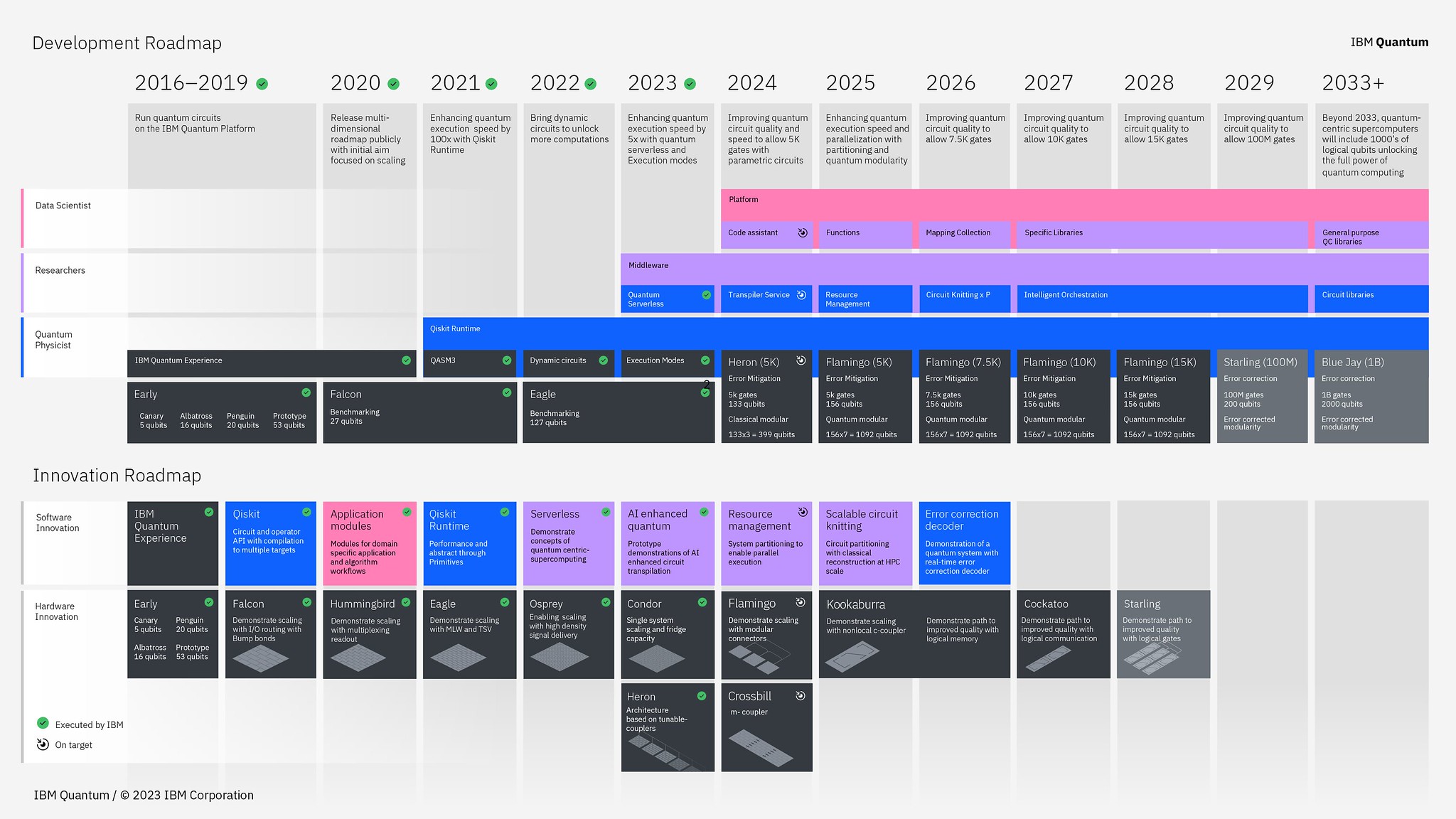
▲IBM 퀀텀 개발 로드맵(자료:IBM)
IBM은 차세대 소프트웨어 스택에서 안정성과 속도면에서 업계 구심점이 될 퀴스킷 1.0에 대한 계획도 자세히 설명했다. 이와 함께 IBM은 양자 컴퓨팅 개발의 대중화를 목표로 퀴스킷 패턴(Qiskit Pattern)도 발표했다.
퀴스킷 패턴은 양자 개발자들이 보다 쉽게 코드를 작성할 수 있도록 하는 메커니즘 역할을 할 것으로 이는 전통적인 문제를 간단히 매핑하고, 퀴스킷을 사용해 양자 회로에 최적화할 수 있다.
퀴스킷 런타임을 사용해 해당 회로를 실행한 다음, 결과를 후처리하는 도구 모음에 기반한다. 퀀텀 서버리스와 결합된 퀴스킷 패턴을 통해 사용자는 클라우드 또는 온프레미스 시나리오와 같은 다양한 환경에서 클래식 컴퓨팅과 양자 컴퓨팅을 통합하는 워크플로를 구축, 배포, 실행할 수 있다. 이러한 모든 도구는 사용자가 양자 알고리즘을 더 쉽게 구축하고 실행할 수 있는 구성요소가 된다.
또한, IBM은 IBM의 엔터프라이즈 AI 플랫폼인 왓슨x (watsonx)를 통해 양자 코드 프로그래밍을 위한 생성형 AI의 활용을 발표했다.
IBM은 퀴스킷의 양자 코드 개발을 자동화하기 위해 왓슨x에서 사용할 수 있는 생성형 AI를 통합할 예정이다. 이는 IBM 그래니트 모델 시리즈의 미세 조정을 통해 이루어질 것이다.
IBM 부사장 겸 IBM 펠로우인 제이 감베타(Jay Gambetta)는 “생성형 AI와 양자 컴퓨팅은 모두 변곡점에 도달해 있으며, 유틸리티 스케일을 연구하기 위한 양자 알고리즘을 쉽게 구축하기 위해 왓슨x의 신뢰할 수 있는 파운데이션 모델 프레임워크를 사용할 수 있는 기회를 제공하고 있다”며, “이는 양자 컴퓨팅을 과학적 탐구를 위한 도구로 사용자가 접근하고 활용할 수 있는 방법을 확대하기 위한 중요한 단계이다”라고 말했다.

Comments
Related news

IBM and Adobe Offer Generative AI Content Supply Chain Solution
IBM is expanding its partnership with Adobe to support enterprise customers with Adobe's Sensei GenAI services and Adobe's creative generative AI model products such as Adobe Firefly, as well as consulting services.
2023.08.09by 김예지 기자
IBM Korea Supports Lotte Biologics' Enterprise Asset Management Platform
Companies manufacture products through various manufacturing facilities and complex workflow processes, and the adoption of related systems such as management platforms makes a significant contribution to enabling integrated management and operation of these processes.
2023.08.29by 명세환 기자
IBM Unveils New Generative AI Product, 'Watson X Code Assistant'
Generative AI enables developers to evaluate, modify, verify, and test correct code more rapidly. Through this, it is expected to become a tool that modernizes large-scale applications more efficiently and allows developers to focus on high-impact tasks.
2023.09.01by 명세환 기자
IBM Korea, "Maximizing Enterprise AI Utilization with Watson X"
IBM Korea is thinking not only about developing domain-specific foundation models for generative AI, but also about how to help customers more easily create AI value through Watson X. On the 19th, IBM Korea held the 'IBM Tech Summit Seoul 2023' conference at the Conrad Hotel in Yeouido, Seoul, under the theme of 'Enterprise Transformation with Generative AI,' introducing IBM's AI strategy and approach, and providing customers with opportunities to experience actual demonstrations through exhibitions.
2023.09.19by 김예지 기자
.jpg)
IBM Launches $500 Million AI Venture Fund
IBM is undergoing a transformation into a leading AI technology company. Through its AI venture fund, IBM is making substantial investments in promising AI-pioneering companies, while demonstrating its position as an industry leader by contributing to AI ecosystem development and technological advancement.
2023.11.09by 명세환 기자











