


LG Ensol and KAIST Develop Lithium Metal Battery Technology Capable of 900km of Driving Range on a Single Charge
 Published2023.12.07 11:15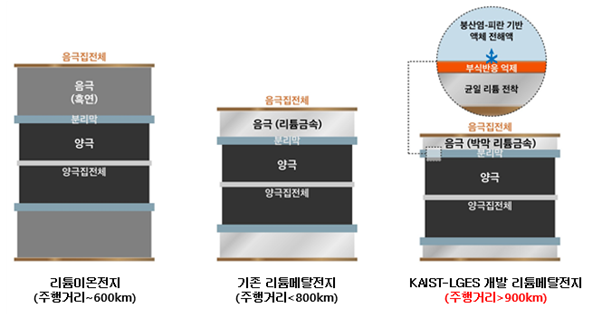
▲Infographic on KAIST-LGES FRL lithium metal battery technology (Image source: LG Energy Solution)
Replacing Existing Graphite-Based Anode Materials with Lithium Metal…Securing Core Technology for Lithium Metal Battery
Lithium metal batteries enable simplified battery system design to increase driving range.
A joint research team from LG Energy Solution and KAIST has succeeded in developing a technology that can dramatically increase the performance of lithium metal batteries, which are attracting attention as next-generation batteries.
The joint research team announced on the 7th that it had succeeded in developing core technology related to lithium metal batteries that can increase driving distance by approximately 50% compared to lithium-ion batteries and also significantly improve charge/discharge efficiency and lifespan.
Lithium metal batteries are characterized by the ability to significantly reduce the weight and volume of the negative electrode material compared to existing lithium-ion batteries by replacing the existing graphite-based negative electrode material with lithium metal. This can significantly improve energy density and driving range, making it one of the representative next-generation batteries.
However, in the case of existing lithium metal batteries, dendrites, which are lithium electrodeposition phenomena formed by lithium ion accumulation during the lithium electrodeposition process that occurs on the surface of the negative electrode, and continuous corrosion by liquid electrolyte have been pointed out as limitations that threaten the lifespan and safety of the battery.
To solve this problem, a joint research team of LG Energy Solution and KAIST applied a ‘borate-pyran-based liquid electrolyte’ for the first time in the world.
This electrolyte acts to block corrosion reactions between the electrolyte and the lithium metal negative electrode by reconstructing the solid electrolyte interphase (SEI), which is several nanometers thick and forms on the surface of the lithium metal negative electrode during charge and discharge, into a dense structure.
This will not only improve the charging and discharging efficiency of lithium metal batteries, but also increase the energy density enough to enable 900 km of driving on a single charge. This is 50% higher than the driving range of approximately 600 km for lithium-ion batteries used in existing high-performance electric vehicles.
In addition, it is possible to ensure lifespan stability by allowing recharges over 400 times.
Additionally, the lithium metal battery implemented in this study, unlike all-solid-state batteries, does not require high temperatures and pressures during operation, enabling the design of a simplified battery system to increase the driving range of electric vehicles.
“It is significant that we have been able to solve a representative challenge of lithium metal batteries using liquid electrolytes together with KAIST and come one step closer to commercialization,” said Jeong Geun-chang, Vice President and Head of Future Technology Center at LG Energy Solution. “We will continue to actively cooperate with FRL and take the lead in commercializing next-generation batteries based on our differentiated technological prowess.”
Professor Kim Hee-tak of KAIST's Department of Biotechnology said, "This study visualizes the possibility of implementing a lithium metal battery based on a liquid electrolyte, which was previously considered impossible."
“We have shown that the limitations of lithium metal batteries can be overcome through nanoscale control of the lithium metal cathode interface,” said Kwon Hyuk-jin, a doctoral candidate and first author of the paper.
Meanwhile, the achievements of this research paper were recognized when it was published in the world-renowned scientific journal ‘Nature Energy.’
This is the result of two years of research by the Frontier Research Laboratory (FRL), a joint research center established by LG Energy Solution and KAIST in 2021 to develop core technologies related to next-generation lithium metal batteries.
FRL is a joint project between LG Energy Solution and leading domestic and international universities and institutions. This is a joint research center conducting next-generation battery-related R&D projects. In addition to KAIST, LG Energy Solution operates FRLs with the University of California, San Diego (UCSD), the University of Münster, and the Helmholtz Institute for Advanced Research in Energy and Environmental Sciences (HEL).
Comments
Related news
Hanjayeon, Asset Management Event Held...Battery Material Related Companies in One Place
The Korea Automotive Research Institute (hereinafter referred to as KARI) has established a forum for diverse communication and exchange among relevant companies regarding issues and industry trends in the battery materials sector.
2023.11.17by 성유창 기자
Lowering the Cost of Car Batteries ① - Expanding LFP Battery Development… Promoting Lower Costs by Compromising Driving Range
According to prospects that entry-level electric vehicles are expected to expand, domestic battery companies, which have primarily manufactured NCM batteries, are also expected to accelerate their supply of relatively low-cost LFP batteries.
2023.11.20by 성유창 기자
Car Battery Cost Reduction ② - Emerging LFP Cathode Materials: Market Dominance Is in Difficulty
As electric vehicles face significant price competitiveness disadvantages compared to internal combustion engine vehicles, cost reduction initiatives for EVs are being pursued as an alternative solution, and the strategic direction of battery cathode material manufacturers aligned with this trend is drawing attention.
2023.11.20by 성유창 기자
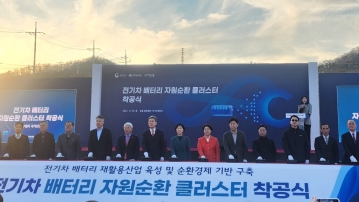
Gyeongbuk Province Holds Groundbreaking Ceremony for Used Battery Resource Recycling Cluster… Plans to Become a Forward Base for Battery Recycling Industry
Gyeongsangbuk-do held a groundbreaking ceremony for a used battery resource recycling cluster and is now formally implementing plans to emerge as a national hub for battery resource recycling and a core component of an eco-friendly green industry ecosystem.
2023.12.06by 성유창 기자
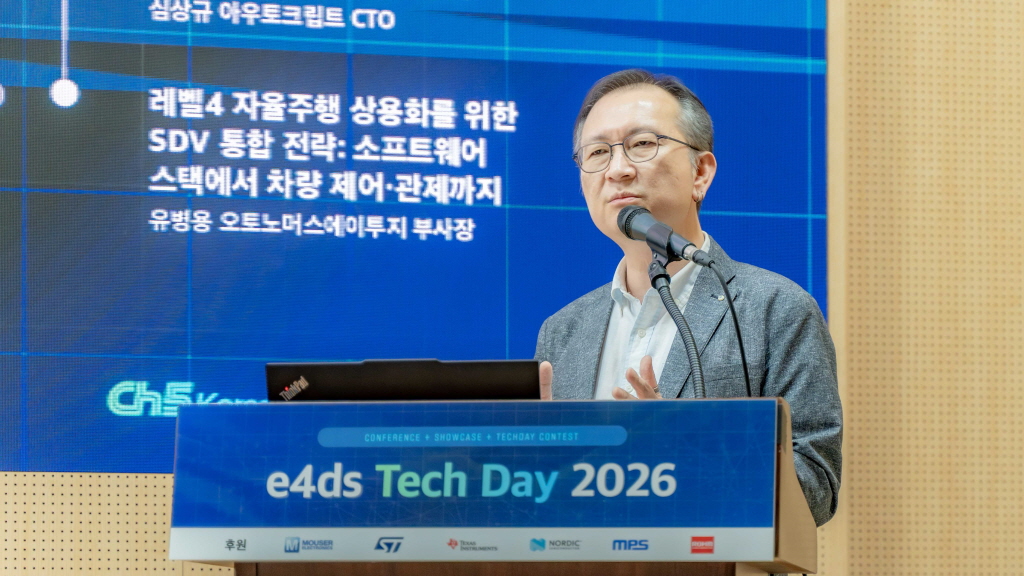
[e4ds Tech Day 2026 ⑨] Sim Sang-gyu, Autocrypt CTO: "In the Physical AI Era, Automotive Security Must Extend Beyond the Vehicle"
At e4ds Tech Day 2026, Sim Sang-gyu, CTO of Autocrypt, explained automotive cybersecurity strategies in the era of Physical AI and SDV (Software-Defined Vehicle). Automobiles are evolving as part of an ecosystem connected to AI, cloud, chargers, IoT, and robots, and he emphasized that the scope of security must expand beyond the vehicle interior to the entire connected environment. In particular, AI model tampering, adversarial attacks, OTA updates, and EV charger hacking were identified as major threats. He explained that response measures require zero trust, AI model integrity protection, intrusion detection, Security by Design and Default, and full lifecycle security management, and that proactive security system establishment beyond regulatory compliance is critical for securing future mobility competitiveness.
2026.10.12by 배종인 기자











