



Ericsson: 5G subscribers to exceed 5.3 billion by 2029
 Published2023.12.13 16:30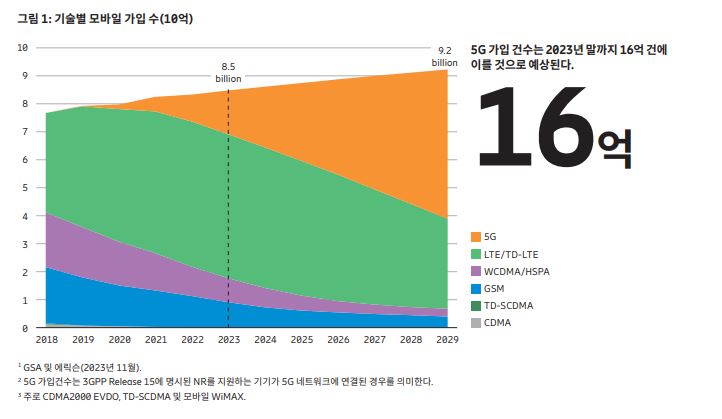
5G to account for approximately 20% of global mobile traffic by the end of 2023
5G mid-band frequencies are suitable for 5G SA deployment.
With the number of global 5G mobile subscriptions expected to more than quadruple from 1.6 billion to 5.3 billion by 2029, Ericsson stressed the importance of increasing 5G mid-band deployment density to expand the full 5G experience.
According to the Ericsson Mobility Report, published on the 7th, despite the economic downturn, new 5G subscriptions are projected to reach 610 million in 2023, a 63% increase from 2022. By the end of 2023, 5G is expected to account for approximately 20% of global mobile subscriptions, 100 million more than previously forecast. Furthermore, global 5G coverage (the area where 5G networks are available) is projected to reach 45% by the end of 2023, with North America accounting for 61%, and 85% by the end of 2029.
5G continues to gain traction in the overall smartphone market. The share of 5G-capable smartphones shipped will increase from 57% last year to 62% in 2023. The number of 5G smartphones capable of supporting services beyond mobile broadband also reaches a total of 1,000.
The continued surge in data traffic is driving demand for mobile networks. The average global data consumption per smartphone has recently exploded. Total mobile data traffic is projected to triple between the end of 2023 and the end of 2029, reaching 56 GB per month.
However, most 5G deployments have been built as NSA (Non-Standalone), which struggles to handle rapidly increasing mobile traffic. Recently, deployments are increasingly shifting to "5G SA (Standalone)," which can satisfy ultra-low latency, high speeds, capacity, and network slicing requirements.
“With more than 600 million 5G subscriptions added globally this year and growing across all regions, the demand for high-performance connectivity is clear,” said Fredrik Jejdling, Executive Vice President and Head of Business Area Networks, Ericsson. “5G rollouts and the growing number of 5G SA networks provide opportunities to support increasingly diverse and emerging applications for both consumers and businesses.”
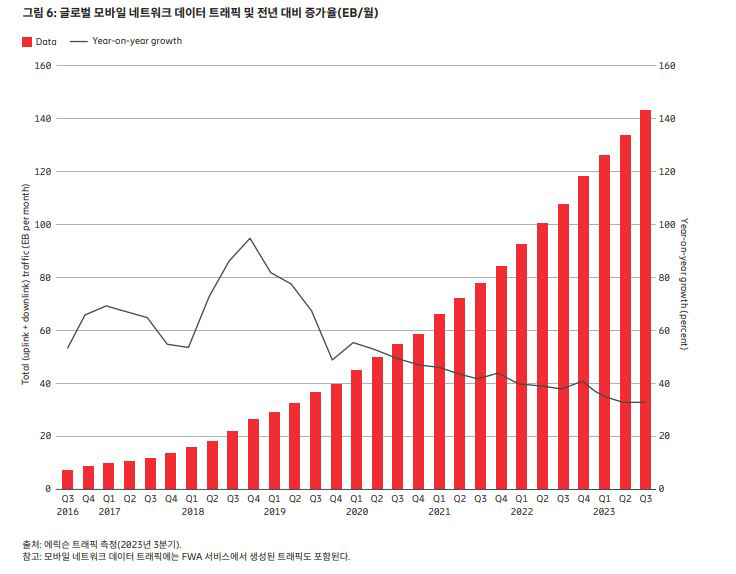
Ericsson Mobility Report (November 2023)
However, more than 40 carriers are still struggling to build 5G SA. Ericsson has found the answer in the 3.5 GHz band, a 5G mid-band. This band combines high speeds, high capacity, and excellent coverage, making it ideal for deploying 5G standalone (SA) networks. Driven by this argument, Ericsson projects that by the end of 2023, approximately 30% of existing 4G deployments worldwide, excluding China, will be in this 5G mid-band.
For example, Indian mobile operator Jio has adopted a 5G SA architecture with a multi-band strategy, deploying 5G in low bands (700MHz), mid bands (3.5GHz), and high bands (26GHz). By prioritizing mid bands and providing differentiated, high-quality 5G services, Jio is securing new customers and building 5G scale to migrate 4G customers to 5G. Jio achieved 70 million 5G customers just 11 months after launching its 5G service.
Ericsson also emphasized improved connectivity performance in indoor environments. While indoor environments like train stations and airports present challenges due to the inherent characteristics of buildings, such as steel structures and walls, Ericsson explained that these challenges can be overcome with customized 5G solutions for indoor deployments. Ericsson stated, "5G mid-band TDD and indoor small cells are optimal solutions that significantly improve network performance for both downlink page arrival times and uplink, laying the foundation for new immersive and XR services."
In particular, as 5G SA matures, support for enterprise-only networks using sub-6 (bands below 6 GHz) or mmWave frequencies has become possible. Because 5G SA does not rely on existing LTE networks, companies can independently build and operate customized 5G networks. The sub-6GHz band offers long range and high power efficiency, enabling wide-area coverage. The mmWave frequency, a high-bandwidth frequency of 28GHz, enables high-speed, low-latency services.
Ericsson said that a dedicated 5G network can provide the coverage, performance, and reliability needed for "gigafactories" for large-scale electric vehicle and battery manufacturing. Specifically, 5G's mid-band frequencies are less susceptible to radio wave reflections. The 5G network covers a vast area within the gigafactory, which is more than five times larger than a typical manufacturing facility. Ericsson added that "5G has proven to be more cost-effective in gigafactories, requiring eight to ten times fewer access points than Wi-Fi."
South Korea utilizes a specialized 5G network, called "Eum 5G," to support companies other than mobile carriers in building 5G networks in specific areas, buildings, and factories. Using the 4.7 GHz and 28 GHz frequency bands, domestic companies are building an ecosystem by establishing convergence services for 5G specialized networks in public and private sectors such as logistics, safety, disaster relief, healthcare, and manufacturing.
Comments
Related news
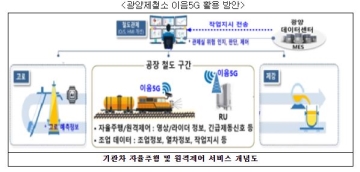
Introduction of 5G steel automation and safety management
The Ministry of Science and ICT announced on the 11th that it has completed the procedures for frequency allocation and registration as a basic telecommunications business operator for POSCO DX in the 5G Leap (Eum) program. The requested frequency is 4.7GHz with a bandwidth of 100MHz, and the usage period is 2 years.
2023.09.12by 김예지 기자
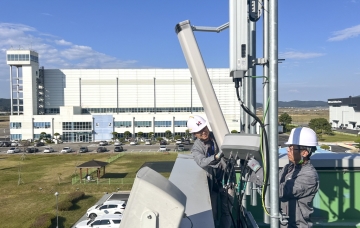
KT Completes Development Verification of UAM 5G Aerial Network-Specific Antenna
KT has developed a specialized antenna that enables efficient construction of 5G aerial network coverage dedicated to UAM and has conducted field verification.
2023.10.30by 배종인 기자

SKT, Ericsson-LG, Dell, and AMD Advance 5G Core
SKT announced on the 9th that it has established a global cooperation system with Ericsson LG, Dell Technologies, and AMD for "5G Core System Enhancement."
2023.11.13by 김예지 기자
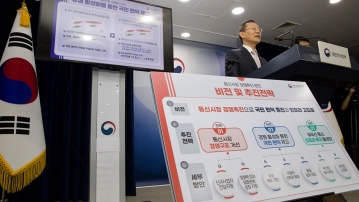
28GHz, only possible with 5G? What's next for the fourth mobile carrier?
Mobile carriers will be able to provide subway Wi-Fi services utilizing 28GHz in subways through Eeum 5G (5G private networks). Meanwhile, the feasibility of utilizing the 28GHz band in commercial networks continues to show limited prospects.
2023.11.29by 김예지 기자
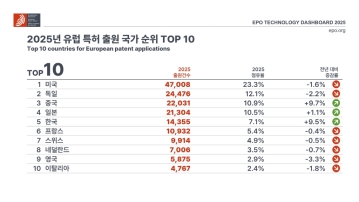
European Patent Applications Surpass 200,000 for the First Time… South Korea Maintains 5th Place, Led by Batteries and Telecommunications
According to the European Patent Office (EPO)'s 'Technology Dashboard 2025', European patent applications last year reached 201,974, surpassing 200,000 for the first time. Korean companies and inventors filed 14,355 applications, representing a 9.5% increase from the previous year and maintaining 5th place by country. Battery, digital communication, and semiconductor technologies led the growth, with Samsung ranking as the top EPO applicant for the second consecutive year and LG reaching 3rd place. The presence of major domestic cities such as Seoul, Suwon, and Yongin was also confirmed. It was also revealed that Korea's European patent strategy is expanding beyond individual technologies to span the entire industry.
2026.03.24by 명세환 기자











