


Schneider Electric Joins Semiconductor Decarbonization Program Catalyze
 Published2023.12.14 16:16
Schneider Electric (Kim Kyung-rok, Country President of Schneider Electric Korea), a global leader in digital innovation in energy management and automation, is embarking on full-scale support for the energy transition and decarbonization of the semiconductor value chain through the Catalyze program.
Schneider announced on the 13th that a new partner has joined 'Catalyze,' a collaboration program that helps build a decarbonization system in the global semiconductor value chain.
Google, Dutch semiconductor company ASM, and global manufacturing company HP have been named as new sponsors of Schneider Electric's Catalyze program.
Schneider Electric’s Catalyze is the first collaborative program in which major semiconductor and technology industry leaders address carbon emission issues within the semiconductor supply chain, with Intel and Applied Materials participating as the first corporate sponsors.
Energy transition is essential within the semiconductor value chain. According to a recent study by the SEMI Semiconductor Climate Consortium, carbon emissions from the semiconductor industry in 2021 amounted to approximately 500 million tons, with 16% of this originating from the supply chain.
The semiconductor industry can have a significant impact on overall Scope 3 emissions by switching suppliers to low-carbon energy sources and supporting decarbonization measures.
Schneider Electric's Catalyze program combines energy purchasing power across the semiconductor value chain to accelerate the deployment of renewable energy projects.
In addition, it provides opportunities for suppliers lacking internal capabilities to participate in the utility-scale Power Purchase Agreement (PPA) market and conducts training on topics such as the development of operational models for sustainability.
Jean-Pascal Tricoire, Chairman of Schneider Electric, stated, “We are very pleased that the addition of our new partner supports our ambition to accelerate the decarbonization of the semiconductor supply chain. While Scope 3 emissions are known to be difficult to track and manage, the Catalyze program enables companies and suppliers to participate in and collaborate on the energy transition and decarbonization.”
Michael Terrell, Senior Director of Energy and Climate at Google, said, “The transition to carbon-free semiconductor manufacturing is critical to reducing global carbon emissions, but no single company can achieve this alone. As a partner in the Catalyze program, we look forward to working with other suppliers to expand the use of clean energy in critical areas of Google’s supply chain.”
Next, HP's Chief Supply Chain Officer, Ernest NicolaHP stated, “The Earth requires urgent and decisive action to mitigate the impacts of climate change. Accordingly, HP will reduce carbon emissions in the semiconductor value chain by more than half over 20 years while providing innovative technology to customers,” and John Golightly, Vice President of Sustainability at ASM, explained, “Through the Catalyze program, we can collaborate in various ways to reduce global carbon emissions.”
Meanwhile, Kim Kyung-rok, CEO of Schneider Electric Korea, is scheduled to share insights on the Catalyze program for a sustainable future of the semiconductor industry at the Sustainability Forum of SEMICON Korea 2024, which will be held on February 1.
Comments
Related news
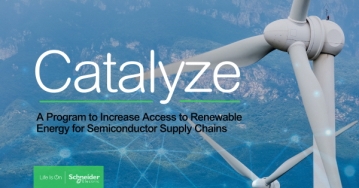
Schneider Begins Building a Semiconductor Decarbonization System
Schneider Electric (Korea office representative Kim Kyung-rok) has unveiled a new partnership program called 'Catalyze' that helps establish decarbonization systems in the global semiconductor value chain, and is beginning full-scale collaboration with major leaders in the semiconductor and technology industries.
2023.07.26by 배종인 기자
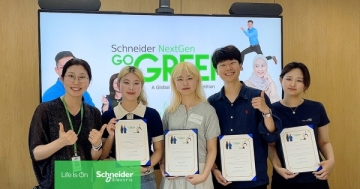
Schneider, Gogreen domestic 3 teams advance to finals
Schneider Electric Korea (Korea Branch Representative Kim Kyung-rok) announced the winners of the domestic finals of "Go Green 2023," a global competition to discover bold, sustainable, and smart ideas for the future, and will support domestic internship opportunities and participation in the East Asia finals.
2023.08.14by 배종인 기자
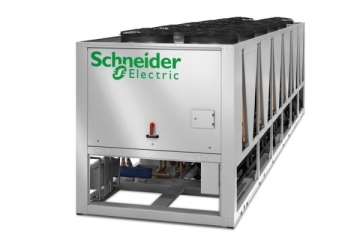
Schneider Reduces Data Center Energy with Cooling Solutions
Schneider Electric Korea (Korea Branch Representative Kim Kyung-rok) is making significant contributions to improving economic efficiency in data center operations through energy savings via its cooling solutions.
2023.09.06by 김예지 기자
Schneider Supports Decision-Making with Conversational AI Tools
Schneider is introducing an interactive AI tool called "EcoStruxure Resource Advisor Copilot."
2023.09.20by 배종인 기자
Schneider Electric to Help U.S. Guardian Glass Manage Power
Schneider Electric (Korean subsidiary representative: Kim Kyung-rok), a global company leading digital innovation in energy management and automation, is supporting power management for Guardian Glass, a leading U.S. glass manufacturer, and realizing power digitalization.
2023.09.27by 배종인 기자











