


Samsung Electronics Unveils Two Isocell Vision Products, "The Eye of Future Advanced Industries"
 Published2023.12.19 13:46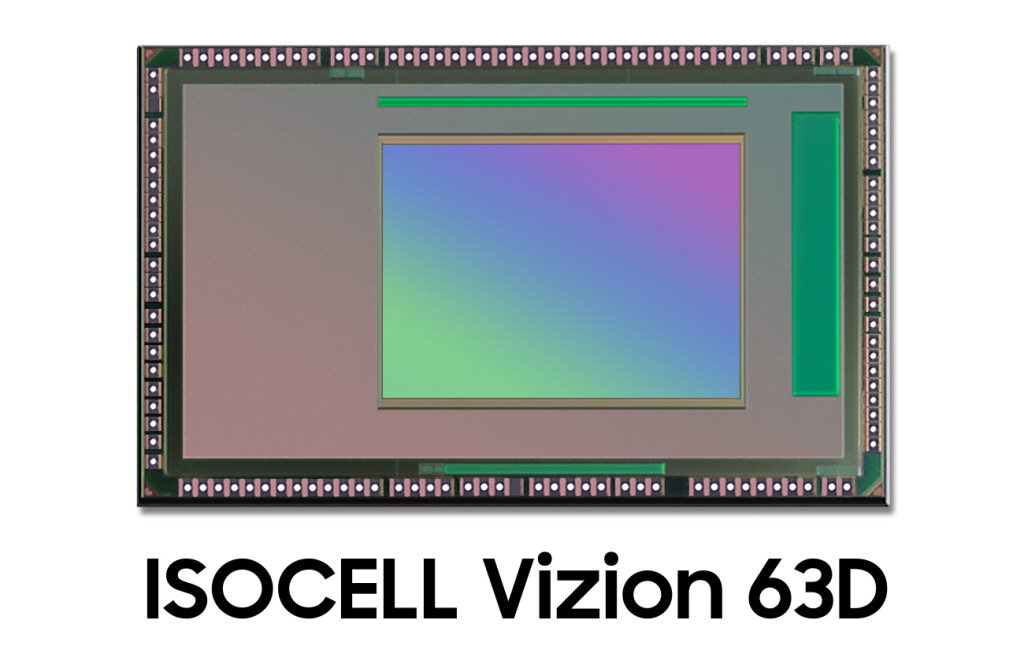
The shutter sensor, the ISOCELL Vision 931, is ideal for XR, gaming, and drones.
Samsung Electronics has launched a next-generation image sensor, making a full-scale foray into the sensor market in various advanced industries.
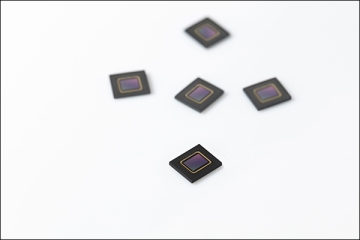
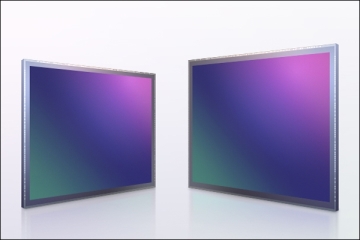
Samsung Electronics unveiled two next-generation products in its 'ISOCELL Vizion' image sensor lineup for advanced content platforms such as mobile, robot, and XR on the 19th.
The 'ISOCELL Vision 63D' is an indirect time of flight (iToF) sensor that detects light wavelengths to measure three-dimensional information of objects. It is used in various future cutting-edge industries such as mobile, robotics, and XR.
The 'ISOCELL Vision 931' is a global shutter sensor that simultaneously exposes all pixels to light and takes pictures, much like the human eye, and is optimized for fields such as XR, motion tracking games, robots, and drones that require capturing moving subjects without distortion.
The ISOCELL Vision 63D measures distances using a principle similar to how bats use sound waves to detect their surroundings. Instead of sound waves, it quickly and accurately calculates the distance by using the phase difference between the emitted light wavelength and the wavelength reflected back from the subject, thereby obtaining three-dimensional information about the object.
Through this, it is expected to be utilized as a key product in various cutting-edge applications such as serving/logistics robots, XR devices, and facial authentication.
This product is the industry's first single-chip iToF sensor. It features a built-in Image Signal Processor (ISP) optimized for depth calculations, enabling depth map capture without AP support. Furthermore, compared to its predecessor, the ISOCELL Vision 33D, system power consumption is reduced by up to 40%.
The ISOCELL Vision 63D processes QVGA resolution images at 60 frames per second, optimized for implementing iToF sensor functions.
Samsung Electronics achieved an industry-leading 38% quantum efficiency at 940nm (nanometers) using Backside Scattering Technology (BST), which enhances pixel light absorption. This minimizes motion blur, delivering clear images.
It also supports both a high-resolution surface light source mode and a point light source mode that enables long-distance measurement, doubling the maximum measurable distance from 5 meters to 10 meters. It is essential for driving/service robots that need to quickly and accurately recognize the surrounding situation and move.
In addition, the ISOCELL Vision 63D is optimized for small, portable or wearable devices by implementing VGA (640x480) resolution in a 1/6.4" optical format size with the industry's smallest 3.5㎛ (micrometer) pixel size.
The ISOCELL Vision 931 is an image sensor that uses global shutter technology rather than the rolling shutter method of existing image sensors for high-resolution cameras.
While conventional image sensors use a rolling shutter method that sequentially exposes pixels to light to take pictures, a global shutter exposes all pixels to light simultaneously, like the human eye.
This allows for clear, distortion-free capture of even fast-moving objects, making it ideal for use in fields where speed and accuracy are crucial, such as XR, motion tracking games, robots, and drones.
In particular, the ISOCELL Vision 931 supports a 1:1 ratio resolution (640x640), making it optimized for recognizing fine movements such as eye tracking, facial expressions, and hand gestures as well as iris recognition in head-mounted display devices such as XR devices.
In addition, by applying the FDTI (Front Deep Trench Isolation) method that forms an insulation layer between the backscattering technology and pixels, it has achieved a quantum efficiency of 60%, the highest in the industry, at 850 nm infrared.
Additionally, the multi-drop function allows up to four cameras to be connected simultaneously with a single data line, enabling device manufacturers to design products more easily.
“The ISOCELL Vision 63D and ISOCELL Vision 931 are the culmination of Samsung Electronics’ differentiated next-generation image sensor technology and know-how,” said Lee Hae-chang, Vice President of the Next-Generation Sensor Development Team at Samsung Electronics’ System LSI Business Division. “Samsung Electronics is developing iToF sensors, global positioning sensors, and other next-generation image sensor technologies.”“We plan to lead the rapidly growing next-generation image sensor market based on the ISOCELL Vizion lineup, including the bee shutter sensor,” the company said.
Samsung Electronics is currently providing samples of both products to customers.

Comments
Related news
Samsung Electronics Unveils Four Ultra-Small, High-Resolution 0.7μm Image Sensors
Samsung Electronics unveiled four new products in its 0.7μm pixel image sensor lineup. The new products include the ISOCELL HM2, the industry's first 108-megapixel product with 0.7μm pixels; the GW3, a 64-megapixel product capable of 4K 60fps video recording; the GM5, a 48-megapixel product supporting ultra-wide angle and folded zoom; and the JD1, an ultra-compact 32-megapixel product optimized for bezel-less design implementation.
2020.09.15by 이수민 기자
Galaxy S21 Ultra equipped with 108-megapixel image sensor
Samsung Electronics has launched a new 108-megapixel image sensor product, the ISOCELL HM3. The ISOCELL HM3 is Samsung Electronics' third-generation 0.8-micrometer image sensor following the HMX and HM1, integrating 108 million pixels in a 1/1.33-inch form factor. Additionally, it incorporates Samsung Electronics' proprietary camera technologies including Smart ISO Pro and Super PD Plus.
2021.01.16by 강정규 기자
Samsung Electronics begins mass production of 0.64㎛ pixel image sensors.
Samsung Electronics is launching the "ISOCELL JN1," a 50-megapixel image sensor with the industry's smallest pixel size of 0.64㎛ (micrometer), thereby actively supporting slim design for high-megapixel mobile cameras.
2021.06.10by 배종인 기자
Samsung Electronics Launches Automotive Image Sensor with Enhanced Low-Light Detection
Samsung Electronics announced its launch of the ISOCELL Auto 4AC, an automotive image sensor, signaling a full-scale expansion of its image sensor product lineup from mobile to automotive applications. The ISOCELL Auto 4AC is a product equipped with 1.2 megapixels in a 1/3.7-inch optical format, and is planned to be mounted in surround-view monitors and rear-view cameras that allow drivers to view the exterior from inside the vehicle.
2021.07.15by 명세환 기자
Samsung Electronics Unveils 200-Mediapixel Image Sensor and Compact Dual-Pixel Image Sensor
Samsung Electronics has unveiled the ISOCELL HP1, a 200-megapixel mobile image sensor, and the ISOCELL GN5, an industry-leading dual-pixel image sensor with the smallest size. The HP1 is a product that implements 200 million pixels with 0.64 micrometer pitch in a 1/1.22-inch optical format size. The GN5 is an industry-leading smallest dual-pixel product that implements 50 million pixels with 1.0 micrometer pitch in a 1/1.57-inch optical format.
2021.09.02by 이수민 기자











