



“Feeling multiple tactile sensations simultaneously, like human skin.”
 Published2023.12.21 09:53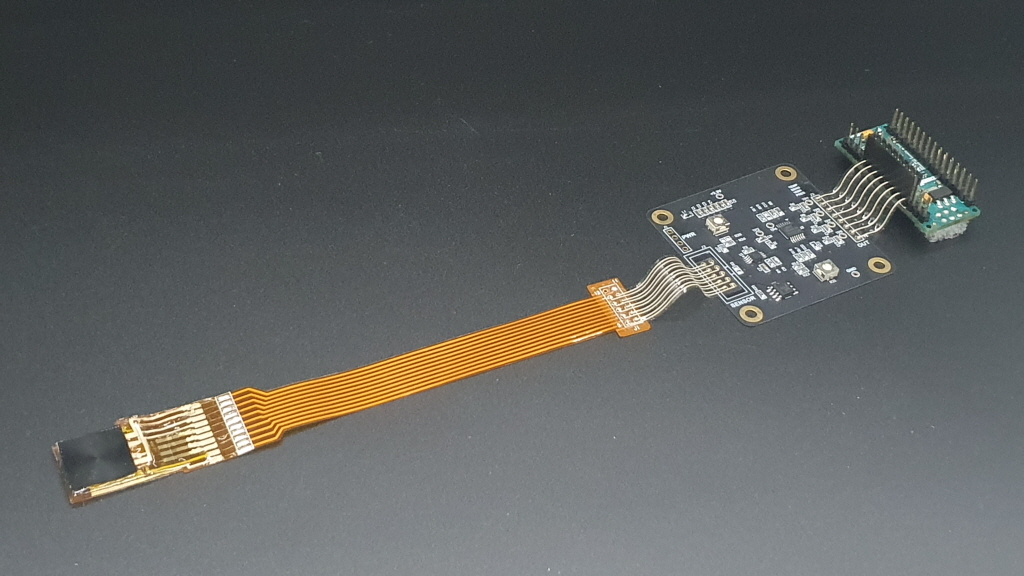
▲Real-time multi-tactile detection system developed by the Korea Institute of Machinery and Materials
Expected applications include process automation, robotics, and customized prosthetics.
Amidst the recent increase in robot accidents, including worker injuries caused by industrial robots, a world-first tactile sensing system capable of simultaneously sensing multiple tactile sensations like human skin has been developed for use in high-priced robots and wearable devices that require tactile information. It is expected to be used in manufacturing process automation systems, robots in daily life, and customized prosthetic limbs.
The Korea Institute of Machinery and Materials (President Ryu Seok-hyun) under the Ministry of Science and ICT announced on the 21st that the research team of Research Director Lim Hyeon-ui of the Nano Convergence Equipment Research Department recently developed a real-time multi-tactile sensing system that provides real-time tactile information like human skin, and published the related research results in the prestigious journal Soft Robotics (IF: 7.9).
According to a presentation by the researchers, the multi-tactile sensing system, which mimics the principle of detecting various types of touch on human skin and transmitting them to the brain, consists of four tactile sensors and modules responsible for signal processing, transmission, and analysis, and can identify various touches and surface textures and distinguish complex movements based on them.
This system allows you to feel the same tactile sensations as human skin, such as warmth, surface roughness, and slip.
The tactile sensing system uses 3D printing technology to create flexible electrodes that are easy to bend and connect them to the FPCB (Flexible Printed Circuit Board) of the electronic module, allowing for easy signal processing of four tactile sensors that detect temperature, vibration, shear force, and vertical pressure.
Previous studies have used various external measuring devices and analysis equipment to detect various types of tactile sensations, but their large size and complex system configuration make them difficult to apply to wearable devices or robots.
On the other hand, the system developed this time is thinly layered and vertically stacked with four tactile sensors, and is developed to simultaneously receive module information that converts, transmits, and analyzes the corresponding signals, so it can be applied to actual robots or wearable devices in a lightweight and simple form.
Lim Hyeon, head of research, said, “The real-time multi-tactile sensing system can feel multiple senses simultaneously by imitating the human sensory system, and is superior to existing sensors. He said, “This is a technology that solves problems that arise due to complex signal processing or detection systems,” and “If applied to robots, wearable devices, and prosthetic limbs, it can be utilized in manufacturing and patient rehabilitation exercises, contributing to the improvement of public welfare and safety.”
Meanwhile, this research was conducted with the support of the Ministry of Science and ICT's 'Bionic Arm Mechatronics Convergence Research Project' and the Korea Institute of Machinery and Materials' basic project 'Development of Nano-based Omni-TEX Manufacturing Technology'.
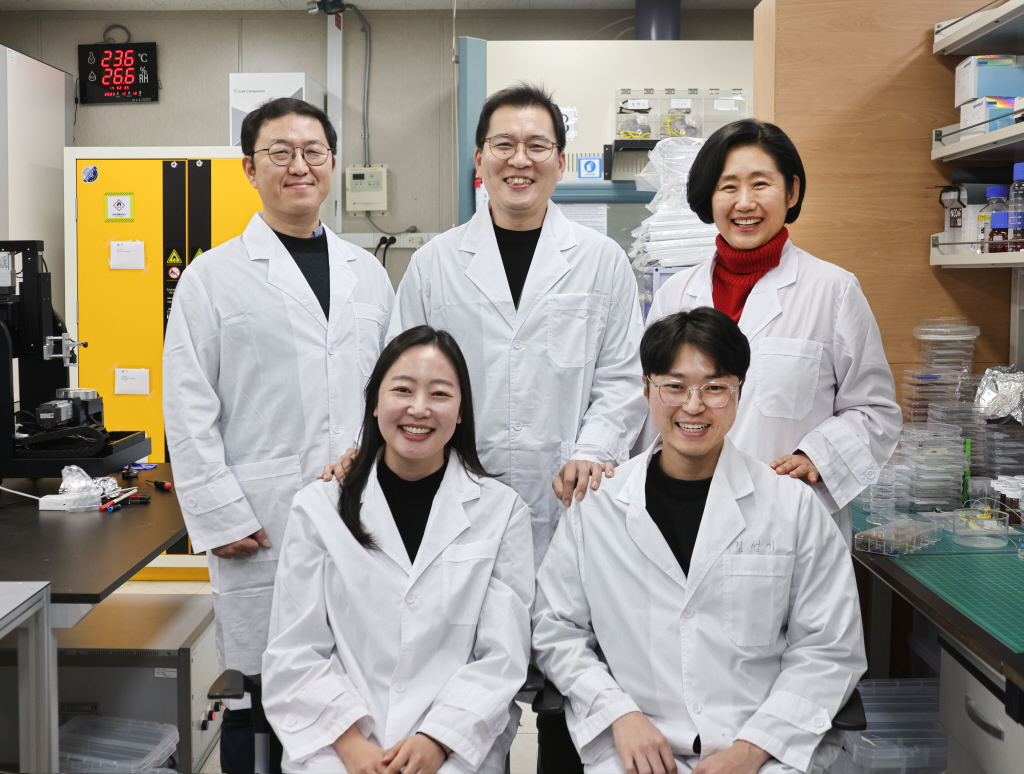
▲Research team led by Lim Hyeon-ui, head of the Nano Convergence Equipment Research Department at the Korea Institute of Machinery and Materials

Comments
Related news
Korea Institute of Machinery and Materials: "3D Bioprinting Technology Eliminates Cancer Cells"
The Korea Institute of Machinery and Materials (KIMM, Director Park Sang-jin) under the Ministry of Science and ICT has developed 3D bioprinting technology using NK cell therapeutics as a novel immunotherapy for cancer treatment through joint research with the Korea Research Institute of Bioscience and Biotechnology (KRIBB, Director Kim Jang-sung).
2023.07.11by 배종인 기자
KIMM Localizes Key Automotive Semiconductor Equipment
As electric vehicle technology rapidly grows, demand for high-value-added automotive semiconductors is increasing. Equipment that processes key components of automotive semiconductors using both lasers and water pressure has been developed for the first time in Korea, generating expectations that it will help reduce import dependence and achieve cost savings.
2023.08.08by 배종인 기자
Machinery Research Institute Develops Turbo-Brayton Cryogenic Cooling System
The research team led by Dr. Yeom Han-gil, Principal Researcher at the Extreme Heat and Fluid Machinery Research Division of the Korea Institute of Machinery and Materials (KIMM, Director Park Sang-jin) under the Ministry of Science and ICT, has successfully constructed a turbo-Brayton cryogenic cooling system with 10kW cooling capacity at -196°C and completed operational testing. This marks the first domestic development of complete process technology from cryogenic cooling system design through construction.
2023.09.21by 배종인 기자
KIMM Realizes Future Buildings with Urban Rooftop Greenhouses
A research team led by Senior Researcher Lee Sang-min at Korea Machinery Research Institute (Director Park Sang-jin), under the Ministry of Science and ICT, has developed world-class level active energy exchange technology and successfully demonstrated a rooftop greenhouse with an area of 200㎡ on the rooftop of a building located in Seongsu-dong, Seongdong-gu, Seoul.
2023.11.14by 배종인 기자
Korea Mechanical Engineering & Construction Co. develops eco-friendly refrigerant compressor using hydrogen
A research team led by Kim Young, principal researcher at the Korea Institute of Machinery and Materials (Director Park Sang-jin) under the Ministry of Science and ICT, and a research team of professors Kim Min-sung and Kim Dong-kyou at Chung-Ang University (President Park Sang-gyu) have successfully developed an environmentally friendly refrigerant compressor that utilizes an electrochemical method rather than a mechanical approach.
2023.11.24by 배종인 기자











