


EV subsidy policy, for 'future generations' → for 'checks and balances'
 Published2024.01.09 14:43
“Protect Our Continent and Companies”… EV Subsidies Transform into a Means to Check Other Countries
South Korea and the UK Reduce or Suspend EV Subsidies as They Implement Policies to Expand EV Infrastructure
With the determination to leave a better world for future generations, countries around the world, including Korea, have joined forces to reduce carbon emissions and agreed to decarbonize the transportation sector, which accounts for 17% of global greenhouse gas emissions, leading to a resurgence of the electric vehicle industry.
The electric vehicle subsidy policy is a representative promotional policy that led to the popularization of electric vehicles by providing differential subsidies to electric vehicles below a certain price, thereby curbing price increases and reducing the burden on consumers.
Taking the lead in eco-friendliness, such as reducing carbon emissions, countries have strived to expand the adoption of electric vehicles by implementing their own independent subsidy policies, which has effectively contributed to the growth of the electric vehicle industry.
Meanwhile, examining the electric vehicle (EV) subsidy policies of the countries currently leading the EV industry reveals a divide between those that have suspended EV subsidies altogether and those implementing protectionist policies that provide subsidies only to EVs produced within their own country or on their respective continents.
Taking a protectionist stance on the electric vehicle industry France and the United States, representative nations, strongly keep other continents in check regarding electric vehicle subsidy policies.
According to the Inflation Reduction Act (IRA) announced by the U.S. on the first day of 2024, no electric vehicles from other countries, including ours, were included.
The U.S. government drastically reduced the number of electric vehicle subsidy models from 43 to 19, excluding all vehicles using Chinese batteries such as CATL, and also excluded vehicles not assembled in North America (Canada, the U.S., and Mexico) from the subsidy by giving them low scores.
This is because the IRA's detailed regulations regarding foreign entities of concern (FEOC) were applied last December.
The measure stipulated that using parts made by FEOC would prevent companies from receiving subsidies, and the U.S. government designated most battery component companies in China.
In addition, if a Chinese company establishes a joint venture with a foreign company outside of China, it is considered a foreign entity of concern if the Chinese side holds 25% or more of the shares.
Contrary to concerns that the announcement of the IRA by the U.S. last year would trigger a major crisis for the Korean automotive industry, Hyundai Motor Group capitalized on the fact that business leases and rental vehicles are eligible for tax credits, and captivated American consumers with vehicles of a moderate size (such as the Ioniq 5 and 6) that are smaller than the large SUVs that are representative models of U.S. OEMs but larger than the Chevrolet Bolt EV.
However, given that Korea imports most of its key battery minerals from China, it appears necessary to prepare plans to flexibly respond to changes in U.S. policy aimed at strengthening containment of China.
France revamped its electric vehicle subsidies last December, giving a strong boost to European electric vehicles, while modifying the policy to provide subsidies only to the Hyundai Kona model among Korean vehicles.
Kia's Niro and Sorento, which were previously eligible for subsidiesWool was excluded.
The biggest change in French policy is that subsidies are provided based on environmental scores, which means that carbon emissions will be thoroughly verified throughout the entire process from electric vehicle production to transportation.
In particular, as carbon emissions from maritime transport are also taken into account, this has become a very disadvantageous policy for electric vehicles produced in Asia, leading to speculation that this is intended to exclude Chinese electric vehicles from subsidy eligibility.
In conclusion, under this French policy, a total of 78 models from 22 brands are eligible for subsidies, covering 65% of electric vehicles sold in France.
Vehicles such as Japan's Nissan TOWNSTAR, Toyota's PROACE CITY VERSO ELECTRIC, and Tesla's Model Y could be eligible for subsidies because they are produced in Germany.
While Korea and the UK have focused on the adoption of electric vehicles until now, a trend is now emerging toward investing in infrastructure, including EV chargers.
At the '2023 Electric Vehicle Leaders Forum' held last December, Ryu Pil-mu, a division head at the Ministry of Environment, stated that while the total amount of electric vehicle subsidies for 2024 has decreased compared to 2023, plans are in place to alleviate the inconvenience of electric vehicle drivers by increasing the budget allocated to infrastructure.
We plan to invest a budget in infrastructure and expand the convenience of charging stations.
Manager Ryu stated, “We are taking steps to increase the number of charging stations from approximately 290,000 as of November 2023 to 1.23 million by 2030,” adding, “We will review and implement policies to ensure that the charging industry and the adoption of electric vehicles work in tandem.”
When the UK Department of Transport announced that it would end electric vehicle subsidies in 2022, it hinted that it intended to invest the subsidy funds into expanding charging infrastructure. there is.
The UK originally provided a subsidy of up to 2.4 million won for the purchase of electric vehicles priced at approximately 50 million won or less.
The Society of Motor Manufacturers and Traders (SMMT) revealed that while one in six new cars was an electric vehicle, that number dropped to less than one in ten in 2023 due to the suspension of subsidies.
The UK is keeping its word by significantly expanding payment and charging conveniences, in accordance with the EU's recent legislation requiring that electric vehicle fast charging stations with a minimum output of 150kW be installed every 60km on major roads starting in 2025, along with concrete support measures for charging infrastructure.
The UK allocated approximately 625.1 billion won in budget to expand regional electric vehicle infrastructure, and charging infrastructure in the UK increased by 42% in 2023 compared to 2022.
The UK Parliament also passed a bill last October requiring charging station operators to provide key data, such as charging station rates, online, leading to assessments that they are providing an experience that exceeds the value of subsidies.
Germany also announced the suspension of electric vehicle subsidies starting in mid-December last year, overturning its existing policy to provide subsidies until the end of 2024.
The reason for the suspension of subsidies is different from that of the previous countries.
Last month, the German Constitutional Court ruled that diverting 60 billion euros, or approximately 85.7 trillion won, allocated to respond to COVID-19 to a climate change response fund was unconstitutional, leading to a change in the electric vehicle subsidy policy.
There is also analysis suggesting that it could affect the overall market, as Germany is the largest seller, accounting for 25.9% of electric vehicle sales in Europe by November 2023 and about 6% of the global market, and is also the second largest seller of Hyundai Motor Group globally excluding Korea.
Germany since last SeptemberEven corporate electric vehicles were excluded from subsidies, and with electric vehicle sales in Germany dropping by 29% that month, future trends need to be monitored.
In an issue brief titled 'Suspension of German EV Subsidies and Domestic Impact,' the KDB Future Strategy Institute stated that price competition is expected to intensify in 2024 as brands lower their EV sales prices, and that demand for low-cost EVs is projected to increase in the mid-to-long term.
Comments
Related news

Jeju Island Begins Recycling of Used Electric Vehicle Batteries
A pilot project to preprocess waste batteries from Jeju Island, which could not be transported to the mainland due to fire and explosion hazards, is being launched.
2023.12.20by 성유창 기자
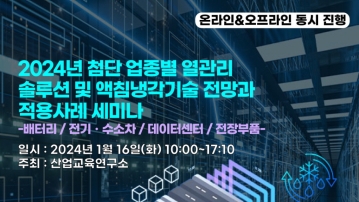
The Korea Institute of Industrial Technology (KIIT) will host a seminar on advanced industry-specific thermal management solutions and immersion cooling technology outlook and application cases in 2024.
The Industrial Education Institute (hereinafter referred to as IEI) is hosting a seminar to examine the current state of thermal management systems and technology development directions, while sharing information as the importance of thermal management technology—which inevitably accompanies the explosive growth of electronic devices, electric vehicles, and data centers—continues to increase.
2023.12.20by 성유창 기자
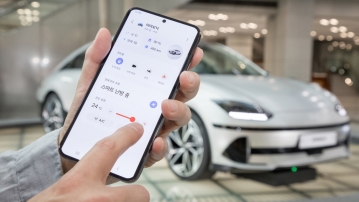
Start the electric car at home, turn on the TV in the car… Samsung SmartThings linkage range expands to cars
Samsung Electronics is expanding the connectivity range of its 'SmartThings' platform to connected vehicles through collaboration with Hyundai Motor Group.
2024.01.04by 성유창 기자

Sangyoyeon Holds Seminar on Battery Technology Outlook and Business Strategy after Electric Vehicle Use
As the end-of-life electric vehicle batteries are projected to increase exponentially starting in 2025, the Industrial Education Research Institute (hereinafter referred to as IERI) shares insights on direction through seminars related to used battery technology.
2024.01.05by 성유창 기자
.jpg)
Onsemi Launches DC Ultra-Fast Electric Vehicle Charger Solution
ON Semiconductor, a leading company in intelligent power and sensing technology, has unveiled a new DC ultra-fast electric vehicle charger solution utilizing silicon carbide (SiC), achieving high-speed charging while reducing size by up to 40% and weight by up to 52% compared to existing IGBT solutions.
2024.01.09by 배종인 기자











