



LG Chem, GM Sign 25 Trillion Won Cathode Material Supply Contract for 500,000 Tons
 Published2024.02.08 15:33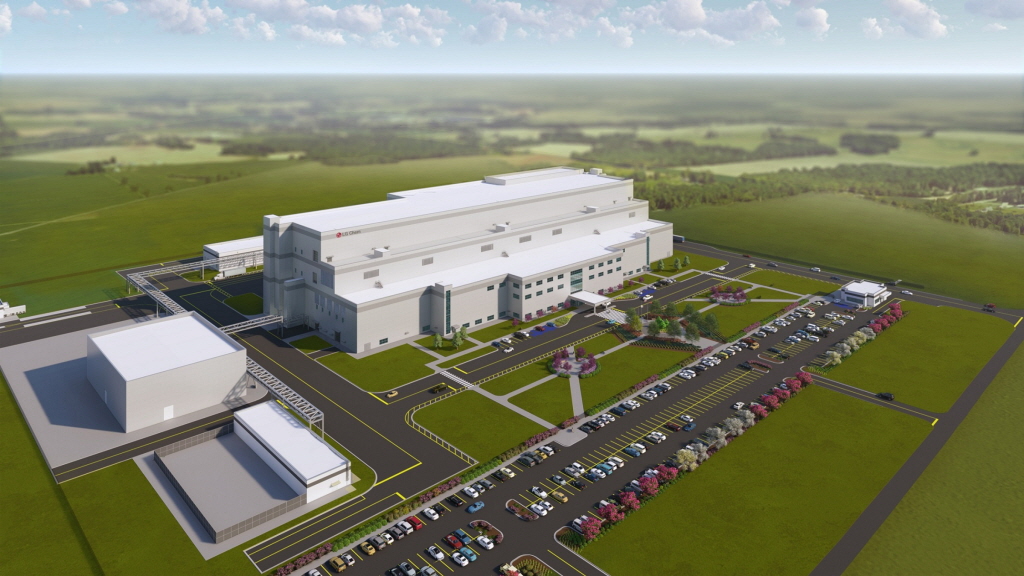
▲A bird's eye view of LG Chem's Tennessee cathode material plant (Image source: LG Chem)
Over 500,000 tons of cathode materials… Capable of producing batteries for approximately 5 million high-performance pure electric vehicles
North American cathode materials to be supplied to GM starting in 2026 when Tennessee cathode material plant starts full operation
On the 7th, LG Chem announced a cathode material supply contract with GM at the LG Twin Towers in Yeouido, and said that with this contract, LG Chem will supply at least KRW 24.75 trillion worth of cathode materials to GM by 2035.
LG Chem, which has established a local supply chain centered on its cathode material plant in Tennessee, USA, plans to strengthen cooperation with GM in the North American market.
The volume of cathode materials to be traded by the two companies is expected to exceed 500,000 tons, which is enough to produce batteries for about 5 million high-performance pure electric vehicles (EVs, capable of traveling 500 km).
The two companies, which previously reached a comprehensive agreement for the long-term supply of cathode materials in July 2022, have strengthened their cooperation through this supply contract and specified some of the agreed quantity.
LG Chem plans to supply North American cathode materials to GM starting in 2026, when its Tennessee cathode material plant begins full operation.
NCMA (nickel, cobalt & mid) produced at the Tennessee plantdot; manganese aluminum) cathode materials are expected to be used primarily by Ultium Cells, a joint venture between LG Energy Solution and GM.
Since the supply contract is a direct contract with GM, LG Chem's cathode materials may also be used in GM's other electric vehicle projects.
LG Chem plans to respond through its local supply chain to enable its customers, including GM, to meet the electric vehicle subsidy standards of the U.S. Inflation Reduction Act (IRA).
The Tennessee plant, which broke ground in December last year, is expected to become the largest cathode material plant in the U.S. with an annual production capacity of 60,000 tons.
The Tennessee plant is located in the central eastern part of the United States, and not only will it have excellent geographical accessibility for supplying customers and importing raw materials, but it will also secure world-class manufacturing competitiveness with an annual production capacity of 10,000 tons per line by advancing the design technology of the sintering process.
“With this agreement, GM is building a strong and sustainable electric vehicle battery supply chain,” said Jeff Morrison, GM vice president of global purchasing and supply chain. “Working with LG Chem, we will strengthen our North American supply chain during this critical time of transformation for the auto industry.”
Vice Chairman Shin Hak-cheol said, “We will continue our strategic partnership with GM, the number one automaker in the U.S., and lead the North American electric vehicle market,” adding, “We will create differentiated customer value unique to LG Chem through world-class productivity and expansion of global production bases.”
Comments
Related news
SiC and GaN also draw attention in the automotive semiconductor market growth driven by xEV
An analyst from the Yole Group stated, "OEMs are continuing to make strategic investments in semiconductors to adapt to the changing automotive industry environment," and added, "Attention will be focused on compound semiconductors such as SiC and GaN in the power device market for xEV."
2024.02.01by 성유창 기자
.jpg)
Infineon and Honda Join Forces for Automotive Semiconductor Development
Infineon Technologies (Korea CEO Lee Seung-su) has signed a Memorandum of Understanding (MoU) with Honda Motor to establish strategic cooperation.
2024.02.02by 배종인 기자
UNIST, Hyundai Motors Join Hands for Next-Generation 3D Printing
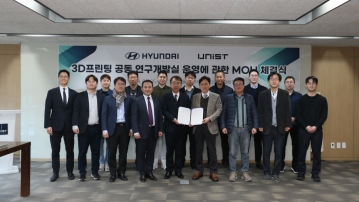
UNIST (President Lee Yong-hun) and Hyundai Motor Company (CEO Lee Dong-seok) have signed a mutual cooperation agreement for the operation of a joint research and development facility for 3D printing at the 3D Printing Convergence Technology Center located within the UNIST Industry-Academy Convergence Campus in Duwang-dong, Nam-gu, Ulsan.
2024.02.05by 배종인 기자

[Contribution] Professor Kim Pil-su of Daerim University - Improvement of the mandatory fire extinguisher system for automobiles scheduled to be implemented at the end of 2024 is essential
The primary purpose of fire extinguishers installed in vehicles is not to extinguish fires directly when they occur, but rather to delay the spread of fire to extend the golden time window and provide sufficient time for the 119 fire department to arrive and conduct extinguishing operations.
2024.02.06by 명세환 기자
Keysight, Avrobotics 4D Imaging Radar Chipset Validation
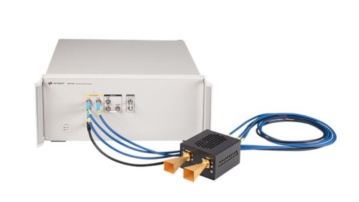
Keysight Technologies (hereinafter "Keysight") announced on the 7th that its E8719A Radar Target Solution (RTS) has been adopted as a test instrument for Arbe Robotics' Arbe 4D imaging radar chipset for the automotive sector.
2024.02.07by 성유창 기자











