


The Korea Institute of Future Technology Education held a seminar on developing technologies for recycling and reusing used batteries.
 Published2024.04.04 15:22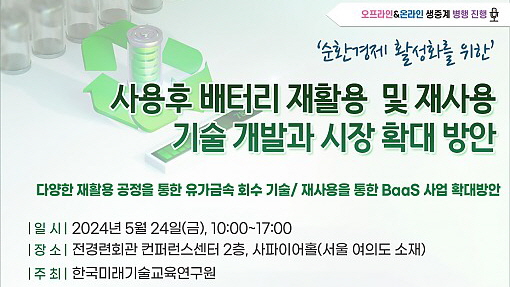
The used battery market is expected to grow to KRW 600 trillion by 2050.
Contributing to improving environmental issues and stabilizing the supply chain of key minerals… A key element of the circular economy.
The Korea Institute for Future Technology Education announced that it will hold a seminar titled “Development of Used Battery Recycling and Reuse Technology and Market Expansion Plan - Technology for Recovery of Valuable Metals through Various Recycling Processes/Expansion of BaaS Business through Reuse” both online and offline on May 24th at the Sapphire Hall of the Federation of Korean Industries in Yeouido, Seoul.
As the amount of used batteries generated when electric vehicles are scrapped is expected to increase significantly around 2030, the revitalization of the used battery recycling and reuse industry is inevitable.
The used battery industry can significantly contribute to the expansion of a circular economy for energy resources by improving environmental issues caused by the hazardous substances generated when waste batteries are simply buried or incinerated, and by reusing key minerals to secure limited raw materials and stabilize the supply chain.
Recycling is a process of disassembling and melting used batteries that cannot be reused, and recovering materials such as nickel, manganese, and lithium from the batteries to use in the production of new batteries.
reReuse refers to collecting used batteries that have still a lifespan after being used in electric vehicles and reusing them for various purposes after going through a series of safety verification processes.
Through reuse, it can be reused in energy storage systems (ESS), EVs, small EVs, large batteries, factory backup systems, EV buses, golf carts, electric forklifts, and unmanned transport robots.
In this regard, the government is actively promoting public-private BaaS service verification support projects, including safety inspections of used batteries, testing and certification, and building testing infrastructure for subscription services.
According to SNE Research, an energy market research firm, considering the trend of electric vehicle distribution, the number of electric vehicles scrapped is expected to reach 4.11 million in 2030 and 42.27 million in 2050.
Accordingly, the size of the used battery market is expected to grow from 70 trillion won in 2030 to 230 trillion won in 2040 and 600 trillion won in 2050.
This seminar will feature presentations on a variety of topics, including: △Development of various process technologies for used batteries and current market status; △Safety evaluation and testing/certification of used batteries and establishment of domestic BaaS demonstration projects; △Current status of reuse business and regulatory sandbox using used batteries.
A researcher said, "If a virtuous cycle of reuse and recycling of used batteries is established, a large amount of energy can be reused," and added, "In order to lead the used battery market, which is expected to grow explosively in the future, we need to establish a legal and institutional foundation as well as the technological capabilities to overcome the international regulatory environment."
Comments
Related news

Ministry of Trade, Industry and Energy to Invest 117.2 Billion Won in Development of Promising Batteries, Including All-Solid-State Batteries
The government plans to invest a total of 117.2 billion won by 2028 to develop three promising battery technologies including all-solid-state, lithium-metal, and lithium-sulfur batteries, and it is expected that all three major battery manufacturers will participate.
2024.03.12by 성유창 기자
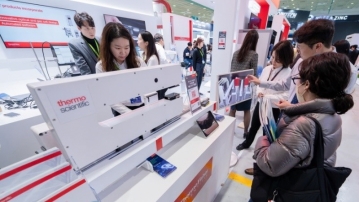
Thermo Fisher offers total battery solutions from mineral extraction to battery production
Thermo Fisher Scientific Inc. (hereinafter Thermo Fisher, CEO Seok Su-jin), a global science company, participated in 'InterBattery 2024' and introduced comprehensive battery solutions ranging from battery materials to production.
2024.03.12by 배종인 기자
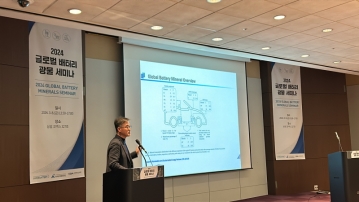
“The proportion of key battery minerals has increased”
An opportunity has been arranged to hear about the current status and outlook of critical minerals represented by lithium, nickel, and cobalt, which have achieved significant growth driven by the expansion of the electric vehicle market.
2024.03.12by 성유창 기자
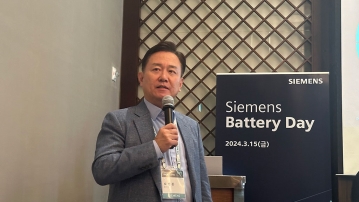
Siemens: “3D Digital Twin Helps Predict Battery Life”
Siemens claimed that through its feasible digital twin solution (xDT), it can predict performance and lifespan from battery materials to finished products, thereby pre-validating battery stability. Siemens revealed its ambition to establish a sustainable battery manufacturing ecosystem covering all process stages together with its partners.
2024.03.18by 김예지 기자
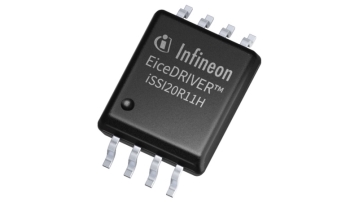
Infineon Launches Solid-State Isolator… Power Loss ↓ 70%
Infineon Technologies (hereinafter Infineon) is introducing a new product portfolio to the market that is suitable for various applications such as advanced battery management and building automation systems, and can further enhance the efficiency of electronic and electromechanical systems.
2024.03.19by 성유창 기자











