



[Op-Ed] Kim Pil-soo, Professor at Daelim University – “Absolutely No Will to Improve Domestic Motorcycles”
 Published2024.04.09 09:38
.jpg)
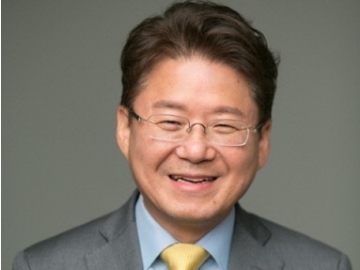
▲ Kim Pil-soo, Professor, Department of Future Automotive Engineering, Daelim University
“No Will to Improve Domestic Motorcycles”
Annual Motorcycle Fatalities Exceed 400… Domestic Motorcycle Industry and Culture Severely Underdeveloped
All you need to do is register it… No one knows the exact number of motorcycles in the country.
In other words, despite being a type of vehicle operated alongside others on public roads, it remains in a blind spot with absolutely no will to improve.
Currently, the domestic motorcycle industry remains a backward and underdeveloped sector, lacking both industry and culture.
Decades ago, domestic motorcycle manufacturers existed in the form of technical joint ventures with Japan, such as Daelim Honda and Hyosung Suzuki, before becoming independent. However, several years ago, there were virtually no domestic motorcycle manufacturers, and the industry became largely dependent on imports.
The same applies to the production of electric motorcycles, so it can be seen that the motorcycle industry itself has disappeared.
Motorcycle culture is the most underdeveloped compared to the advancements in other fields; there are many motorcycle-related accidents, and proper advanced motorcycle culture, such as traffic regulations, does not exist at all.
Currently, the domestic delivery industry is said to be the fastest and most innovative in the world, but behind this lies a lawless situation where "it is okay even if it is not the right path."
Have you recently seen a motorcycle properly obeying traffic laws and traveling alongside regular cars?
From crossing crosswalks with pedestrians, making unauthorized U-turns across the center line, and motorcycles speeding on sidewalks, to the normalization of reckless driving on March 1st—they are operating in violation of every single regulation.
The annual number of motorcycle fatalities easily exceeds 400. That means more than one person dies every day.
Meanwhile, the number of domestic traffic accident fatalities has decreased from 10,000 to 5,000, and to about 2,800 to 2,900 last year.
Of course, the situation is still high compared to developed OECD countries, and the number of motorcycle fatalities is much higher than expected.
I assert that both the domestic motorcycle industry and culture are the most underdeveloped and backward countries.
Unlike the general automobile registration system, the domestic motorcycle system is based on a usage notification system.
The overall management system for two-wheeled vehicles is a major issue, characterized by laxity and the most loopholes in terms of administration.
From the vehicle usage reporting system to maintenance, inspection, insurance, and scrapping systems, there is not a single proper system in place.
It is rare for owners to bring their motorcycles to a junkyard. You can abandon scrapped motorcycles in mountains or rivers as long as you file a deregistration report.
Since proper management is not possible even with usage registration, no one knows the exact number of motorcycles in the country.
With only regulations and no exit strategy, the public's view is predominantly negative.
Just like in developed countries, two-wheeled vehicles should be managed as a type of automobile and promoted as an eco-friendly means of transportation, and ultimately, they should be considered a 'convenience of civilization' operated by humans.
Korea is the only OECD country where vehicles cannot travel on dedicated automobile roads and expressways.
This does not mean that one should simply drive blindly; rather, in the case of expressways, it is necessary to verify the results by testing and applying them to high-displacement motorcycles through monitoring.
Of course, there is also a way to prevent delivery motorcycles from entering.
For high-displacement motorcycles, there is also a method of incorporating them into the vehicle registration system to assign them rights and responsibilities.
Currently, expensive, high-displacement motorcycles are subject to a usage registration system, meaning they are not recognized as assets such as mortgages, yet they are still burdened with the responsibility of paying automobile taxes in full.
It is also possible to establish a two-wheeled vehicle scrapping system.
In Europe, a method is utilized where a certain fee is added to the price when a new motorcycle is first sold, and this fee is held by public institutions. When the motorcycle is scrapped, the fee is paid to the owner, ensuring that it is brought to a junkyard.
The situation in Korea is so poor that there isn't even a similar system at all.
There is no effort from the government, the National Assembly, or even related organizations.
In the past, the National Assembly held policy debates led by me, but recently, they have been neglected as they do not generate votes, and related debates have long since disappeared.
It goes without saying that the National Police Agency, which harbors a deep sense of victimhood, is one thing, but the Ministry of Land, Infrastructure and Transport, the responsible department, is merely showing perfunctory efforts with absolutely no substantive attitude.
It is a situation where there is only regulation and a maintenance function that keeps things out of sight.
We must recognize that while the delivery industry is booming, it is in a serious situation where it is rotting from the inside.
The problem of reckless motorcyclists should be approached as a problem of youth, not motorcycles, and the problem of the delivery industry is a problem of the delivery sector, not motorcycles.
Can our country really develop a two-wheeled vehicle culture into an advanced model?
Although the motorcycle industry has already become obsolete, depending on the efforts made, it will be possible to create an opportunity for growth into the electric motorcycle industry.
Of course, government efforts are essential, and the same goes for motorcycle culture.
There are plenty of excellent examples from developed countries, and opportunities exist to establish a Korean-style advanced model.
As someone who has continuously emphasized for the past 20 years that an advanced motorcycle culture is possible, I would like to look forward to it.
I want to see the government and the National Assembly making an effort.

Comments
Related news
[Contribution] Professor Kim Pil-su of Daerim University - Improvement of the mandatory fire extinguisher system for automobiles scheduled to be implemented at the end of 2024 is essential
The primary purpose of fire extinguishers installed in vehicles is not to extinguish fires directly when they occur, but rather to delay the spread of fire to extend the golden time window and provide sufficient time for the 119 fire department to arrive and conduct extinguishing operations.
2024.02.06by 명세환 기자

[Contribution] Professor Kim Pil-su of Daerim University - “Tesla Cybertruck, Innovation or Weapon?”
The vehicle itself must generate synergy through interactive roles with pedestrians and safety infrastructure, rather than being unconditionally robust.
2024.02.13by 명세환 기자

[Contribution] Professor Kim Pil-su of Daerim University - “The 2024 electric vehicle subsidy system is going well”
Ultimately, they are complaining that domestically-produced ternary NCM lithium-ion batteries with high energy density are at an advantage, while LFP batteries based on Chinese lithium iron phosphate technology are at a disadvantage.
2024.02.29by 명세환 기자

[Contribution] Professor Kim Pil-su of Daerim University - "Is Apple Car development abandoned? Or postponed?"
Apple Car is not merely the manufacturing of an electric vehicle, but a starting point for a different era.
2024.03.11by 명세환 기자

[Contribution] Professor Kim Pil-su of Daerim University - “Electric vehicle electrocution accidents occur, more thorough preparations are needed”
Recently, there has been a case in Korea where a tow truck operator was admitted to the intensive care unit after suffering an electric shock when touching the ignition switch following an electric vehicle accident.
2024.04.08by 명세환 기자











