


KIMM Accelerates Atmospheric Environment Improvement in Mongolia
 Published2024.04.30 10:41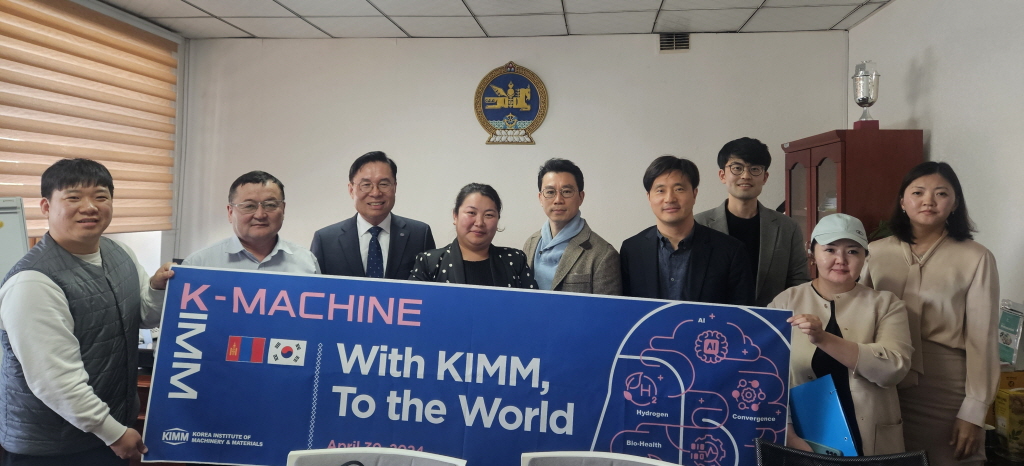
The plasma burner-based diesel particulate filter (DPF) technology, developed for the first time in the world by the Korea Institute of Machinery and Materials (KIMM) under the Ministry of Science and ICT, has been highly effective in improving the atmospheric environment in Mongolia, and is accelerating the implementation of the next project.
From April 29 to 30, Ryu Seok-hyun, President of the Korea Institute of Machinery and Materials (KIMM), and his research team visited Abrams Co., Ltd. (CEO Son Chang-ho), a company affiliated with the institute, as well as the Mongolian Ministry of Economic Development, Ministry of Road and Transport Development, Ministry of Finance, the Development Corporation under the Ulaanbaatar City Hall, and the Policy Analysis Research Institute to discuss follow-up measures for the exhaust gas reduction project applied to aging urban vehicles, and ways to expand technical cooperation for improving air quality and solving odor problems.
The KIMM delegation held specific discussions with high-ranking Mongolian government officials, including Deputy Minister of Economic Development Idesh Batkhuu and Director General of Planning at the Ministry of Road and Transport Development Munkhnasong, regarding the priority submission of the Official Purpose Document (PCP) from the recipient country, the provision of vehicles to facilitate the effective dissemination of KIMM’s locally proven DPF technology, and measures to expand the application of KIMM’s technology in the environmental sector.
Abrams Co., Ltd. is a research institute spin-off of the Korea Institute of Machinery and Materials (KIMM) that was established in 2023 to commercialize technology capable of solving air pollution and odor problems.
As part of the newly launched 'With KIMM, To the World' international cooperation program, KIMM laid the groundwork for the first entry of a research institute company into Mongolia and held concrete cooperation discussions with the Ulaanbaatar City Development Corporation and the Policy Analysis Institute.
In Ulaanbaatar, the capital of Mongolia, the average operating speed of buses is low due to severe traffic congestion, and the problem of fine dust emissions caused by soot from aging engines and high concentrations of sulfur in the fuel is serious.
The Mongolian government has officially requested technical support for fine dust reduction from our government since 2019, and to this end, the Korea Institute of Machinery and Materials has been carrying out a project to reduce fine dust in urban areas by applying independently developed technology.
Since 2021, through the Ministry of Science and ICT’s Science and Technology Support Program for the Utilization of Intellectual Property (Joint Research for Solving Problems in Developing Countries, ODA), the Korea Institute of Machinery and Materials has been carrying out the project 'Development and Demonstration of DPF Technology for Old Buses to Improve Air Pollution in Ulaanbaatar' (Project Leader: Lee Dae-hoon, Principal Researcher and Adjunct Professor at UST) by applying its proprietary technology to old buses operating in downtown Ulaanbaatar.
The plasma burner-based Diesel Particulate Filter (DPF) technology developed by the Korea Institute of Machinery and Materials (KIMM) captures and burns soot particles generated during the combustion of diesel engine fuel to remove them.
In particular, by applying plasma burner technology, the ignition and flame retention performance of the burner were innovatively improved, and demonstration tests have been conducted on special military vehicles since 2018. Since 2021, demonstrations have also been conducted on domestic construction machinery and aging buses in Mongolia, resulting in a significant reduction in white smoke generation.
Ryu Seok-hyun, President of the Korea Institute of Machinery and Materials, stated, “Improving the global atmospheric environment is an important demonstration topic on which we, as a government-funded research institute, must concentrate our capabilities. We will definitely expand sustainable, locally customized plasma DPF systems through securing follow-up ODA projects,” adding, “In particular, we will expand our international cooperation network with other Asian countries that have a demand for air quality improvement in the future.”

Comments
Related news
.jpg)
Machine Learning, AI technology automatically generates and executes robot work commands
The research team led by Kim Chang-hyun, head of the Artificial Intelligence and Robotics Research Division at the Korea Institute of Machinery and Materials (KIMM, Director Ryu Seok-hyun) under the Ministry of Science and ICT, has developed robot task AI technology that can be easily applied to manufacturing processes.
2024.01.17by 배종인 기자
.jpg)
Machinery Research Institute, contributing to strengthening corporate competitiveness with 40 years of know-how in machine design
The Korea Institute of Machinery and Materials (KIMM, Director Ryu Seok-hyun) under the Ministry of Science and ICT is actively stepping up efforts to strengthen corporate competitiveness by leveraging its proprietary online mechanical design platform, "Smart DP (Smart Design Platform)," which embodies over 40 years of mechanical design expertise.
2024.01.17by 배종인 기자
.jpg)
Korea Institute of Machinery and Materials (KIMM) personnel
The Korea Institute of Machinery and Materials conducted personnel changes on February 1, 2024.
2024.02.01by 명세환 기자
The Korea Institute of Machinery and Materials (KIMM) is reorganizing its organization to secure national strategic technologies.
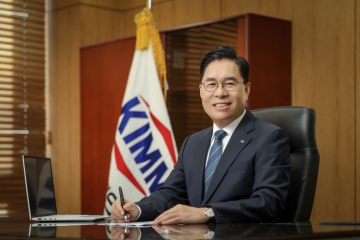
The Korea Institute of Machinery and Materials (KIMM, Director Ryu Seok-hyun) under the Ministry of Science and ICT is implementing an organizational restructuring that focuses on preemptively securing national strategic technologies and establishing a foundation for achieving Digital-KIMM by 2030, thereby laying the groundwork for growth as a world-leading comprehensive research institution spearheading K-Machine.
2024.02.01by 배종인 기자
Find structural defects, including cracks in aging buildings and aircraft, all at once.
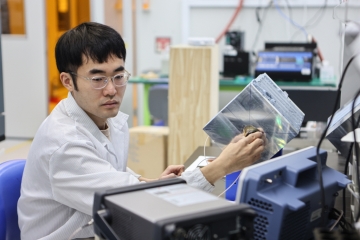
The research team led by Senior Researcher Kwon Min-woo of the Nano Display Research Laboratory, Nano-Convergence Equipment Research Division at the Korea Institute of Machinery and Materials (President Ryu Seok-hyun), and the research team of Professor Kim Yoon-young, Chair Professor of the Department of Mechanical Engineering at Seoul National University, have developed a metamaterial that generates circularly polarized ultrasound capable of detecting structural defects such as cracks in aging buildings and aircraft in a single scan. The related research results have been published in the prestigious journal Nature Communications (IF: 16.6).
2024.02.15by 배종인 기자











