



Companies are increasingly utilizing generative AI.
 Published2024.05.16 16:24
.jpg)
Analysis of the decline in the share of LLM apps and the rise of conversational chatbots.
Snowflake, a global data cloud company, announced that the proportion of chatbots among Large Language Model (LLM) apps increased by 46% compared to May of last year.
Snowflake announced on the 16th that it published the "Data Trend 2024" report, which surveyed over 9,000 customers to identify patterns and trends in data and AI adoption.
This report, which covers how global enterprise companies are leveraging AI technology and data in their businesses, analyzed that the proportion of text-based LLM apps is decreasing (82% in 2023, 54% in 2024) while conversational chatbots are increasing.
Additionally, a survey of the Streamlit developer community found that approximately 65% of respondents said they were working on LLM projects for work purposes.
In fact, enterprise customers are using generative AI-based technologies in a variety of ways to improve productivity, efficiency, and analytical capabilities in their work.
Jennifer Belissent, Snowflake’s Chief Data Strategy Officer, said, “Conversational apps are programmed to interact in a way that people actually interact with, so now you can easily interact with LLMs as if you were talking to a person.“In particular, if the governance and security of the data that forms the basis of the LLM app are guaranteed, the interactive app will meet the expectations of both businesses and users and its usability will expand,” he said.
Over 20,000 developers worldwide in the Snowflake Streamlet community have built over 33,143 LLM apps over the past nine months.
Their most preferred programming language was Python. Python usage on Snowflake's app-building platform, Snowpark, increased 5.71x last year.
This is a significant increase compared to Scala and Java, which saw increases of 3.87x and 1.31x, respectively. Python accelerates prototyping and testing, significantly accelerating overall workflows and overall learning rates in the early stages of cutting-edge AI projects.
Recently, there has been a growing trend of LLM app development using programming on top of data management platforms. Usage of Snowflake Native Apps, which allow developers to develop apps directly on the Snowflake platform, more than tripled between July of last year and January of this year.
Applications developed on a single data platform eliminate the need to export copies of data to external vendors, speeding up app development and deployment and reducing operational and maintenance costs.
With the introduction of AI, the analysis and processing of unstructured data within organizations has also increased. This process has led to the discovery of new, untapped data sources, and data governance has become increasingly important to protect sensitive personal data.
According to a Snowflake report, the amount of unstructured data that enterprises processed increased by 1.23 times over the past year.
IDC, a global market analysis firm, estimates that up to 90% of the world's data is unstructured video, images, and documents. Unlike structured data, where language model training is already widespread, processing unstructured data will provide new opportunities to enhance corporate business competitiveness.
“Data governance isn’t about controlling data, but ultimately leveraging the value of data,” said Jennifer Belisant, Snowflake’s Chief Data Strategy Officer. “Snowflake has categorized governance into three pillars: data collection, data security, and data utilization, and enables customers to tag and classify data to apply access and usage policies that are appropriate for their businesses.”
As a result, the number of companies adopting Snowflake's data governance capabilities increased from 70% to 100%, and the number of queries running within governance increased by 142%.
Furthermore, Chief Belisent stated, "Each piece of data reveals how companies are responding to the challenges they face. By viewing these individual data points as a whole, we can develop a comprehensive strategy for our organization that leverages the latest AI technology opportunities." He added, "The key strategy in the era of generative AI is not fundamental changes to data, but rather the ability to immediately execute that strategy. To achieve this, it's crucial for companies to open and share data sources across the vast data ecosystem, breaking down data silos."

Comments
Related news
Snowflake Shares Strategy for Building Data Foundation in the AI Era
Snowflake will hold its annual conference "Data for Breakfast" on March 14th at 10 a.m. in the Grand Ballroom Vendôme at Sofitel Ambassador Seoul to support data-driven growth of domestic companies.
2024.03.08by 배종인 기자
Snowflake CFO Mike Scarpelli: “Will Boost AI Productivity with Data Cloud Platform”
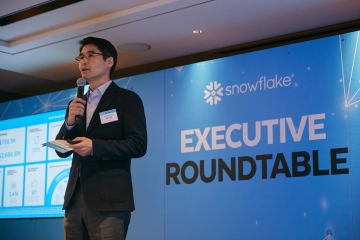
Snowflake held an executive roundtable customer seminar on the 13th at Sofitel Ambassador, inviting executives from major domestic companies.
2024.03.21by 배종인 기자
Snowflake, NVIDIA Join Hands to Provide Full-Stack AI Platform
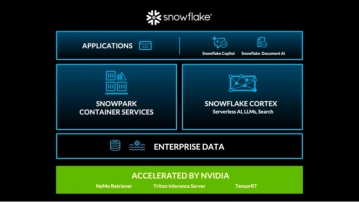
Global data cloud company Snowflake is supporting NVIDIA models to accelerate AI productivity in the data cloud, strengthening its partnership with NVIDIA.
2024.03.21by 배종인 기자
Snowflake's "Data Clean Room" Perfects Multi-Cloud Collaboration Security
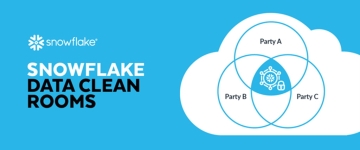
Global data cloud company Snowflake has officially launched 'Snowflake Data Clean Room,' supporting secure data sharing and collaboration between enterprises.
2024.04.02by 배종인 기자
Snowflake Launches Enterprise-Class LLM 'Arctic'
Snowflake has launched Snowflake Arctic, an enterprise-grade Large Language Model (LLM) featuring industry-leading openness and performance, on the 24th.
2024.04.25by 김예지 기자











