


Infineon Leads Decarbonization, Providing Customers with Product Carbon Footprint Data
 Published2024.06.11 14:21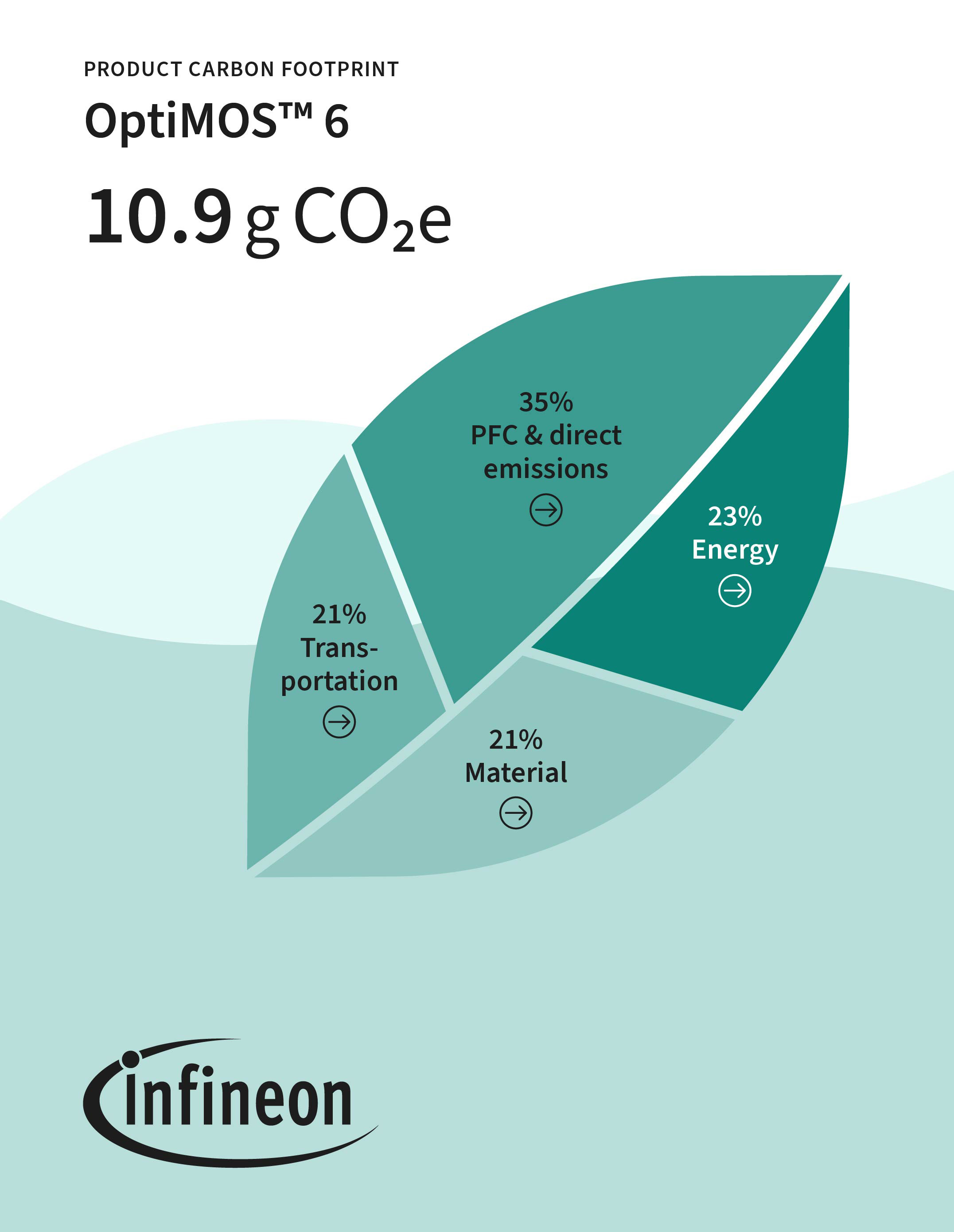
Infineon develops a methodology for measuring product carbon footprints by integrating customer requirements and best practices.
Quantifying greenhouse gas emissions associated with individual products… A comparative indicator of the climate impact of products.
Infineon announced on the 11th that it will become the semiconductor industry's leading provider of comprehensive Product Carbon Footprint (PCF) data.
Our goal is to help customers achieve their individual sustainability goals and effectively reduce their carbon footprint across their entire supply chain.
A product carbon footprint is a metric that quantifies the greenhouse gas emissions associated with individual products, allowing comparison of the climate impacts of different products.
The specific data Infineon provides for individual products is essential for customers seeking greater transparency about their carbon footprint.
Furthermore, this data is expected to support informed decision-making, increasing the potential for further emissions reductions across the value chain.
Because there are no established industry standards, Infineon has developed a robust methodology for measuring the carbon footprint of its products by integrating customer requirements and best practices.
Includes carbon emissions from raw materials and supplies, our own manufacturing processes, manufacturing partners, capital goods, and transportation for delivery to customers.
Product carbon footprint is expressed in kilograms of carbon dioxide equivalent (kg CO2e).
Infineon's products are making a significant contribution to the global energy transition and a carbon-neutral society.
Infineon products are used in solar and wind power plants, electric vehicles, and in numerous applications, including AI data centers, to improve energy efficiency.
Infineon's semiconductor chips reduce carbon emissions by 34 times the carbon dioxide equivalent (CO2e) emitted during their production over their lifetime.
Breaking down the carbon footprint down to the product level is an important milestone in Infineon's sustainability journey.
Infineon has committed to achieving carbon neutrality by 2030 for direct and indirect emissions (Scope 1 and Scope 2), and last year announced that it would set a science-based target that would also include supply chain emissions (Scope 3).
Comments
Related news
.jpg)
“Infineon Low Noise Amplifier (LNA) Minimizes RF Signal Noise”
At the EEWebinar held by e4ds news on the 21st, Kyungmin Song, Director of the Power & Sensor Systems Business Division at Infineon Korea, presented an overview of RF system concepts and the components and operating principles of RF front-end.
2024.05.24by 김예지 기자
Infineon Announces Power Supply Roadmap… AI Data Center Energy Efficiency ↑
Infineon Technologies (hereinafter Infineon) enables cloud data center and AI server operators to reduce energy consumption required for system cooling by delivering unprecedented high PSU performance.
2024.05.28by 성유창 기자
Omar Cruz, Infineon Technologies - The Future of IoT with Edge AI
In developing edge AI, Infineon Technologies' Omar Cruz discusses the elements necessary for developers.
2024.06.03by 명세환 기자
Infineon Launches CoolGaN™ Transistor Family Based on 8-Inch Foundry Process
In the GaN device market, which is expected to grow at an annual average rate of 46% over the next five years (Yole Group forecast), Infineon Technologies (hereinafter Infineon) announced that it will further expand the strengths of CoolGaN and its production capacity, and introduces a new CoolGaN product line as part of this plan.
2024.06.04by 성유창 기자
Jaeyoung Choi, Infineon Manager - “Design of Edge AI-based Sensing System, Prioritizing User Analysis”
Ahead of the webinar on 'Radar Sensing Technology for Edge Devices and On-Device AI,' we heard from the presenter Choi Jae-young, Manager of Power & Sensor Systems Business Unit at Infineon Korea.
2024.06.05by 성유창 기자











