



Accelerating the Distribution of 1 Million Intelligent Robots by 2030
 Published2024.06.27 08:59
.jpg)
The government has set out in earnest to push forward with the goal of distributing one million intelligent robots without any setbacks.
The Ministry of Trade, Industry and Energy held the second Advanced Robot Economy Task Force on the 26th, presided over by First Vice Minister Kang Kyung-sung.
The Advanced Robot Economy Task Force is a public-private consultative body composed of government officials and experts from industry, academia, and research institutes that discusses development plans for the robot industry. About 20 people, including government officials, business leaders, and experts, attended the meeting on this day.
On this day, the Ministry of Trade, Industry and Energy reported on follow-up measures for four agenda items, including the National Robot Test Field implementation plan submitted to the first meeting, while also discussing measures to expand the supply of advanced robots and a comprehensive amendment to the Intelligent Robot Act.
First, the government will prepare an implementation plan by the first half of next year to achieve the goal of distributing 1 million units by 2030 under the 4th Basic Plan for Intelligent Robots.
In particular, there are plans to establish sector-specific deployment targets across 10 major fields, including manufacturing, medical, safety, and construction, centered around each ministry, and to identify customized policies to achieve them. The Ministry of Trade, Industry and Energy will monitor sector-specific deployment targets and implementation status through the Advanced Robot Economy Task Force.
In addition, the Ministry of Industry will fully revise the Intelligent Robot Act within this year. Although 16 years have passed since the Robotics Act was enacted in 2008, there are assessments from the industry that it lags behind the speed of rapid industrial and technological development due to the lack of changes in its legal structure and key provisions.
Through this revision, the Ministry of Trade, Industry and Energy plans to redefine new technologies and industries, such as artificial intelligence (AI) and humanoid robots, and establish new provisions to foster them. To this end, it will comprehensively review the definitions of terms such as the robot industry and robot technology, taking into account recent industrial trends.
In addition, the government will promote the diffusion of robots through initiatives such as AI autonomous manufacturing leading projects, and will revamp various support policies including fostering specialized robot companies, training the workforce, and strengthening technological capabilities. Furthermore, it is considering establishing a 'Robot System Advancement Council' to systematically review current human-centered laws and regulations in areas such as labor, transportation, and finance, and to identify alternatives.
First Vice Minister Kang Kyung-sung stated, “The robot industry is a key new future industry that will respond to demographic changes and boost manufacturing productivity,” adding, “In order to respond quickly to the speed of robot technology advancement and global competition for hegemony, we will push forward with the robot dissemination expansion plan and the amendment of the Robot Act announced today in a timely manner without delay.”

Comments
Related news
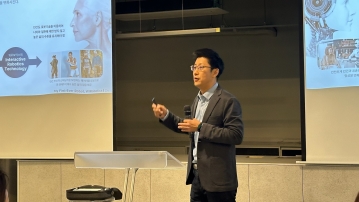
[Report] WeRobotics' 'Wearable Walking Assistance Robot Wim', Light and Easy to Use
Wiro Robotics has launched WIM (Wimbot), an ultralight wearable walking assistance robot. Wiro Robotics demonstrated its commitment to improving walking ability across the entire population, based on interactive robot technology that can safely coexist with humans and an innovative form factor driven by a single motor.
2024.04.24by 김예지 기자
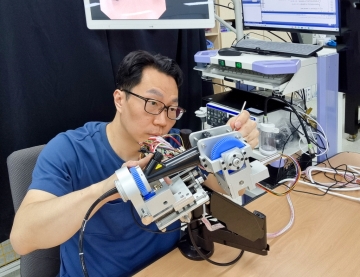
Robotic bronchoscope that removes swallowed foreign bodies 'right away'
When accidents occur in which the airways of infants, young children, or elderly individuals become obstructed due to food or foreign object insertion, a bronchial endoscopic robot system that can immediately remove foreign objects using an articulated endoscopic robot has been developed for the first time in Korea. This is expected to provide patients with rapid and accurate treatment while reducing side effects and minimizing the deployment of medical personnel.
2024.05.02by 배종인 기자
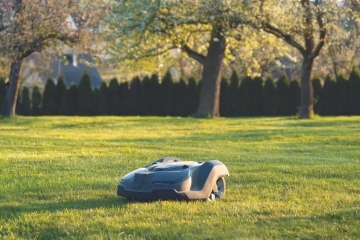
u-blox, 'High-precision positioning technology' dominates the lawnmower robot market
u-blox, a global leader in the positioning and wireless communication technology sector (Korea Country Manager: Son Gwang-soo), is dominating the lawn mower robot market with its high-precision positioning technology, and expectations are converging on the company generating over 100 million dollars in revenue from this sector alone in the future.
2024.05.07by 배종인 기자
.jpg)
Universal Robots and MiR Open 600-Square-Meter Robotics Hub in Denmark
Universal Robots and MiR (mobile industrial robot company) announced on the 14th (local time) that they held an opening ceremony for a new headquarters spanning 20,000 square meters (approximately 600 square meters) in Odense, Denmark.
2024.05.17by 김예지 기자
.jpg)
Mouser supplies AMD/Xilinx Kria K24 SOM
Mouser Electronics, a globally authorized distributor of cutting-edge electronic components and industrial automation products, supplies AMD/Xilinx's Kria™ K24 SOM (System-on-Module). The K24 SOM is a cost-effective solution featuring a customizable Zynq™ UltraScale+™ MPSoC device in a form factor approximately half the size of a credit card, delivering the power, cost, and performance suitable for DSP-based industrial applications such as motor control, medical equipment, sensor fusion, multi-axis robotics, and factory automation.
2024.05.20by 배종인 기자











