



Kang Sang-won, Infineon Manager – “Infineon Hybrid ToF System Compensates for the Disadvantages of Standard Indirect ToF and Maximizes Its Advantages”
 Published2024.08.02 10:30
ToF 센서·근거리 광원·원거리 광원 동시 구동…로봇 매핑·장애물 감지 기능 동시 구현
9월26일 인피니언 Indirect ToF 시스템 관련 웨비나 진행…원리·스펙 등 공유 예정
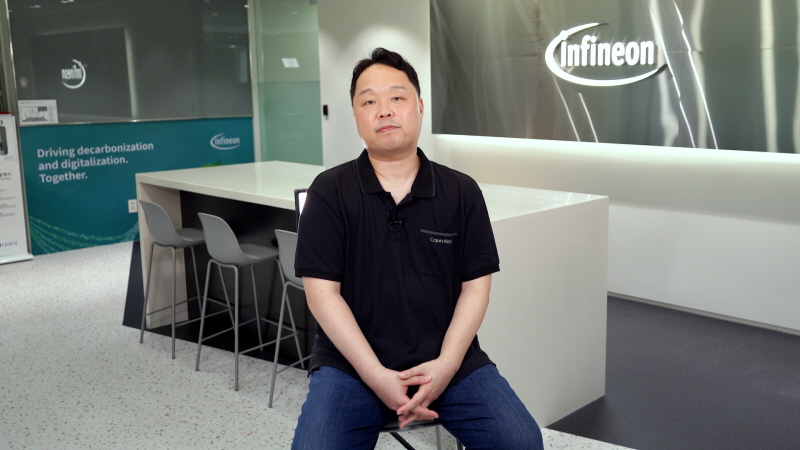
▲강상원 인피니언 코리아 전력&센서 시스템 사업부 매니저
■ ToF 기술에 대한 설명과 대표적인 수요처에서의 활용성에 대해 말씀 부탁드린다
ToF는 송신부에서 나간 신호가 물체에 부딪힌 후 수신부까지 돌아오는 시간, 즉 비행시간을 측정하여 사물과의 거리를 측정하는 기술로 IR 레이저를 송신하고 카메라를 통해서 수신하는 3D Depth 카메라 방식이 가장 보편적이며, 발전해 있다.
ToF는 대표적으로 제스처 제어에 활용되어 사람들을 위한 AR/VR 기술에 적용되는 사례가 많았으나 최근 AI 기술 발전으로 급속도로 확산되고 있는 로봇 시장에서 로봇의 ‘시각’을 담당하는 대표적인 센서로서 물체 인식과 공간 매핑에 가장 효율적인 센서 솔루션으로 채택되고 있다.
이 외에도 자동차 내부 운전자 및 탑승자 모니터링 시스템이나, 얼굴 인식 기술의 보안 등급 강화용으로도 많이 사용된다.
■ Direct ToF, Indirect ToF 시스템의 차이점은 무엇인가
ToF 기술은 송신부에서 나간 신호가 물체에 맞고 수신부에 돌아오는 시간 차이를 직접 측정하여 거리를 계산하는 Direct 방식과 송신 신호와 수신 신호 간의 위상 차이를 거리로 변환하는 Indirect 방식이 있다.
Direct 방식의 3D Depth 카메라는 더 먼 거리를 측정할 수 있는 장점이 있다.
반면, 돌아오는 빛의 시간을 실측하기 위해 Imager의 픽셀마다 여러 개의 SPAD(Single Photon Avalanche Diode)가 사용되어야 하기 때문에 Imager의 가격이 높고 픽셀 크기가 커서 카메라의 해상도가 낮은 단점도 존재한다.
Indirect 방식의 3D Depth 카메라는 Imager 하나의 픽셀마다 두 개의 저장 공간을 마련해 수신된 신호를 송신부가 켜져 있을 때와 꺼져 있을 때로 나누어 저장하고, 두 공간에 저장된 전하량의 차이를 이용하여 송신부와 위상 차이를 계산해서 거리로 변환한다.
원거리에서는 두 공간에 저장된 전하량의 차이가 줄어들기 때문에 Direct 방식 대비 측정거리가 짧은 단점이 있으나, SPAD 같은 별도의 광소자가 필요가 없어서 Imager의 가격이 낮고, 픽셀 소형화가 가능해 카메라의 해상도가 훨씬 높은 장점을 가진다.
■ 인피니언의 Indirect ToF 솔루션의 특징과 강점이 궁금하다
인피니언의 Indirect ToF로 개발된 Hybrid ToF 시스템은 일반적인 Indirect ToF가 가지고 있는 Direct 방식 대비 짧은 측정 거리의 단점을 보완하면서, 높은 해상도의 장점을 유지한다.
이러한 3D Depth 카메라 솔루션은 인피니언 ToF 센서와 근거리용 면(Flood) 광원과 원거리용 점(Spot) 광원을 탑재, 동시에 구동해 가격과 성능 모든 측면에서 매우 효율이 높다.
이러한 강점을 통해 로봇의 매핑과 장애물 감지 기능을 동시에 구현할 수 있다.
■ 이번 웨비나의 핵심이 되는 내용은 무엇인가
이번 웨비나를 통해서 ToF 기술이 동작하는 기본 원리를 포함해 Direct 방식과 Indirect 방식의 차이점과 장단점 등을 공유하고, 3D Depth Camera의 구조와 인피니언의 Indirect ToF 솔루션으로 구현한 Hybrid ToF System에 대한 이해를 돕고자 한다.
또한 ToF 애플리케이션의 실제 시장 적용 사례와, 인피니언 ToF Imager 및 관련 제품의 스펙에 대해 소개할 예정이다.
■ e4ds 독자들께 한 마디
ToF는 인간의 ‘시각’과 같은 센서로서, 인간과 로봇 모두에게 공간의 디지털화에 핵심이 되는 디바이스입니다.
센서가 동작하는 원리부터, 시스템이 만들어내는 결과물까지 모든 과정이 흥미롭기 때문에 여러분이 이번 기회를 통해서 ToF 기술에 대해서 조금 더 친숙해지고, 유용하게 활용할 수 있는 기회가 되길 바랍니다.
Comments
Related news
Infineon Launches Power System Reliability Modeling to Address Power Supply Failures in Data Center Systems
Infineon Technologies (hereinafter Infineon) announced on the 21st a Power System Reliability Modeling that addresses issues occurring in data centers and communication infrastructure systems due to power supply failures.
2024.06.21by 성유창 기자
.jpg)
Infineon Launches CoolSiC™ MOSFET 400V for AI Server Power Supply Units to Improve Power Density and Efficiency
Infineon Technologies (hereinafter referred to as Infineon) has launched products to the market that can meet the energy demands of advanced GPUs capable of consuming more than 2kW per chip and demanding applications.
2024.06.26by 성유창 기자
Infineon Launches GaN Family with 20% Better FoM Performance
Infineon Technologies (Korea Representative Director Lee Seung-soo) is introducing a new cost-effective CoolGaN™ transistor 700V G4 product family that offers 20% superior input and output figures-of-merit (FoM) compared to other GaN (gallium nitride) products currently available on the market, ensuring best-in-class performance in consumer power supplies.
2024.07.01by 배종인 기자
Infineon and MediaTek Collaborate on Smart Cockpit Solution Development
Infineon Technologies and MediaTek have joined forces to improve digital cockpit systems, which were previously unsuitable for mid-to-low-end automotive models due to high initial investment costs.
2024.07.23by 성유창 기자
Infineon Accelerates ML Application Development with New EdgeAI Evaluation Kit
Infineon Technologies announced on the 30th that it will launch a comprehensive evaluation kit for embedded, edge AI and machine learning (ML) system design.
2024.07.30by 성유창 기자











