


Brain electrical stimulation to suppress appetite, opening new path to obesity treatment
 Published2024.08.07 11:19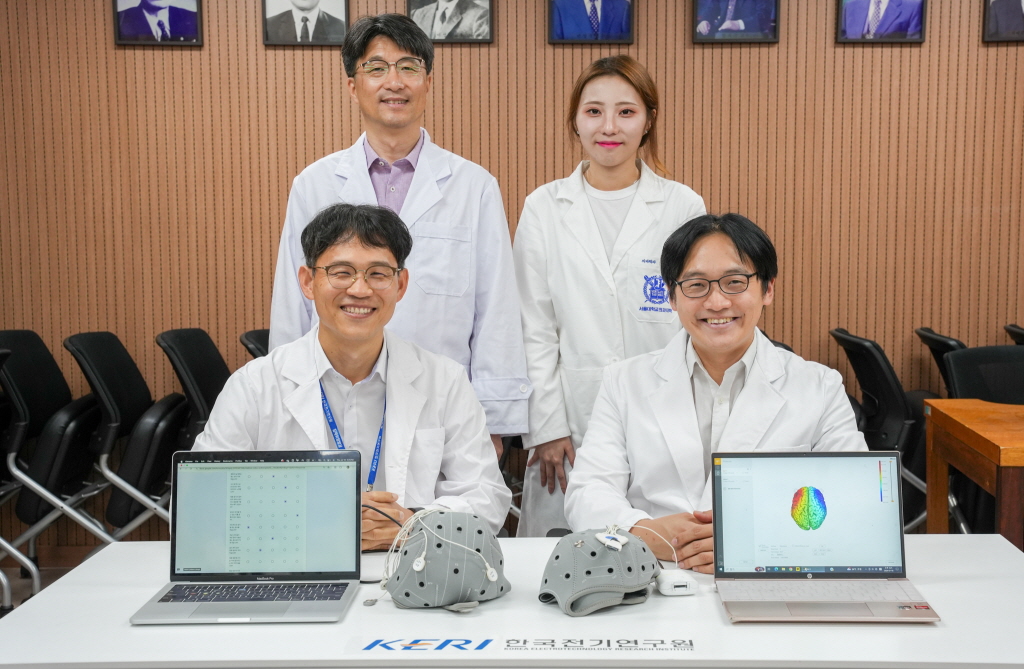
▲(Front row, left) KERI Dr. Shin Gi-young and (Front row, right) Seoul National University Hospital Professor Choi Hyeong-jin’s research team
A technology has been developed that can suppress appetite through brain electrical stimulation, which is expected to open up a new path for obesity treatment in the future.
The Korea Electrotechnology Research Institute (KERI) announced on the 7th that the research and development of 'bio-neurostimulation technology for the treatment and management of metabolic syndrome' being conducted by Dr. Shin Ki-young's team at the Electro-Medical Device Research Group's Electro-Fusion Human Care Research Center is continuing smoothly.
Metabolic syndrome is a complex syndrome in which several metabolic abnormalities, such as obesity, high blood pressure, and high neutral fat, occur simultaneously, and is mainly caused by bad eating habits and lack of exercise. In particular, according to the World Health Organization (WHO), one in eight people worldwide is overweight, and obesity treatment drugs are currently one of the most notable markets.
There are various types of obesity treatment drugs, such as drug injections and medicines, but these chemical treatments always have side effects that need to be taken into consideration when taken for a long period of time. Accordingly, Dr. Shin Ki-young's team at KERI has proposed a new method of suppressing appetite by electrically stimulating the cerebral cortex through the scalp.
The official name for the electrical stimulation technique is 'transcranial random noise stimulation (tRNS)'. After several years of research, the research team confirmed the possibility that noninvasive electrical stimulation of the dorsolateral prefrontal cortex using tRNS technology can induce appetite suppression.
This kind of research requires three key technologies: △Technology that can accurately deliver electrical stimulation to the desired specific area; △Electrode technology that allows the electrode to penetrate well into the space between hairs and make contact with the scalp; △Monitoring technology that confirms whether the electrical stimulation is well delivered to the target point and causes changes in brain activity. Dr. Shin Gi-young's team is currently developing all of these technologies, and they possess world-class technology.
In order to prove the clinical usefulness of tRNS stimulation in advance, KERI conducted a clinical trial with Professor Choi Hyung-jin's team at Seoul National University Hospital using a commercial electrical stimulator. The goal of this clinical trial was to prove that tRNS stimulation is effective in reducing appetite. The clinical subjects were 30 women in the tRNS group and 30 in the placebo (fake drug) group, for a total of 60 female volunteers. The clinical trial was conducted with electrical stimulation six times in total at 2-3 day intervals for two weeks. The electrical stimulation used a current of 2mA, which is barely perceptible to humans, for 20 minutes per session.
As a result, it was confirmed that the group that received tRNS treatment was effective in reducing appetite, the desire to eat, and hunger compared to the placebo group. In addition, it was proven through clinical trials that tRNS is also helpful in treating emotional eating. In other words, it means that the tendency to eat food to process or relieve emotions such as stress, depression, anxiety, and joy was significantly reduced. Although the clinical trial lasted only two weeks and did not confirm long-term weight loss, participants reported a significant appetite suppression effect.
Dr. Shin Ki-young said, “Although it is not a complete technology yet and requires more research and verification, if electrical stimulation therapy equipment with far fewer side effects than existing obesity treatments is commercialized and can be used at home rather than in hospitals, it will be possible to receive appetite suppression management easily and simply every day.” He added, “In particular, many people feel emotional hunger and eat food when they are having a hard time or are stressed, so if we introduce digital healthcare technology that combines electrical stimulation therapy and exercise therapy, we will be able to enjoy greater weight loss effects and it will be of great help in managing our health.”
The research team is nearing the end of the first phase of the key project (2022-2024) this year, and aims to verify the development technology academically and clinically through follow-up research such as the second phase project, and to promote technology transfer to companies.
Meanwhile, KERI is a government-funded research institute under the National Research Council of Science and Technology of the Ministry of Science and ICT.

Comments
Related news
KERI and Gimhae Biomedical & Industrial Promotion Agency Join Hands for Regional Project
The Korea Electrotechnology Research Institute (KERI) and the Gimhae Institute for Bioscience and Industry Advancement have joined hands to promote regional business collaboration.
2024.05.29by 배종인 기자
Korea Electrotechnology Research Institute New Position Announcement (Power SoC Research Center Director)
The Korea Electrotechnology Research Institute (KERI, President Kim Nam-gyun), a government-funded research institute under the National Research Council of Science and Technology of the Ministry of Science and ICT, will implement personnel changes for the Power SoC Research Center Director effective June 1, 2024 (Saturday) as follows. ▲Power SoC Research Center Director Kim Ki-hyun
2024.05.30by 명세환 기자
MathWorks Korea, 'MATLAB Expo 2024 Korea' Completed
At the MATLAB Expo, MathWorks customers and technical experts shared best practices and insights on major technology trends including △artificial intelligence △electrification △wireless and signal processing. This year, technical experts from various industries including △Samsung Electronics △Hyundai Motor △Qualitas Semiconductor △Korea Electrotechnology Research Institute (KERI) △POSTECH attended and shared technical achievements and insights using MathWorks product portfolios.
2024.06.12by 명세환 기자
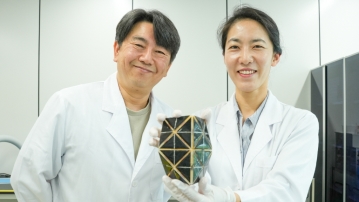
Flexible solar modules that don't require tempered glass or plastic appear
A research team led by Dr. Cha Seung-il at the Electrical Conversion Materials Research Center of the Korea Electrotechnology Research Institute (KERI) has developed a 'next-generation solar module technology' that enables electrical self-sufficiency in urban areas.
2024.07.10by 배종인 기자
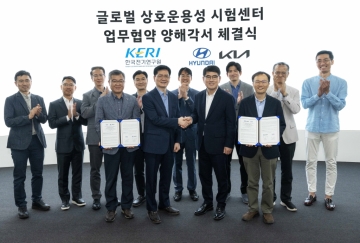
KERI, Hyundai, and Kia Join Hands for Infrastructure to Improve EV Charging Errors
Korea Electrotechnology Research Institute (KERI), Hyundai Motor, and Kia have signed a business agreement for establishing a 'Global Interoperability Test Center' and are beginning full-scale efforts to improve electric vehicle charging errors.
2024.07.17by 배종인 기자











