


Korea Electric Power Corporation (KEPCO) develops PVDF alternative battery binder
 Published2024.09.10 09:43
.jpg)
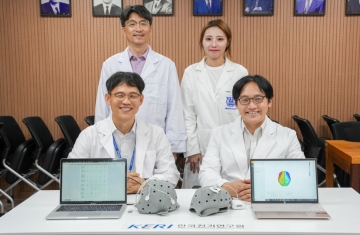
▲(From left, front row) KERI's research team including Dr. Kang Dong-jun and Dr. Lim Hyeon-gyun developed a binder for battery cathodes that can replace PVDF.
A 'PVDF alternative battery binder' that surpasses EU environmental regulations has been developed by domestic researchers, realizing localization, eco-friendliness, high performance, and low price of binder materials.
The Korea Electrotechnology Research Institute (KERI) Insulation Materials Research Center's Dr. Lim Hyeon-gyun and Dr. Kang Dong-jun's research team, through joint research with the research teams of Dr. Yoo Jeong-geun of KIST and Professor Kim Jong-soon of Sungkyunkwan University, developed a technology that raises the performance of binders, the 'unsung hero' of the secondary battery field, to the world's highest level while also using eco-friendly materials. The paper was published in an internationally renowned academic journal.
The electrode, which has the greatest impact on the performance of a secondary battery, is manufactured by mixing an "active material" that generates electricity, a "conductive material" that facilitates the flow of electricity, and a "binder" with a solvent. The binder's role is to help the active material and conductive material adhere to the metal plate (current collector) and to physically stabilize the electrode.
Binders occupy a relatively small proportion of the electrode, so research on them has been slow, but interest is growing as demand for high-capacity, high-performance batteries increases. Currently, polyvinylidene fluoride (PVDF), a fluorine-based polymer, is mainly used as a cathode (+) binder material for lithium secondary batteries.
On the other hand, PVDF is dominated by some global companies from Japan and Europe, and functional issues such as reduced battery stability have been continuously raised during the utilization process.
PVDF, in particular, is composed of extremely strong carbon (C)-fluorine (F) bonds, making it virtually non-biodegradable in nature, earning it the nickname "zombie compound." Because it's difficult to decompose, it persists in the environment for long periods of time and is known to emit significant greenhouse gases when burned. Due to these environmental concerns, the European Union (EU) is discussing potential restrictions on PVDF use. Therefore, the development of a binder material that surpasses PVDF is urgently needed.
KERI's breakthrough in solving this problem was the application of siloxane to the cathode binder. Siloxane is a compound composed of silicon and oxygen, boasting excellent electrical properties and chemical stability. After years of research on nanocomposite technology, the team led by Dr. Lim Hyeon-gyun and Dr. Kang Dong-jun developed a "hybrid siloxane resin manufacturing technology" that combines the advantages of both organic and inorganic materials. They also developed molecular structure design and synthesis control technology for applying this technology to cathode binders.
The research team also conducted multiple validations by fabricating a full cell using the technology. The results confirmed the superiority of KERI's technology, demonstrating a lifespan stability 1.4 times greater than that of conventional PVDF binders. PVDF possesses physical and chemical stability and excellent adhesive properties. However, with the recent advancement in battery capacity and performance, it has encountered various issues, including swelling and side reactions between internal substances. However, KERI's technology has achieved performance that overcomes these limitations.
The greatest advantage of this achievement is that it is environmentally friendly and harmless to the human body, as it does not contain fluorine. Not only will it avoid EU environmental regulations restricting the use of PVDF, it is also expected to significantly reduce dependence on imported cathode binders.
KERI's Dr. Lim Hyeon-gyun said, "Our country's battery industry is world-class, but we are completely dependent on imports for cathode binders because we do not have the specialized technology or companies in the country." He added, "Our eco-friendly binder technology utilizing siloxane can replace the existing PVDF and increase the safety and lifespan of products that require high-capacity batteries, such as electric vehicles."
Meanwhile, the results of this study were recognized for their excellence and were recently published as a cover article in "Advanced Functional Materials," a world-renowned academic journal in the materials field. The journal's "JCR Impact Factor," which measures its influence, is 18.5, placing it in the top 5% of its field.
The research team anticipates that this research will garner significant attention from the secondary battery industry and aims to identify potential suppliers and pursue technology transfer. Furthermore, they plan to apply the developed technology to dry cathode binder materials. They also plan to continue their research to expand the technology beyond lithium secondary batteries to other fields, including zinc and sodium batteries.
KERI is a government-funded research institute under the National Research Council of Science and Technology, Ministry of Science and ICT.

Comments
Related news
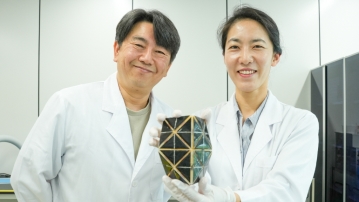
Flexible solar modules that don't require tempered glass or plastic appear
A research team led by Dr. Cha Seung-il at the Electrical Conversion Materials Research Center of the Korea Electrotechnology Research Institute (KERI) has developed a 'next-generation solar module technology' that enables electrical self-sufficiency in urban areas.
2024.07.10by 배종인 기자
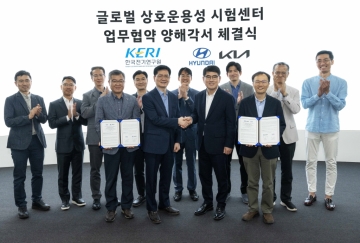
KERI, Hyundai, and Kia Join Hands for Infrastructure to Improve EV Charging Errors
Korea Electrotechnology Research Institute (KERI), Hyundai Motor, and Kia have signed a business agreement for establishing a 'Global Interoperability Test Center' and are beginning full-scale efforts to improve electric vehicle charging errors.
2024.07.17by 배종인 기자
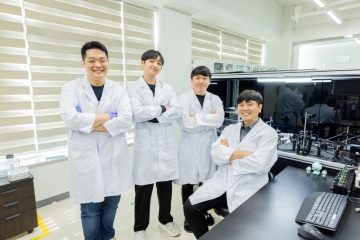
Electric Yeon, Finds Way to Use Nano-Light Emitting Diodes for Ultra-High-Resolution Displays
A research team led by Dr. Pyo Jae-yeon at the Korea Electrotechnology Research Institute (KERI) has successfully elucidated highly directional light emission patterns observed in nanostructures, raising expectations for technological innovation in the ultra-high resolution display field.
2024.07.22by 배종인 기자
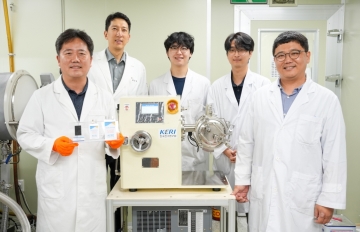
Optimal Mixture of All-Solid-State Battery Cathode and Electrolyte Found
A research team led by Dr. Ha Yun-chul from the Next-Generation Battery Research Center at the Korea Electrotechnology Research Institute (KERI), in collaboration with Professor Kim Byung-gon's team from the Department of Applied Chemistry at Kyung Hee University, Professor Moon Jang-hyuk's team from the Division of Energy Systems Engineering at Chung-Ang University, and Professor Lee Seung-ki's team from the Department of Materials Science and Engineering at Pusan National University, has developed a technology for optimally mixing cathode active materials and solid electrolytes for all-solid-state batteries (sulfide-based).
2024.07.29by 배종인 기자
Brain electrical stimulation to suppress appetite, opening new path to obesity treatment
The research and development project on "biomedical neural stimulation technology for treatment and management of metabolic syndrome," being conducted by Dr. Shin Ki-young's team at the Electro-Convergence Human Care Research Center under the Medical Electrical Equipment Research Division of the Korea Electrotechnology Research Institute (KERI), continues to progress smoothly, and it is expected that new approaches related to obesity treatment will be opened in the future.
2024.08.07by 배종인 기자











