


26 Types of Zirconium-Based Structures Discovered as New Materials to Save the Environment
 Published2024.09.10 09:50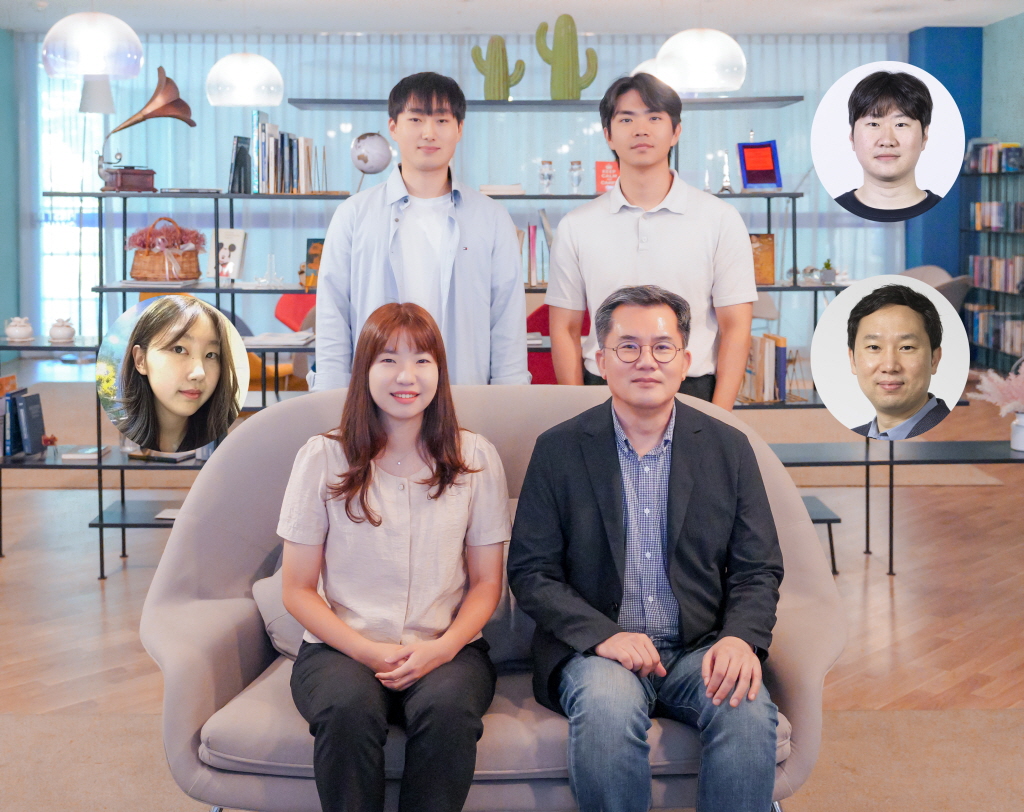
▲ (From bottom left, counterclockwise) Researcher Jo Hye-jin (1st author), Researcher Kim Ji-yeon (1st author), Professor Choi Won-young, Professor Kim Ji-han, Researcher Nam Dong-sik (1st author)
Twenty-six zirconium-based metal-organic frameworks have been identified through new material design strategies. This is expected to significantly accelerate the development of high-performance materials for solving environmental problems.
UNIST (President Park Jong-rae) announced on the 10th that a team led by Professor Choi Won-young of the Department of Chemistry has developed a design strategy to more efficiently discover metal-organic frameworks, which are attracting attention as next-generation carbon-neutral materials.
It opened a way to quickly and easily discover new materials that were difficult to find using existing methods.
The 'up-down approach' proposed by the research team is a method for efficiently discovering new material structures by combining two existing approaches. The bottom-up approach involves designing by building up from small units, whereas the top-down approach sets a target structure first and then searches for materials that match it.
The research team first explored designable structures using small metal fragments called 'metal clusters.' They then identified 'ligands,' organic linkers that connect these fragments, to complete the new material structure. This overcomes the limitations of existing new material development methods and enables more sophisticated structural design.
Metal-organic frameworks are porous structures in which metals and organic materials are combined, and they have demonstrated excellent performance in various fields such as carbon dioxide separation and storage, and catalytic reactions. However, conventional methods have been limited by predefined components or structures, which has restricted the broad exploration of synthesizable structures.
The research team discovered 26 new structures using zirconium. They successfully synthesized two of them. They also introduced a 'ribbon representation' that allows for more precise design of ligand structures, further enhancing the accuracy of the synthesis.
First author Researcher Jiyeon Kim stated, “This approach is a powerful tool for rapidly exploring and developing new materials.”
Co-first author Nam Dong-sik said, “We have laid the groundwork for the rapid discovery of innovative materials in various fields such as catalysts, gas storage, and environmental purification.”
Professor Choi Won-young expressed his anticipation, stating, “The chemical diversity of metal-organic frameworks will be greatly expanded, broadening their scope of application,” and adding that “this will present a new turning point in functional materials research.”
The research was conducted with support from the National Research Foundation of Korea (NRF) and UNIST, with joint participation from Professor Jihan Kim's team at KAIST. The research results were published on September 5 in Nature Synthesis, a sister journal of Nature.

Comments
Related news
Powering Wearable Devices Wirelessly
Professor Jimin Kwon and Doctor Yongwoo Lee from the Department of Electrical and Electronic Engineering at UNIST (President Jong-Rae Park) have developed a technology to maintain long-term stability in polymer Schottky diodes together with Professor Seongjun Jung from the Department of Advanced Materials Science and Engineering at POSTECH (President Sung-Geun Kim). This overcomes the existing problem of diode performance degradation caused by moisture and oxygen.
2024.08.08by 배종인 기자
Implementation of ultra-low power gas sensors
A research team led by Professor Shin Heung-joo from the Department of Mechanical Engineering and Professor Kim Jae-jun from the Department of Electrical and Electronics Engineering at UNIST (President Park Jong-rae) has successfully implemented an electronic nose capable of precisely measuring the type and concentration of gases by combining nanoprocessing and deep learning technologies. The device is expected to be utilized in various fields including air quality monitoring, health diagnostics, food safety, and environmental protection in the future.
2024.08.13by 배종인 기자
Electric vehicles charge while driving
Professor Byeon Young-jae's team from the Department of Electrical and Electronics Engineering at UNIST (President Park Jong-rae) has developed a 'wireless power supply track' that delivers uninterrupted power to moving vehicles, and expectations are high that it will enable flexible vehicle movement in all directions—forward, backward, left, and right—without the need for expensive ferromagnetic materials, by forming a wide and strong magnetic field composed of wires.
2024.08.19by 배종인 기자
SW Star Lab 10 New Selections
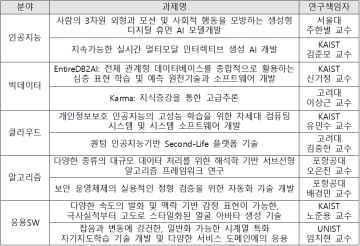
The Ministry of Science and Technology (Minister Lee Jong-ho) announced the selection results of the 2024 SW StarLab project, which supports university research laboratories with outstanding foundational and core technologies in the software (SW) field. In artificial intelligence, the research labs of Professor Ju Han-byul from Seoul National University and Professor Kim Jun-mo from KAIST were selected. In big data, Professor Shin Ki-jung from KAIST and Professor Lee Sang-geun from Korea University were selected. In cloud, Professor Yoo Min-soo from KAIST and Professor Kim Jung-heon from Korea University were selected. In algorithms, the research labs of Professor Oh Eun-jin from POSTECH and Professor Bae Kyung-min from POSTECH were selected. In applied SW, the research labs of Professor Rho Jun-yong from KAIST and Professor Lim Chi-hyun from UNIST were selected.
2024.08.19by 배종인 기자
Charge your battery directly with solar energy from your smartphone screen
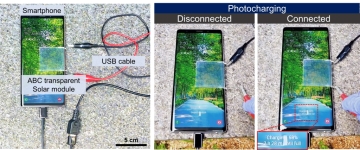
Professor Seo Kwan-yong's team at the Department of Energy and Chemical Engineering at UNIST has unveiled a new type of transparent solar cell and module that maintains colorless and transparent characteristics like glass while achieving high efficiency. When applied to smartphones, the technology enables direct battery charging from the smartphone screen, and is expected to lead eco-friendly energy initiatives upon future commercialization.
2024.08.20by 배종인 기자











