



Making aviation fuel from CO2
 Published2024.09.12 10:25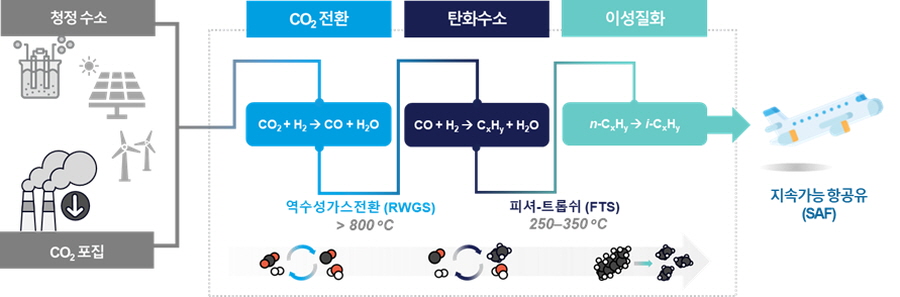
A catalyst technology has been developed to produce sustainable aviation fuel (SAF), which can significantly reduce carbon emissions by utilizing carbon dioxide. This technology captures atmospheric carbon dioxide to produce isoparaffin, a high-value hydrocarbon, and is expected to contribute to carbon neutrality.
UNIST (President Jong-Rae Park) Department of Energy and Chemical Engineering Professor Kwang-Jin Ahn's team and LG Chem's Carbon Neutral Research TFT announced on the 12th that they have developed an isoparaffin-generating catalyst suitable for producing sustainable aviation fuel (SAF) using carbon dioxide.
It was used in conjunction with an iron-based catalyst to replace the existing zeolite catalyst, and successfully increased the isoparaffin production rate significantly.
In particular, aviation fuel produced using a platinum-based tungsten-zirconia catalyst is expected to reduce carbon emissions by up to 80% compared to conventional fossil fuel-based aviation fuel. Furthermore, process efficiency is significantly improved by directly converting carbon dioxide into isoparaffins.
This catalyst has a high potential for commercialization as it produces little carbon deposition and allows stable reactions over long periods of time. It is expected to help dramatically reduce carbon emissions not only in the aviation industry but also in other transportation sectors.
Professor Ahn Gwang-jin explained, “We have presented a new catalytic method that can overcome the limitations of existing zeolite catalysts, which are vulnerable to coke during reaction, and maximize the production rate of isoparaffins.”
Kim Won-hee, a senior researcher at LG Chem, emphasized, “This technology has high industrial value as it can improve fuel economy and minimize costs incurred during additional refining processes.”
The aviation sector currently accounts for 24.5% of total carbon dioxide emissions, making the commercialization of SAF an urgent task for achieving carbon neutrality. The International Air Transport Association is strengthening regulations to increase the use of SAF.
The research was conducted with technical support from the Korea Basic Science Institute, and the results were published online on August 9th in the internationally renowned academic journal ACS Catalysis. The research was supported by the National Research Foundation of Korea and the Ministry of Trade, Industry and Energy's Materials, Components and Equipment Support Program.
Comments
Related news
Implementation of ultra-low power gas sensors
A research team led by Professor Shin Heung-joo from the Department of Mechanical Engineering and Professor Kim Jae-jun from the Department of Electrical and Electronics Engineering at UNIST (President Park Jong-rae) has successfully implemented an electronic nose capable of precisely measuring the type and concentration of gases by combining nanoprocessing and deep learning technologies. The device is expected to be utilized in various fields including air quality monitoring, health diagnostics, food safety, and environmental protection in the future.
2024.08.13by 배종인 기자
Electric vehicles charge while driving
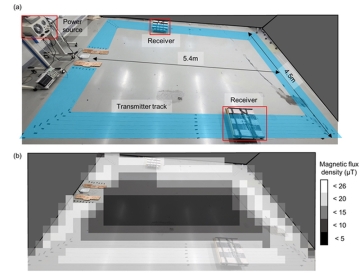
Professor Byeon Young-jae's team from the Department of Electrical and Electronics Engineering at UNIST (President Park Jong-rae) has developed a 'wireless power supply track' that delivers uninterrupted power to moving vehicles, and expectations are high that it will enable flexible vehicle movement in all directions—forward, backward, left, and right—without the need for expensive ferromagnetic materials, by forming a wide and strong magnetic field composed of wires.
2024.08.19by 배종인 기자
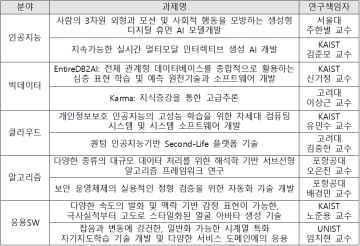
SW Star Lab 10 New Selections
The Ministry of Science and Technology (Minister Lee Jong-ho) announced the selection results of the 2024 SW StarLab project, which supports university research laboratories with outstanding foundational and core technologies in the software (SW) field. In artificial intelligence, the research labs of Professor Ju Han-byul from Seoul National University and Professor Kim Jun-mo from KAIST were selected. In big data, Professor Shin Ki-jung from KAIST and Professor Lee Sang-geun from Korea University were selected. In cloud, Professor Yoo Min-soo from KAIST and Professor Kim Jung-heon from Korea University were selected. In algorithms, the research labs of Professor Oh Eun-jin from POSTECH and Professor Bae Kyung-min from POSTECH were selected. In applied SW, the research labs of Professor Rho Jun-yong from KAIST and Professor Lim Chi-hyun from UNIST were selected.
2024.08.19by 배종인 기자
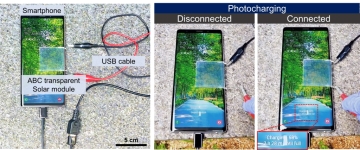
Charge your battery directly with solar energy from your smartphone screen
Professor Seo Kwan-yong's team at the Department of Energy and Chemical Engineering at UNIST has unveiled a new type of transparent solar cell and module that maintains colorless and transparent characteristics like glass while achieving high efficiency. When applied to smartphones, the technology enables direct battery charging from the smartphone screen, and is expected to lead eco-friendly energy initiatives upon future commercialization.
2024.08.20by 배종인 기자
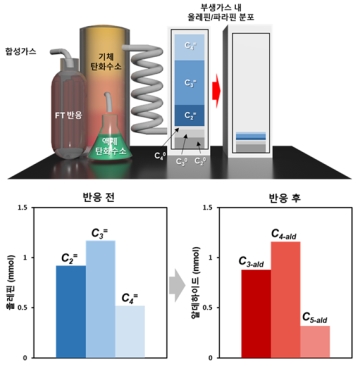
Discarded by-product gas transformed into high-value-added aldehyde.
UNIST (President Park Jong-rae) has developed a high-performance rhodium-based catalyst in collaboration with the Korea Institute of Energy Research through the research teams of Professor Ahn Kwang-jin from the Department of Energy and Chemical Engineering and Professor Han Jung-woo from Seoul National University. This catalyst efficiently converts olefins contained in by-product gas into high-value-added aldehydes. Olefins are unsaturated hydrocarbon compounds with double bonds and are used as important raw materials in the chemical industry alongside paraffins.
2024.08.23by 배종인 기자











