


Korea Mechanical Engineering & Construction Co. develops 60% lighter car air duct
 Published2024.10.03 04:36
.jpg)
▲Senior researcher Seunghoon Bae (second from the right) and his research team at the Busan Machinery Technology Research Center of the Korea Institute of Machinery and Materials are examining a lightweight air duct prototype.
A lightweight airtight air duct that can be applied directly to commercial vehicles has been developed. It is expected to be of great help in securing domestic production technology to replace existing French air ducts and increasing the self-sufficiency of the domestic automobile industry.
The research team of Senior Researcher Bae Seung-hoon of the Busan Machinery Technology Research Center of the Korea Institute of Machinery and Materials (President Ryu Seok-hyun) under the Ministry of Science and ICT, Eugene SMRC AT (CEO Kim Heung-sik), and SH Korea (CEO Woo Sang-il) have made a groundbreaking improvement in the air duct manufacturing technology for automobile cockpit modules. They are on the verge of commercialization as they satisfied the complete vehicle standards in performance evaluations.
Existing air ducts were made of high-density polyethylene (HDPE), which made them heavy and had poor insulation performance, leading to significant heat loss. They were also inconvenient to assemble and had other problems such as noise generation. This resulted in reduced vehicle fuel efficiency and uncomfortable ride, and there was also a safety issue as the duct could break in the event of an accident and injure the driver.
The air duct developed by the joint research team this time is characterized by a weight reduction of approximately 60% compared to existing products through the use of foam sheets, and significant improvements in airtightness, noise reduction performance, and safety.
The new air duct was manufactured through vacuum forming and hot knife processes using foam sheets. This process significantly increases productivity by lowering the defect rate and enabling the precise implementation of complex shapes compared to conventional blow molding. In addition, the use of polyethylene (PE) foam material improved insulation performance and maximized noise reduction, thereby simultaneously improving the vehicle’s fuel efficiency and comfort.
The research team preheated the PE foam sheet and formed the shape by suction on the upper and lower vacuum molds, and at the same time, joined the upper and lower foam sheets by compression to form the shape. This was followed by a post-processing step where the edges were precisely cut using a hot knife process.
The joint research team then conducted a performance evaluation to ensure the reliability of the developed air duct and confirmed that it met the standards for finished vehicles. In the process, they also secured technology to extract dynamic properties of polymer structures such as PE or polypropylene (PP).
“This product appears to solve the shortcomings of existing air ducts,” said Bae Seung-hoon, a senior researcher at the Korea Institute of Machinery and Materials, who led the study. “It will likely be applicable to a variety of vehicle models in the future.”
Also Eugene SMRC AT Research Institute Director Lim Seong-bin said, “With this development, we have created a part that is superior in all aspects including quality, cost, and weight reduction,” and added, “We will strengthen our competitiveness not only in the domestic market but also in overseas markets through mass production in the future.”
Meanwhile, this study was conducted with the support of the 'Automobile Industry Technology Development (Green Car)' project of the Ministry of Trade, Industry and Energy and the Korea Institute of Industrial Technology Evaluation and Planning.

Comments
Related news
.jpg)
Materials Research Institute and Mechanical Research Institute Pour Warm Water for Research Cooperation
The Korea Institute of Materials Science (KIMS, Director Choi Chul-jin) and Korea Institute of Machinery and Materials (KIMM, Director Ryu Seok-hyun) held the "2024 First Machinery-Materials Research Collaboration Exchange Meeting," a communication forum for the smooth implementation of their "Collaboration Priming Project" for research cooperation.
2024.07.29by 배종인 기자
.jpg)
Machinery and Materials Research Institute, Nano-Chemical Research Institute, Join Hands for 300mm Semiconductor Packaging Infrastructure
The Korea Institute of Machinery and Materials (President Ryu Seok-hyun) and the National Nano Fabrication Center (President Park Heung-su) have joined forces to establish advanced packaging infrastructure for 300mm semiconductors and develop related technologies.
2024.08.01by 배종인 기자
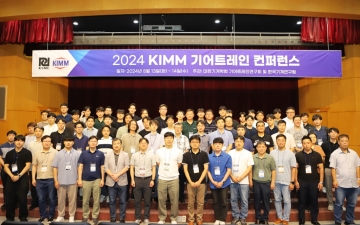
Korea Machinery Research Institute, expanding domestic gear train base
The Korea Institute of Machinery and Materials (KIMM) under the Ministry of Science and ICT, headed by Director Ryu Seok-hyun, jointly hosted the "2024 KIMM Gear Train Conference" with the Gear Train Research Group of the Korean Society of Mechanical Engineers on August 13-14.
2024.08.19by 배종인 기자

Korea Institute of Machinery and Materials, '2024 Global Machinery Technology Forum' September 4th, National Assembly Museum
The Korea Institute of Machinery and Materials (Director Ryu Seok-hyun) under the Ministry of Science and ICT will host the '2024 Global Machinery Technology Forum' simultaneously online and offline at the National Assembly Museum in Seoul on September 4th at 1:10 p.m. Sponsored by the Ministry of Science and ICT and the National Research Council of Science and Technology, this forum is jointly hosted by the Korea Institute of Machinery and Materials, Rep. Jo Seung-rae of the Democratic Party, Rep. Choi Hyung-doo of the People Power Party, and Rep. Hwang Jeong-a of the Democratic Party. The forum invites domestic and international experts in machinery technology to discuss the development direction of future machinery technology under the theme of digital transformation.
2024.08.26by 배종인 기자
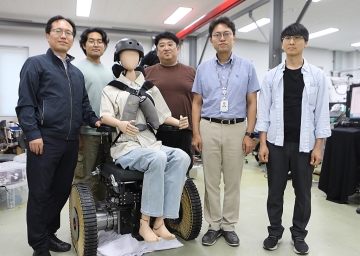
“The wheel shape changes depending on the road obstacles”
The Korea Institute of Machinery and Materials (KIMM, Director Ryu Seok-hyun) under the Ministry of Science and ICT has successfully developed a morphing wheel with variable stiffness for the first time in the world by mimicking the surface tension principle of liquid droplets, and has achieved its application to an actual mobile platform. By real-time modulation of wheel stiffness, the wheel can overcome various obstacles encountered in daily life such as stairs and rocks, making it widely applicable to all types of mobile platforms utilizing wheels where obstacle traversal on irregular terrain is critical.
2024.09.03by 배종인 기자











