


“Consumer Technology Success and Failure in 2025 Depend on AI Utilization”
 Published2025.02.17 15:22
.jpg)
IoT service-centered strategy, strategy tailored to specific consumer groups is a must
As consumer electronics companies are expected to further enhance their AI capabilities and business models in 2025, it has been suggested that simply installing AI capabilities is not enough for AI technology to become standard in more and more devices, and that AI utilization strategies for product differentiation, additional revenue generation, and improved profitability are needed.
Omdia and Canalys recently released their report, ‘Consumer Technology Trends at a Glance 2025’.
According to Nicole Peng, Research VP, Consumer, who authored the report, the consumer tech market in 2025 will become more complex with various innovations. As AI technology becomes the standard, AI functions will shift to service-oriented business models and become part of strategies to differentiate products, generate additional revenue, and improve profitability.
Smartphone and PC manufacturers are expected to use AI to improve premium products and find new revenue streams.
The key to success in 2025 will be investing in AI capabilities and understanding how to market them effectively, as the entertainment industry looks set to leverage AI to address financial challenges and explore new creative opportunities. />
Consumer IoT vendors are expected to adopt service-centric business models and leverage more granular targeting tailored to specific consumer groups.
The wearable device market is increasingly driven by specialized and personalized user experiences.
For example, smartwatches, fitness bands, rings, and other wearable devices are focusing on health and sports functions.
The introduction of subscription-based smart home services The smart home market has been strong in recent years, but profitability remains uncertain.
Many manufacturers have made plans to sell their devices at near cost and monetize them later, but this has not yet been realized.
In this trend, it is expected that brands that find it difficult to transition to a subscription-based smart home business model or do not want to transition will experience great competitive confusion.
In particular, the global competitive environment is expected to shrink as many small brands are forced out of the market due to their inability to sustain the investments required to improve or create software and services.
As the media and consumer electronics markets mature, monetization through freemium models is expected to become essential for service providers and manufacturers.
The freemium model is a method in which basic services are provided for free, but additional features or advanced content are charged, and many digital service companies are adopting this.
Video Platforms' 'Super Hybrid' Services TV and online video platforms are evolving their existing hybrid strategies that combine subscription and ad-based VOD models, while introducing a wider range of content types and monetization methods.
Live games can provide stable profits.However, the technical complexity and commercial risks are significant.
Representative live games still maintain a solid position, attracting tens of millions of users.
In particular, GTA 6, scheduled for release in the fall of 2025, is highly anticipated and is expected to be a major focus for time and consumption in the gaming market.
The Evolution and Expansion of Online Video Bundling Online video platforms have long acquired subscribers through partnerships with mobile, broadband and pay TV operators.
In 2025, video bundling strategies are expected to take new forms and find new partners.
Connected TV OS is expected to be central to various media strategies in the future.
Partnerships with retailers are expected to become more important, with operators expected to secure in-store and online shelf space for their TV sets' OS and integrate their platforms to help retailers achieve their advertising goals.
Omdia expects OS vendors to pursue mergers and acquisitions.
Like Walmart's acquisition of smart TV vendor Vizio in 2024, the move was expected to provide an opportunity for vendors to rapidly change market share through TV OS.
Comments
Related news
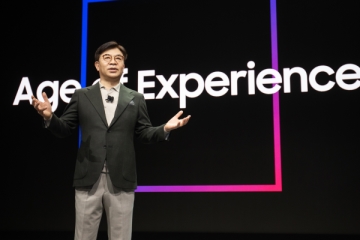
In an era where user experience takes precedence, what direction should home appliances evolve in?
Today's consumers expect positive life experiences—such as convenience, stability, and enjoyment—that products deliver, rather than product ownership itself. Samsung Electronics President Kim Hyun-suk defined the next decade as an era of experience, stating that home appliance manufacturers must work to provide increasingly personalized experiences and environments by combining hardware and software for individuals.
2020.01.07by 이수민 기자
.jpg)
Intel: "13th Gen Processors and Evo Certification Enhance User Experience"
Intel launched a new 13th-generation mobile processor in the domestic market, hoping to drive a recovery in demand in the second half of the year, as consumer device demand for PCs and laptops has plummeted amid global economic downturn and inflation.
2023.03.02by 명세환 기자
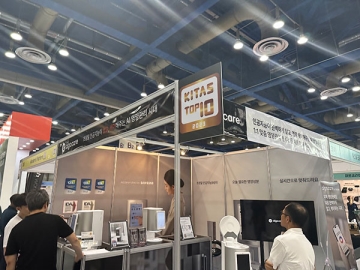
[KITAS 2023] One place for 'smart home IoT devices' that enhance user experience
The 13th Korea Smart Device x Small Electronics Trade Show 2023 (KITAS 2023) will be held from the 17th to the 19th at the COEX B Hall in Samseong-dong. This exhibition, themed "Do What You're Going to Do Anyway, but Make It Convenient," is expected to serve as a venue for visitors to grasp the latest trends in the smart device market that expands user experience.
2023.08.18by 김예지 기자
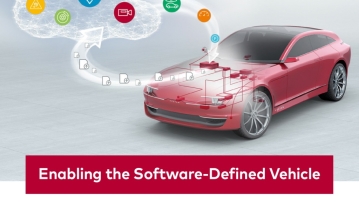
“Vehicle OS, autonomous driving and AI integration, vehicle stability and user experience innovation”
Vector Korea (Branch Manager Jang Ji-hwan) has announced 'Vehicle OS', an operating system for software-defined vehicles (SDV). Vector stated, "Vehicle OS, which is being jointly developed in cooperation with more than half of global automotive manufacturers, is driving change in the future automotive industry through data integration, AI technology, and standardized design, thereby innovating vehicle stability and user experience," and added success cases of Vehicle OS.
2024.12.09by 배종인 기자
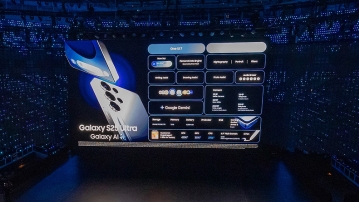
Galaxy S25 success depends on ‘AI user experience’
Samsung Electronics' new flagship smartphone, the Galaxy S25, is analyzed to require AI software and service revenue generation through the Galaxy S25 as a key factor for its success.
2025.01.23by 배종인 기자











