


Hyundai to Install Next-Generation Hybrid System in 2026
 Published2025.04.21 08:25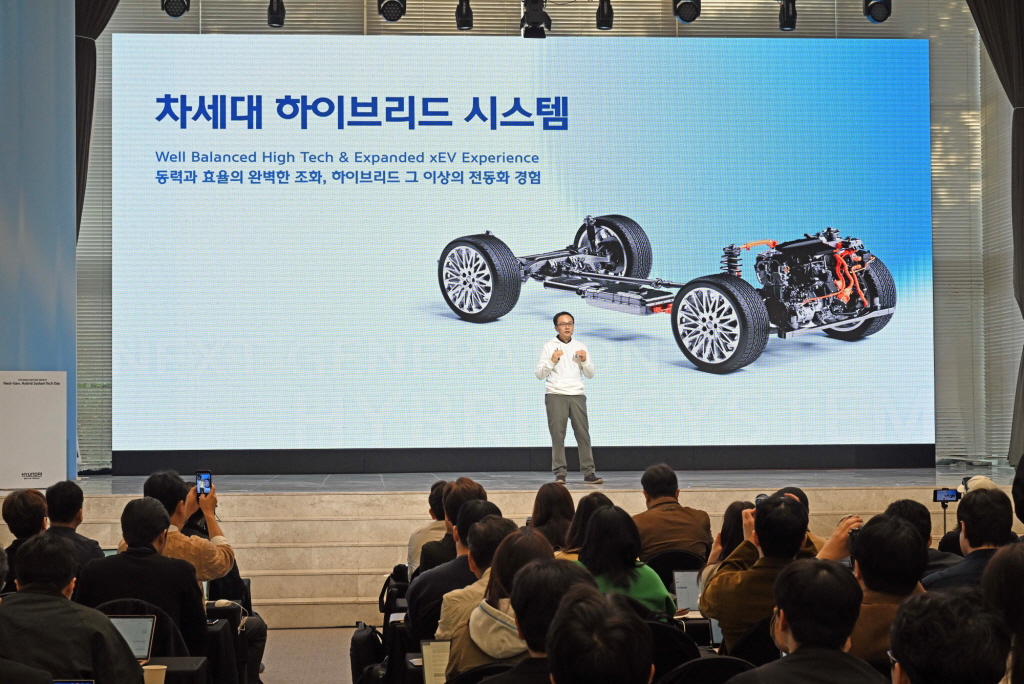
2.5, 45% fuel efficiency and 19% output improvement compared to the previous model
Hyundai Motor Group is expanding its lineup by installing a next-generation hybrid system with two motors mounted in parallel in the transmission in the 2026 Genesis.
Hyundai Motor Group held the 'Hyundai Motor Group Next-Gen. Hybrid System Tech Day' at Crest 72 in Jung-gu, Seoul, and unveiled its further evolved hybrid technology.
The hybrid system announced this time will significantly improve performance, efficiency, and ride comfort, and provide a variety of electrification experiences.
The next-generation hybrid transmission developed by Hyundai Motor Group features two motors (P1 and P2) in a parallel configuration. The P1 motor is directly connected to the engine, minimizing frictional losses and performing starting, power generation, and traction assistance functions. The P2 motor is responsible for both driving and regenerative braking, and the cooperation between the two motors simultaneously improves fuel efficiency and power performance.
The allowable torque is 46.9 kgf·m, which is about 25% more than the previous model, providing powerful performance that can be naturally combined with high-displacement turbo engines, and the power density and torque density have also been significantly improved through improvements in the cooling structure.
Developed as the first powertrain for the next-generation hybrid system, the gasoline 2.5-liter turbo hybrid engine maximizes efficiency through improved design and control technology. Specifically, it utilizes overexpansion cycle technology to reduce mixture compression energy and generate maximum energy during the combustion process.
Unnecessary power loss was minimized by removing existing parts, and fuel efficiency was improved by approximately 45% and output by 19% compared to existing internal combustion engines by enhancing the high-efficiency cycle and combustion stability.
Hyundai Motor Group has further enhanced its product competitiveness by introducing electrification-specific technologies into its hybrid vehicles. The e-AWD, an electronic all-wheel drive system, adds a rear motor to improve acceleration responsiveness and driving performance. Stay Mode utilizes battery power to enable in-vehicle convenience features without the engine running, maximizing customer convenience.
Additionally, V2L technology, which supports multi-purpose use such as camping and car camping, provides a maximum output of 3.6 kW and contributes to increased fuel efficiency through HPC (Hierarchical Predictive Control) that optimizes battery efficiency and smart regenerative braking technology.
Hyundai Motor Group plans to launch a full lineup of hybrid vehicles, ranging from compact to large and even luxury. The 2.5-liter turbo hybrid engine will be first featured in the Palisade Hybrid, which began mass production this month, and will be sequentially applied to various models in the future. In 2026, the company plans to expand its lineup to include luxury brands by equipping Genesis' main models with a 2.5-liter turbo hybrid for rear-wheel drive.

Comments
Related news
Electric Vehicle Energy Efficiency Grades Divided… Only 6 Out of 278 Models Get Grade 1
According to the electric vehicle energy efficiency rating system introduced by the Ministry of Trade, Industry and Energy (hereinafter referred to as the Ministry of Industry), only 6 models from Hyundai Motor, Tesla, and Smart Solutions received Grade 1, while 62 models including the electric Porter and Porsche Taycan received Grade 5, the lowest rating.
2024.04.01by 성유창 기자
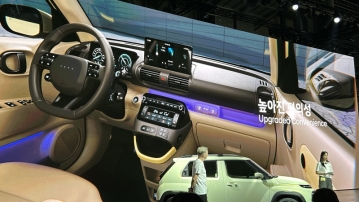
[Busan Mobility Show] Hyundai Motors Announces ‘Compact’ Electric Car Casper Electric and Hydrogen Society Blueprint
Hyundai Motor has presented its future mobility blueprint toward a sustainable future by demonstrating its electrification vision through the Casper Electric, a small electric vehicle that will lead the popularization of electric vehicles, while also expressing its commitment to transitioning to a hydrogen ecosystem through its hydrogen value chain business brand 'HTWO'.
2024.06.28by 성유창 기자
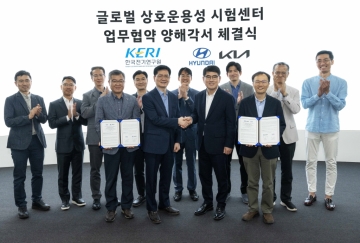
KERI, Hyundai, and Kia Join Hands for Infrastructure to Improve EV Charging Errors
Korea Electrotechnology Research Institute (KERI), Hyundai Motor, and Kia have signed a business agreement for establishing a 'Global Interoperability Test Center' and are beginning full-scale efforts to improve electric vehicle charging errors.
2024.07.17by 배종인 기자
Korea's export growth in the first half of the year... "Hyundai Motor Company and LG Electronics, AI manufacturing is the key to improving productivity"
The Ministry of Trade, Industry and Energy held its 7th Export Item Manager Meeting on the 22nd to review export performance by product category in July. First Vice Minister Kang Kyung-sung stated, "As a result of reviewing export performance by product category, our exports continue to show solid upward momentum in July, and we expect this trend to persist into the second half of the year."
2024.07.23by 김예지 기자
.jpg)
Hyundai Motor and GM Partner on Joint Development and Integrated Materials Supply
Hyundai Motor and General Motors (GM) have signed a Memorandum of Understanding (MOU) for comprehensive cooperation, and will work to reduce production costs and enhance efficiency through joint development and production, as well as integrated material supply.
2024.09.13by 배종인 기자











