


Solving both active and reactive power supply with a single device… Stable supply of new and renewable energy
 Published2025.05.12 09:14
.jpg)
The KERI Power Conversion System Research Center has developed the 'Energy Storage Modular Multi-Level Converter (EMMC)' technology for the first time in Korea.
KEPCO Completes Demonstration of Stable Power Transmission ESS·STATCOM Integration
The development of core technology for converter power devices capable of supplying both active and reactive power with a single unit is expected to facilitate the stable distribution of new and renewable energy and long-distance power transmission.
The Power Conversion System Research Center of the Korea Electrotechnology Research Institute (KERI) announced on the 12th that it has developed core converter power equipment technology that facilitates the stable distribution of new and renewable energy and long-distance power transmission.
With the advent of the AI and carbon neutrality era, High Voltage Direct Current (HVDC) transmission systems, which efficiently transmit large amounts of power over long distances, are receiving significant attention.
In particular, HVDC systems are considered a leading technology for efficiently transporting renewable energy generated in mountainous and coastal areas, such as solar and wind power, to urban areas.
In this process, the important device that performs alternating current (AC) and direct current (DC) power conversion is the 'converter station'.
On the other hand, renewable energy faces the difficulty of causing instability in the power grid due to significant variability in energy supply caused by weather variations.
Therefore, in the power equipment industry, active power Energy Storage Systems (ESS) that absorb and supply power, and STATCOMs (reactive power compensation devices) that absorb and supply reactive power, are installed to maintain a constant grid voltage and enhance the stability of the power system.
KERI’s achievement goes a step further by developing, for the first time in Korea, a technology called the ‘Energy Storage Modular Multilevel Converter (hereinafter EMMC, ESS Modular Multilevel Converter)’ that integrates the ESS and STATCOM, which were previously separated, into a single device.
EMMC is a converter made by stacking kilovolt (kV) class submodules containing ESS, which generates ultra-high voltage DC to enable the effective transmission of renewable energy over long distances.
First, KERI designed the 'KERI High-Performance Control Platform (Control & Protection)' utilizing FPGA (Field Programmable Gate Array) semiconductors to operate a total of 42 modules (composed of 14 modules per phase, totaling 3 phases) identically and stably, thereby ensuring isochronism.
In addition, since the project was pursued with the goal of applying it to mobile substations rather than fixed ones, flexible system design technology was also secured to enable the EMCC to operate in any location.
In addition, the energy storage was designed to go beyond simple ESS functions and perform the role of a 'supercapacitor' with fast charging and discharging and high response speed (fast responsiveness).
Subsequently, KERI confirmed the feasibility of the developed technology through various verifications, including unit module testing, HILs (Hardware In the Loop Simulator)-based controller testing, single-phase valve testing, and high-pressure/low-pressure system testing, and recently, the Korea Electric Power Research Institute The demonstration was successfully completed at the Gochang Power Testing Center.
The research team plans to commercialize the product by pursuing technology transfer to companies in the power equipment sector.
Lee Jong-pil, Head of the Power Conversion System Research Center at KERI, highlighted the impact and significance of the achievement, stating, “It will secure stability and flexibility in high-voltage distribution power systems utilizing renewable energy and contribute significantly to the nationwide carbon neutrality policy.” He added, “It will be utilized as a control and driving device for high-voltage, large-capacity power converters in various fields, including HVDC/MVDC systems that will play an important role in future power grids, as well as e-mobility (railways, ships, aviation) and data centers for AI.”
Meanwhile, KERI is a government-funded research institute affiliated with the National Science and Technology Research Council under the Ministry of Science and ICT. This research was conducted under the Ministry of Trade, Industry and Energy's 'Development of Core Technologies for New and Renewable Energy' and 'Development of Large-Capacity High-Voltage Modular ESS Technology for Renewable Energy Grid Connection' projects.
Comments
Related news
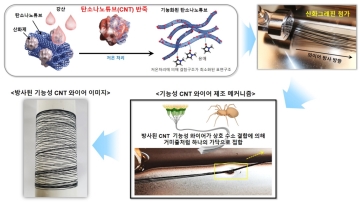
Making wire for wearable electronics using existing textile manufacturing processes
A research team led by Dr. Han Jung-taek at the Nano Convergence Research Center of the Korea Electrotechnology Research Institute (KERI) has successfully developed high-performance functional wires for wearable electronic devices by utilizing existing fiber manufacturing processes.
2025.03.17by 배종인 기자
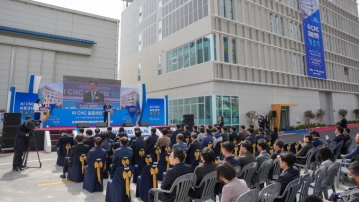
Machine tool technology, highly dependent on overseas markets, goes beyond independence and even incorporates AI
The Korea Electrotechnology Research Institute (KERI) held an opening ceremony for the 'AI CNC Demonstration Center' on the 25th at its Changwon headquarters to advance technology independence and advancement in the Republic of Korea's machine tool sector. Based on the demonstration center, KERI plans to verify product performance of machine tool companies located in the Changwon industrial complex in Gyeongnam, promote collaboration and linkages among them, and enhance the completeness of CNC technology.
2025.03.25by 배종인 기자
Korea Electric Power Research Institute Leads Domestic Production of Electric Powertrain for Lunar Exploration 'Rover'
Korea Electrotechnology Research Institute (KERI) has transferred electric powertrain technology to Unmanned Exploration Laboratory (UEL), the country's only rover manufacturing company, and expectations are mounting that UEL will rapidly achieve technological independence for rovers going forward.
2025.03.31by 배종인 기자
Dr. Cho Jeon-wook of the Korea Electrotechnology Research Institute leads the Global Superconductivity Summit
Dr. Cho Jeon-wook, Principal Research Scientist at the Power Cable Research Center of the Korea Electrotechnology Research Institute (KERI), has been elected as the next chairman of the International Superconductivity Industries Summit (ISIS).
2025.04.14by 배종인 기자
.jpg)
Dr. Bang Wook of Korea Electrotechnology Research Institute, Receives the Order of Science and Technology Innovation Medal
Doctors Bang Wook, Park Jun-woo, Bae Young-min, and Cha Seung-il from the Korea Electrotechnology Research Institute (KERI) were selected as contributors to the advancement of science and technology and received the "Innovation Order of Science and Technology," "Presidential Commendation," and "Minister of Science and ICT Commendation," respectively, at the "2025 Science and Information and Communication Day Commemorative Government Award" ceremony held at the Korea Science and Technology Center on the 21st.
2025.04.22by 배종인 기자











