



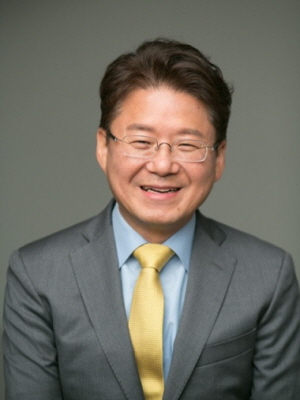
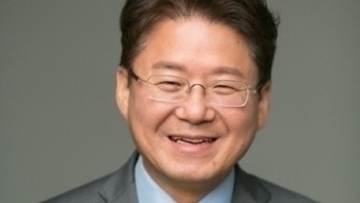
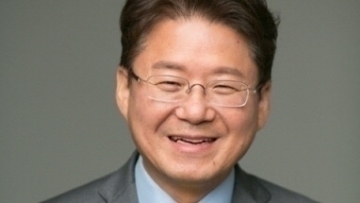
[Contribution] Professor Kim Pil-soo of Daerim University: "We must find a solution that benefits all of GM Korea."
 Published2025.06.23 08:42
The government's role is crucial; incentive policies should be implemented through supplementary budgets.
 The global tariff war caused by the Trump risk is increasing uncertainty about the future.
In addition to the 25% tariff on finished vehicles, a 10% tariff has also been imposed on auto parts, resulting in serious losses.
For us, whose automobile industry serves as the backbone of our national economy, the crisis is accelerating and a definitive solution is needed.
Accordingly, the need for a so-called "big deal" to be reached at the Korea-U.S. summit expected in July is growing.
In particular, in the case of GM Korea, which is known to export approximately 84% of its total production to the United States, voices calling for its withdrawal are growing louder.
It is true that the recent announcement by GM Korea that it will sell off its nine nationwide direct service centers and the idle facilities and land at its Bupyeong plant has greatly fanned the flames of these withdrawal rumors.
The recent announcement by GM headquarters that it will invest over 5 trillion won in facilities in the U.S. to increase production is also adding strength to the withdrawal theory.
However, I hope you will refrain from excessive interpretation.
GM Korea also faced difficulties in 2018.The company has invested a significant amount of money in modernizing its domestic production facilities, which has significantly improved the domestic working environment, and this is also a factor that makes it impossible for the company to leave the domestic market.
Moreover, given the possibility that the tariff issue could be resolved through a big deal at the Korea-U.S. summit in July, the logic of withdrawing without holding out for a month or so is even more unrealistic.
GM Korea plays a key role in the economies of the Incheon and Changwon regions, where its main production facilities are located.
With over 250,000 workers working directly or indirectly with GM, including its partners, continuing to talk about a possible withdrawal could cause chaos across the nation's key industries and the local economy.
Rather, the business restructuring, including the sale of GM Korea's directly operated service centers mentioned above, could be seen as a desperate measure to ensure stable business operations in Korea.
In fact, various global automakers have also flexibly adjusted their production bases and sales networks according to the situation.
Examples include Toyota, which operated flexibly by temporarily halting some of its production lines in Japan in response to the semiconductor shortage; Stellantis, which shut down an aging engine plant in Poland due to the EU's tightening of internal combustion engine exhaust regulations; and Ford, which cut more than 50 dealerships as part of a restructuring plan to halve the size of its dealer network in the UK by the end of this year to maximize profitability at each store.
Such cases can be interpreted as decisions aimed at improving business efficiency and viability in key locations, and mitigating uncertainty in global markets.
GM Korea's decision this time should be understood in this context.
There will be no changes to the domestic production program and the employment of employees working at direct service centers will be Given that it included a condition that it would be guaranteed, this decision could be interpreted not as a step toward withdrawal, but rather as a self-rescue measure to tighten one's belt in order to remain in Korea.
In situations like this, the government's role becomes even more important.
The significance of President Trump's global tariff policy lies in the fact that the White House is asking governments, not corporations, to fill the empty coffers.
Given that financial support from the government and local governments for tariff-covered items exported to the US is paramount, the newly launched government must understand the context of the Trump administration's policies and proactively implement fiscal management through a large-scale supplementary budget and various incentive policies.
At the same time, a solution must be found through a big deal in the scheduled tariff negotiations.
Unlike other sectors, the automotive ecosystem is irreversible once it collapses, making the government's role in maintaining the ecosystem even more crucial to prevent problems such as corporate bankruptcy.
At the same time, we must also take steps to stabilize the currently tense labor-management relations.
Of course, it is most important for GM Korea to actively work to build trust at the company level to prevent further fueling of withdrawal rumors. However, I hope that everyone can work together to overcome the current crisis through policy support from the government and local governments, as well as a stable labor-management environment, to achieve a wise outcome.
Comments
Related news
.jpg)
[Contribution] Professor Kim Pil-su of Daerim University, “Trump’s Tariff Strategy Should Be Solved by the Nation Uniting More, Led by Industry, Academia, and Research”
Professor Kim Pil-soo of Daelim University expressed his views on effective countermeasures against the beginning of Trump's full-scale tariff campaign.
2025.03.10by 명세환 기자
[Contribution] Professor Kim Pil-su of Daerim University, “Expectations for the spread of smart control chargers are high”
We heard from Professor Kim Pil-soo of Daelim University regarding the deployment of smart-controlled chargers in apartment complexes.
2025.04.07by 명세환 기자
[Contribution] Professor Kim Pil-su of Daerim University, “The Golden Time for Electric Vehicle Fires is ‘Smoke Detection’”
We heard from Professor Kim Pil-soo of Daelim University College about responding to electric vehicle fires, in relation to smoke detection occurring earlier than heat detection in the early stages of electric vehicle fires.
2025.04.14by 명세환 기자
[Contribution] Professor Kim Pil-su of Daerim University, “ESG Optimal Practice, Idle Speed Limiter Newly Appears”
We heard from Professor Kim Pilsoo of Daelim University College about the need for government and local government subsidies related to the installation of idle reduction devices for ESG implementation.
2025.04.21by 명세환 기자
[Contribution] Professor Kim Pil-su of Daerim University, “Subsidies for domestically produced mid-sized electric trucks are essential”
We heard from Kim Pil-soo, a professor at Daelim University, regarding subsidy payments for mid-sized electric trucks such as 3.5-ton and 5-ton models.
2025.04.28by 명세환 기자











