



"A waste battery recycling strategy must kill two birds with one stone: resource security and industrial competitiveness."
 Published2025.07.24 06:00
Beyond simple environmental policy, this will be an opportunity to domesticate strategic resources.
“Waste batteries are no longer waste. "It's time to kill two birds with one stone: resource security and industrial competitiveness through a resource recycling strategy."
The Korea Economic Association (KECA) recently emphasized the need for a Korean strategy to utilize waste batteries as an “urban mining resource” in its report, “New Industry Proposal Series ⑦ - Waste Batteries.”
With the number of domestically produced electric vehicle batteries expected to exceed 100,000 starting in 2030, internalizing resources and strengthening industrial competitiveness through battery recycling are emerging as national strategic priorities.
Electric vehicle batteries have an average lifespan of 8 to 15 years.
Accordingly, it is expected that the amount of waste batteries produced by electric vehicles commercialized since 2013 will increase rapidly starting around 2030.
The Korea Economic Research Institute estimates that more than 100,000 waste batteries will be produced in Korea by 2030.
In the global market, the amount of waste batteries produced is projected to increase from 170,000 units in 2023 to 42.27 million units in 2040.
Accordingly, the recycling market size is expected to grow at an average annual rate of 17%, from $10.8 billion in 2023 to $208.9 billion in 2040.
.jpg)
▲Major countries invest large amounts of money in recycling policies.
Compared to major countries, Korea's financial and institutional support is inadequate.
The total budget for the recycling system construction project promoted by the Korea Environment Corporation in 2024 is only 1.5 billion won, and it is being evaluated as limited in supporting early market entry by the private sector.
Accordingly, the Korea Economic Daily presented three major policy tasks: △ expanding public procurement of reused and recycled batteries, △ establishing a dedicated HS code, and △ improving the system related to used batteries.
Expanding public procurement support requires certification of recycled battery products and increasing the mandatory purchase rate for public institutions to secure stable sales channels for companies.
Regarding the improvement of the customs clearance system through the establishment of a new HS code, waste batteries and recycled materials (BM) are currently integrated into the general electronic waste code, making import and export management difficult. Therefore, it is possible to lead international standards by establishing a dedicated code and simplifying import procedures.
Regarding legislation to foster the used battery industry, bills pending in the National Assembly will introduce an integrated information management system and a public transaction system. However, ensuring consistency in standards, such as waste classification for ESS-use battery cells, is urgently needed.
Lithium, cobalt, nickel, and graphite used in electric vehicle batteries are largely dependent on overseas production and refining. This exacerbates supply and demand uncertainty stemming from the US-China hegemony rivalry and geopolitical risks.
Lee Sang-ho, head of the Korea Economic Council’s Economic and Industrial Affairs Division, emphasized, “Recycling waste batteries is not just an environmental policy; it is a strategic means to achieve the establishment of a battery circulation ecosystem, securing resource security, and discovering new growth engines.” He added, “The government must secure a competitive edge for the domestic battery industry through bolder fiscal and institutional responses.”

Comments
Related news
Full Inspection of Waste Batteries Expected to Save Time and Costs
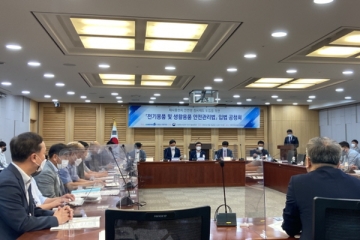
With the global expansion of electric vehicle adoption, continuous generation of used batteries is expected, and opinions have been raised that a comprehensive inspection system should be introduced as a new "full inspection system" by establishing a safety inspection system to improve the utilization of used batteries.
2022.08.11by 성유창 기자
Waste Battery Recycling: A New Future Growth Engine
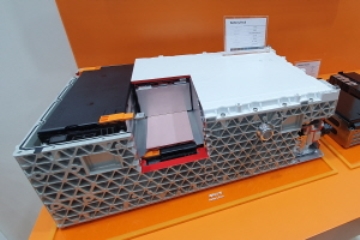
A report has been submitted indicating that convergent technology development and investment foundations are necessary to preempt the 'spent battery recycling' market, which is emerging as a new growth driver for the battery industry.
2022.11.16by 배종인 기자
LG Electronics: "Return your used batteries and get a discount on new batteries."
LG Electronics will conduct a "Battery Return" campaign from May 8 to June 30, in which customers can participate in resource circulation by returning used batteries that were used in the premium cordless vacuum cleaners CordZero A9 and A9S, and receive discounts when purchasing new batteries.
2023.05.08by 배종인 기자
e4ds July Monthly Briefing: In-depth Analysis of 'EMC, 4th Mobile Carrier, MVNOs, and Waste Batteries'
e4ds news will conduct 'e4ds news July Monthly Briefing' as a live broadcast on July 28th at 10:30 AM.
2023.07.27by 배종인 기자
Research into reusing used electric vehicle batteries, motors, and hydrogen fuel cell generators is essential.
Global electric vehicle sales are projected to exceed 14.5 million units by the end of 2023, yet research on spent battery reuse and regulatory improvements remain stalled, and research and development on hydrogen fuel cell vehicle generators is not being conducted, according to industry sources.
2023.08.28by 성유창 기자











