


OpenMind Advances Robot Network Security
 Published2025.10.28 15:06
Verifying Robot Behavior Without Exposing Personal Information… Joint Development of a Privacy-Preserving Auditing System
OpenMind, a startup specializing in robot operating systems (OS) in Silicon Valley, announced that it has signed a technology partnership with cryptography-based verification technology company Succinct and will jointly develop a "privacy-preserving audit system" that verifies robot behavior and work history without revealing personal information.
Modern robots perceive their surroundings and collect data through a variety of sensors, including cameras, microphones, and radar. This process also records the user's identity and personal information, so verifying their work performance through robot operation logs or video data can lead to a risk of personal information leakage.
To address this, the two companies have partnered to apply "Zero-Knowledge Proof (ZKP)" technology to the robot audit architecture. Zero-knowledge proof is a technology that mathematically proves certain facts without disclosing data. For example, a robot can prove its actions, such as "moving only within authorized areas" or "performing only authorized functions," without the original data. A verifier can verify the authenticity of a result with a short mathematical proof without having to see the robot's original log.
OpenMind integrates the identity, permissions, and policies of robots through its robot network platform, FABRIC. It also employs Susingt's zero-knowledge proof engine to store sensor logs and location records in hash format, proving them tamper-proof. This allows the robot's normal operation to be shared with external verifiers, while actual data is never transmitted externally, protecting both personal information and corporate operational information.
This partnership will equip robots with a structure that allows them to independently verify their actions and performance, and is expected to expand the use of trust-based robots in diverse industries, including manufacturing, logistics, and security. OpenMind stated, "We have laid the technological foundation for enhancing the reliability of robots in environments where people and robots coexist."
Founded by Stanford University bioengineering professor Jan Liphardt, OpenMind has raised approximately $20 million (approximately 27 billion won) in funding with the vision of "enabling all AI-connected robots to operate on a single language and platform." Recently, the company has been rapidly expanding its presence in the physical AI field, conducting joint research with LG Electronics.
“The core of this partnership is to transparently verify robot behavior while fully protecting personal information,” said an OpenMind representative. “Together with Susingt, we will create a technological foundation that will enable the robotics industry to grow based on trust.”

Comments
Related news

[e4ds Tech Day 2026 ⑨] Sim Sang-gyu, Autocrypt CTO: "In the Physical AI Era, Automotive Security Must Extend Beyond the Vehicle"
At e4ds Tech Day 2026, Sim Sang-gyu, CTO of Autocrypt, explained automotive cybersecurity strategies in the era of Physical AI and SDV (Software-Defined Vehicle). Automobiles are evolving as part of an ecosystem connected to AI, cloud, chargers, IoT, and robots, and he emphasized that the scope of security must expand beyond the vehicle interior to the entire connected environment. In particular, AI model tampering, adversarial attacks, OTA updates, and EV charger hacking were identified as major threats. He explained that response measures require zero trust, AI model integrity protection, intrusion detection, Security by Design and Default, and full lifecycle security management, and that proactive security system establishment beyond regulatory compliance is critical for securing future mobility competitiveness.
2026.10.12by 배종인 기자
NVIDIA to Invest $1 Billion in U.S. Science Over Next Five Years
NVIDIA has announced plans to invest $1 billion over the next five years to strengthen U.S. scientific and technological competitiveness. The company will enhance cutting-edge artificial intelligence research and development capabilities in key areas including quantum computing, healthcare, and energy security, while expanding support for higher education research institutions and cloud service providers. NVIDIA is participating as a major industry partner in the White House Office of Science and Technology Policy's Genesis Mission, and is promoting supercomputer construction in collaboration with national laboratories including Argonne and Los Alamos.
2026.10.12by 배종인 기자
ETRI Unveils 3 Next-Generation Media Technologies Including AI-Dedicated Video Compression
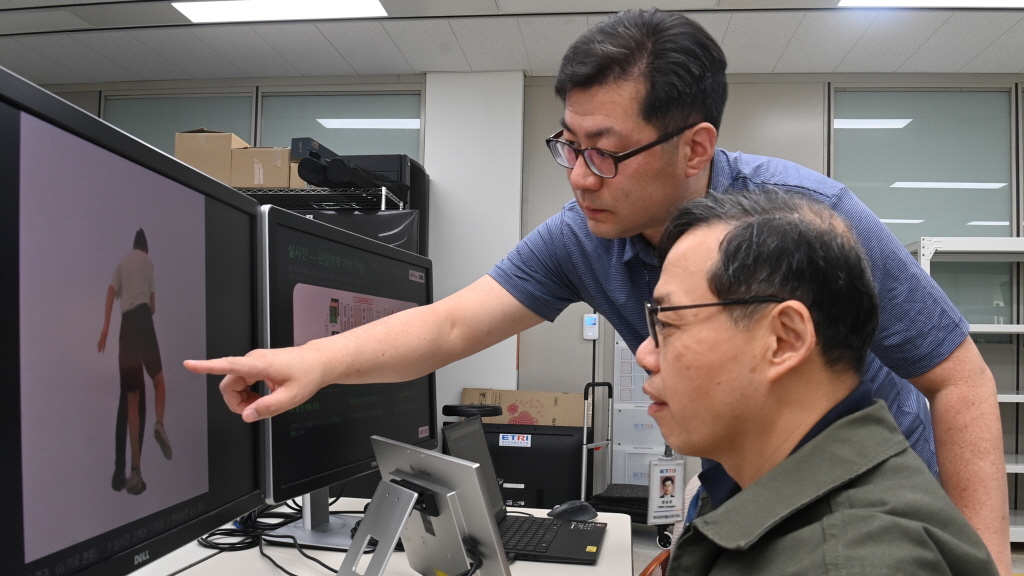
ETRI has unveiled three next-generation media technologies optimized for AI. These include AI-based video encoding (VCM), 3D human generation based on sparse cameras, and generative AI-based pre-visualization technology. In environments where AI directly processes video such as autonomous vehicles, robots, and drones, these technologies enable efficient compression and transmission of large-scale data, and can be applied across various industrial sectors including smart cities, video security, and sports broadcasting.
2026.10.12by 배종인 기자
KETI Connects Domestic and Uzbekistan Museums Through Robot Telepresence for Remote Exhibition
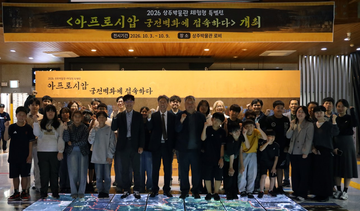
The Korea Electronics Technology Institute (KETI) has hosted a remote experiential exhibition that connects domestic museums with an Uzbekistan museum in real-time using robot telepresence technology. Elementary school students in the Sangju area were able to directly operate autonomous robots to remotely view 7th-century Goguryeo envoy palace murals at the Afrasiab Museum in Samarkand, and the exhibition provides spatial experience comparable to on-site visits by combining real-time high-quality video transmission, AI docent, and autonomous driving technologies.
2026.10.12by 배종인 기자

Arduino UNO Q Technical Whitepaper: MPU·MCU Hybrid Board for Cloud-Free Edge AI
Arduino UNO Q is a product that integrates a Qualcomm Dragonwing QRB2210 microprocessor (MPU) running Debian Linux and an STM32U585 microcontroller (MCU) executing Arduino sketches on Zephyr RTOS into a single UNO form factor board. The two processors do not share RAM and resources, exchanging data only through remote procedure calls (RPC) of Arduino_RouterBridge, and the development environment Arduino App Lab and apps reside within the board. This whitepaper describes the design intent of this hybrid architecture, development workflow, hands-on verification results, and limitations in industrial application based on webinar presentation materials and technical Q&A.
2026.10.09by 편집부











