



Samsung Electronics Hits All-Time Q3 Revenue of 86 Trillion Won… Driven by AI, HBM3E, and Foldables
 Published2025.10.30 10:25
.png)
▲ Samsung Electronics Q3 2025 Business Performance (Based on Consolidated Financial Statements, Unit: 100 million KRW, %)
Earnings expansion expected in both semiconductors and devices driven by AI growth in the fourth quarter
Samsung Electronics achieved its highest-ever revenue in the third quarter of 2025, driven by record-high quarterly memory sales.
Samsung Electronics announced its business results for the third quarter of 2025 on the 30th. According to the report, revenue was 86.0617 trillion won, an 8.8% increase year-on-year, and operating profit was 12.1661 trillion won, a 32.5% increase year-on-year. Net profit was 12.2257 trillion won, up 21% from the same period last year.
The DS (Device Solutions) division achieved its highest quarterly memory revenue, driven by expanded sales of HBM3E and server SSDs.
In particular, HBM3E is currently in mass production and sales to all customers, and HBM4 samples have also been shipped to major clients.
Sales for the DS division totaled 33.1 trillion won, and operating profit was recorded at 7 trillion won.
The DX (Device eXperience) division recorded sales of 48.4 trillion won and an operating profit of 3.5 trillion won, driven by solid sales of flagship smartphones such as the Galaxy Z Fold 7.
New tablet and wearable products also saw strong sales, maintaining double-digit profitability.
Samsung Electronics strengthened its foundation for future growth by spending a record-high 26.9 trillion won on research and development on a cumulative basis for the third quarter.
The impact of exchange rates was slightly negative for the DS division, but it was partially offset by the DX division, so it did not have a significant impact on overall performance.
Harman recorded 4 trillion won in revenue and 400 billion won in operating profit due to increased sales in audio products and the automotive electronics sector, while SDC (Display) achieved 8.1 trillion won in revenue and 1.2 trillion won in operating profit due to increased demand for small and medium-sized OLED and QD-OLED monitors.
The outlook for the fourth quarter is that performance expansion is expected in both the DS and DX divisions due to the rapid growth of the AI industry.
DS is responding to AI demand with a focus on HBM3E, DDR5, and high-performance SSDs, while DX is driving sales expansion with a focus on the Galaxy S25 series, AI smartphones, premium TVs, and AI home appliances.
Mass production of HBM4 and expansion of high-value memory products for AI are key strategies for 2026.
DS is 2nm foundry mass production and Taylor in the US DX plans to strengthen its competitiveness in advanced semiconductors through the operation of its fab, and solidify its market leadership through innovative products such as the Galaxy XR and the expansion of its AI ecosystem.

Comments
Related news
.jpg)
KT-Samsung Electronics Jointly Develop AI-Based Wireless Network Optimization Technology
KT (CEO Kim Young-seop) and Samsung Electronics have jointly developed and successfully validated AI-based wireless network optimization technology, accelerating the securing of core technologies to lead the next-generation 6G communication era.
2025.06.27by 배종인 기자

Samsung Electronics is distributing the "K-Pop Demon Hunters" Galaxy theme for free.
Samsung Electronics is drawing global attention by releasing a Galaxy Themes based on Netflix's popular animated film 'KPop Demon Hunters' for free.
2025.08.13by 명세환 기자
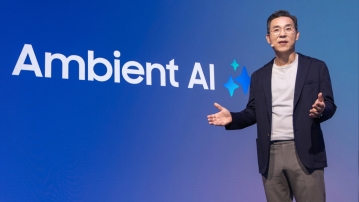
Samsung Electronics aims to distribute 1 billion ambient-based AI home appliances within three years.
Samsung Electronics unveiled its "AI Home" vision and innovative products at the IFA 2025 press conference held at City Cube Berlin in Berlin, Germany, Europe's largest consumer electronics trade show, and announced plans to distribute ambient-based AI devices to one billion units within three years.
2025.09.05by 명세환 기자
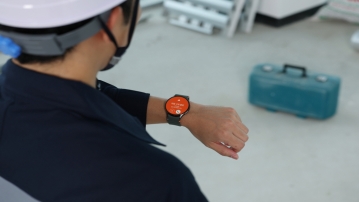
Samsung Electronics Launches Full-Scale Industrial Safety Management Based on the Galaxy Watch
Samsung Electronics is launching "SmartThings Pro for Safety," a B2B exclusive smart safety management solution utilizing the Galaxy Watch LTE model, on September 30th, focusing on real-time safety monitoring and improved work efficiency for industrial field workers.
2025.09.30by 명세환 기자
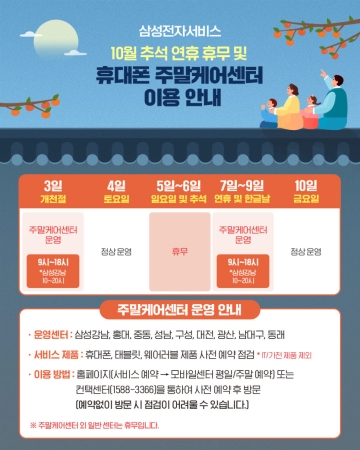
Samsung Electronics Service to Offer Emergency Repair Services for Five Days During the Chuseok Holiday
Samsung Electronics Service will provide repair services for smartphones and home appliances during the Chuseok holiday period for customer convenience. From October 3rd (National Foundation Day) through October 9th (Hangeul Day), a total of 5 days, the company will operate 169 service centers nationwide and 9 weekend care centers, offering emergency repair services through advance reservations. For home appliances such as refrigerators, on-site service is also available, and self-diagnosis and consultation are possible through the homepage and contact center.
2025.10.02by 명세환 기자











