



[Serial Project] Physical AI: Redefining the Future of Industry ③, "Physical AI Sensors: A Key to Physical AI Competitiveness"
 Published2025.11.11 08:48
Sensor technology is directly linked to national competitiveness, and expanding investment in advancing domestic production is essential.
[Editor's Note] While conventional AI focuses on inference and generation within digital data, Physical AI directly acts and reacts in the real world through sensors, edge computing, robots, and control systems. The implementation of Physical AI can significantly advance industrial innovation and automation because it directly acts and solves problems in the real world, and it directly interacts with the real world. Accordingly, global companies such as Nvidia, Tesla, and Google are making massive investments in Physical AI, and the related market is expected to grow explosively. To implement this Physical AI, recognition technologies such as sensors, as well as edge computing and embedded systems for real-time data processing, local computing, robotics, and control technologies are essential. Accordingly, e4ds News has prepared a series of articles to examine the core technologies and implementation strategies of physical AI, including the concept, market outlook, related technologies, and actual cases.
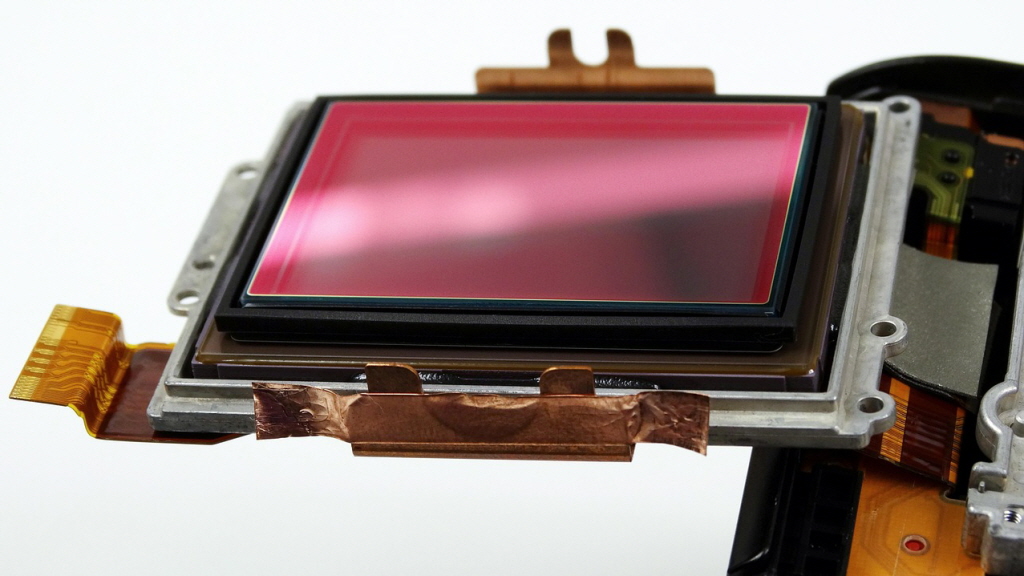
▲Sensors are the core starting point of physical AI. (Photo: pixabay.com)
The era of 'physical AI' is coming, where artificial intelligence (AI) moves and interacts directly in the real world, moving beyond the digital realm where it generates text and images.
As various forms of physical AI, such as self-driving cars, drones, and humanoid robots, spread across industrial settings and daily life, sensors are attracting attention as a core technology.
Sensors are 'sensory organs' that allow physical AI to perceive and react to the external world, just like the five senses of humans.
■ Technology expanded from the five senses
Sensors used in physical AI are broadly categorized into visual, auditory, tactile, position/motion, and environmental sensors.
Representative visual sensors include cameras, LiDAR, radar, and infrared sensors.
Cameras are used for lane recognition and object detection, lidar for 3D map creation and distance measurement, and radar for speed detection.
Acoustic sensors include microphones and ultrasonic sensors.
It is essential for voice recognition, sound direction tracking, and close-range obstacle avoidance.
Tactile sensors detect pressure, vibration,Force sensors applied to robotic hands or skin enable delicate object manipulation and safe human-robot interaction.
Position and motion sensors, such as IMU (accelerometer/gyroscope), GPS, and magnetic sensors, are used to maintain the balance and track the path of drones and robots.
Environmental sensors include temperature, humidity, gas, and light sensors to detect environmental changes in industrial sites or living spaces.
■ A bridge connecting the real world and AI
Sensors are not simply devices that collect data; they are the starting point for physical AI to achieve autonomy and adaptability.
From an environmental awareness perspective, external stimuli are converted into electrical signals so that AI can process them.
Additionally, collision avoidance in autonomous vehicles, altitude maintenance in drones, and balance control in robots require that sensor input be reflected immediately.
Additionally, sensor data serves as raw material for AI learning, enabling environmental adaptation and self-improvement.
In addition, it combines multiple sensor data to perform more accurate recognition and judgment. For example, self-driving cars use cameras, lidar, radar, and GPS simultaneously to comprehensively understand road conditions.
Looking at the sensor combinations for each case, autonomous vehicles perform road recognition and collision avoidance by combining cameras, lidar, radar, GPS, and ultrasonic sensors.
Drones use IMU, GPS, vision sensors, and ultrasonic sensors to ensure flight stability and route tracking.
Humanoid robots can maintain balance, manipulate objects, and interact with humans using IMUs, RGB-D cameras, force-torque sensors, tactile sensors, and microphones.
■ The competitiveness of physical AI
Reports and experts commonly define sensors as a core infrastructure for physical AI.
Without sensors, AI would be disconnected from the real world.
In particular, advances in sensor fusion and intelligent sensors are laying the foundation for physical AI to go beyond simple automation and enable it to collaborate with humans and act autonomously in complex environments.
Furthermore, sensor technology is directly linked to national competitiveness. In the autonomous vehicle and robotics industries, the domestic production and advancement of sensors are considered essential tasks, and major countries are designating them as strategic technologies and expanding R&D and investment.
■ Sensor advancements will lead to the evolution of physical AI.
The era of physical AI goes beyond mere "moving AI" to encompass intelligent systems that organically interact with the real world. At its core are sensors that replace the human five senses. The advancement of sensors will soon lead to the evolution of physical AI and will become a driving force for innovation across industry and society.

Comments
Related news
“Korea’s Key Technology Self-Reliance through Large-Scale Investment in Physical AI Is Essential”
Lee Hae-su, Senior Researcher at the AI Policy Research Division of the Software Policy Research Institute, presented on "Physical AI Development Trends and Related Policy Implications" at the '2025 Embedded AI Trend Forum' held on the 16th at the Grand Hall of Korea Conference Center, hosted by the Embedded Software and System Industry Association (Chairman Lee Chang-yeol, hereinafter KESSIA). He stated that Physical AI is a next-generation technology that will determine industrial competitiveness and national security, and that proactive measures are urgently needed.
2025.07.21by 명세환 기자

“On-device AI requires a lightweight AI model, system software stack, and AI hardware.”
Kwon Jin-se, a researcher at the On-Device AI Research Division of the Electronics and Telecommunications Research Institute (ETRI), presented "On-Device AI Optimization Technology as Seen Through the Case of Quadruped Robot Guide Dog" at the "2025 Embedded AI Trend Forum" held on the 16th at the Korea Conference Center Grand Hall, hosted by the Embedded Software and System Industry Association (Chairman Lee Chang-yeol, hereinafter KESSIA), and discussed practical cases of Physical AI technology that fuses robotics with on-device AI technology.
2025.07.21by 배종인 기자
[2025 e4ds Tech Day] "The Era of Physical AI: New Opportunities for the Semiconductor Industry"
"Physical AI and on-device AI have now become essential technologies rather than optional ones, and semiconductor development for these will determine competitiveness across the entire industry." Choi Hong-seob, CEO of Maum AI, presented on 'On-Device AI Technologies and Strategies in the Physical AI Era' at the '2025 e4ds Tech Day' event held on September 9th, delivering an in-depth presentation on the definition and market outlook of Physical AI as well as the importance of on-device AI semiconductors.
2025.10.20by 배종인 기자
[Serial Project] Physical AI: Redefining the Future of Industry ①, "The Success of Physical AI Depends on the Design of Interactions Between Humans and Intelligent Machines."
While conventional AI has focused on inference and generation within digital data, Physical AI acts and responds directly in the real world through sensors, edge computing, robots, and control systems. The implementation of Physical AI can significantly advance industrial innovation and automation since AI directly acts and solves problems in the real world, interacting directly with the physical environment. Accordingly, global companies including NVIDIA, Tesla, and Google are making massive investments in Physical AI, and the related market is expected to grow explosively. To implement such Physical AI, perception technologies including sensors, edge computing and embedded systems for local computing to process real-time data, as well as robotics and control technologies are essential. In response, e4ds news has prepared a series of articles to examine core technologies and implementation strategies ranging from the concept of Physical AI to market outlook, related technologies, and practical cases.
2025.10.20by 배종인 기자
.jpg)
[Serial Feature] Physical AI: Redefining the Future of Industry ②, "The 'Physical AI Market' Will Become a $1 Trillion Ecosystem by 2030."
According to some experts, 'Physical AI' is projected to become the greatest revolution in human history, surpassing the Industrial Revolution. While it will have significant impacts on society, culture, and economy, since we cannot predict the entirety of these effects, from an economic perspective, citing forecasts from global market research institutions, Physical AI is expected to establish itself as a key driving force that will reshape industrial structures, with the market reaching approximately one trillion dollars by 2030. Below is an examination of the Physical AI market size by industrial sector.
2025.10.27by 명세환 기자











