


Universal Robots Opens the Future with Automation and Robotics Innovation
 Published2025.11.19 14:19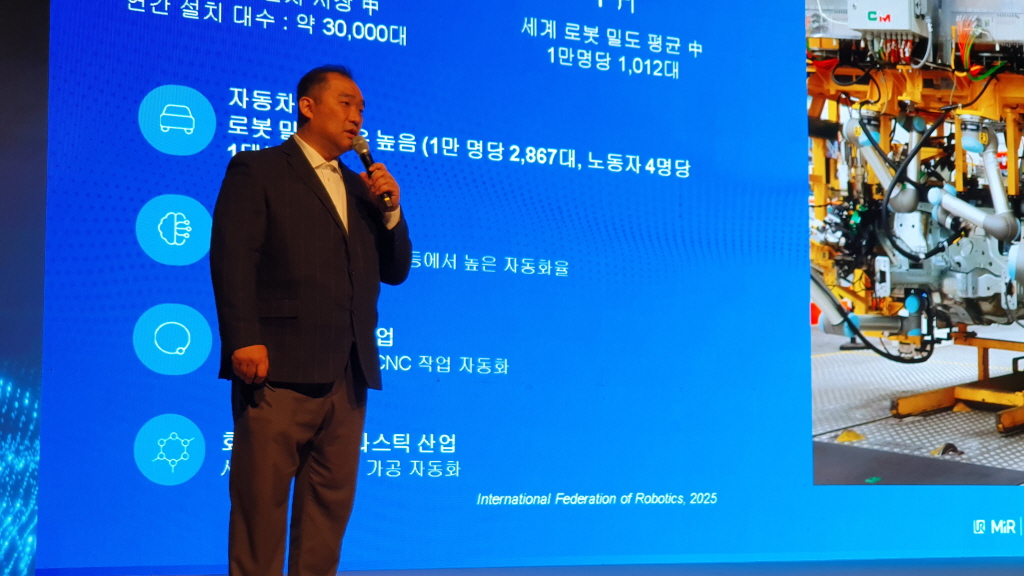
▲이주연 텔레다인 로보틱스(TERADYNE Robotics) 대표이사가 ‘한국 제조업의 미래와 자동화’를 주제로 발표하고 있다.
“AI·로봇 결합 안전하고 효율적인 협업 환경 만드는 데 필수”

“한국 제조업체들이 자동화를 통해 성공할 수 있도록 글로벌 생태계와 함께 협력하겠다”
이주연 텔레다인 로보틱스(TERADYNE Robotics) 대표이사는 18일 GS 타워에서 개최된 ‘Collaborate Powered by Universial Robots’(Collaborate Korea 2025) 세미나에서 ‘한국 제조업의 미래와 자동화’를 주제로 발표하며, 한국 제조업의 미래가 자동화와 로봇 기술을 중심으로 빠르게 재편되고 있다고 밝혔다.
텔레다인 로보틱스는 유니버설 로봇과 MiR의 합병회사이며, 유니버설 로봇의 브랜드는 지속 유지된다.
이주연 대표이사는 “고령화, 인건비 상승, 숙련 인력 부족이라는 구조적 문제를 해결하기 위해 자동화는 더 이상 선택이 아닌 필수”라고 강조했다.
현재 한국은 세계에서 가장 높은 로봇 밀도를 기록하고 있으며, 연간 설치 대수 기준으로도 글로벌 상위권에 올라 있다.
2025년에는 전 세계적으로 약 57만5,000대의 로봇이 설치될 것으로 예상되며, 2028년에는 70만대에 이를 전망이다.
한국은 반도체, 금속, 화학, 플라스틱 산업 등 주요 제조업 분야에서 자동화를 선도하며 글로벌 경쟁력을 강화하고 있다.
정부 역시 적극적인 지원에 나서고 있다. 2030년까지 100만대의 로봇을 보급하고, 1만5,000명 이상의 전문 인력을 양성한다는 목표를 세웠다.
돌봄, 의료, 물류 등 다양한 분야에서 실증형 프로젝트가 진행 중이며, 스마트 제조 혁신 지원을 통해 자동화 설비와 로봇 도입 비용을 줄이는 정책도 추진되고 있다.
산업계에서는 협동 로봇(Cobot)과 자율주행 로봇(AMR)의 활용이 확대되고 있다.
유니버셜 로봇은 창립 20주년을 맞아 글로벌 시장 점유율 30%를 기록하며, 60개국 1,200개 이상의 파트너사와 협력하고 있다.
유니버설 로봇은 단순히 로봇을 공급하는 데 그치지 않고, 고객 맞춤형 애플리케이션을 제공하며 생태계 구축에 힘쓰고 있다.
특히 한국 기업들도 다수 참여하고 있다. 국내 주요 대기업들이 이미 유니버설 로봇의 로봇을 활용 중이다.
이주연 대표는 “한국 제조업체들이 자동화를 통해 성공할 수 있도록 글로벌 생태계와 함께 협력하겠다”고 밝혔다.
한편 유니버설 로봇 20주년 ‘Collaborate Powered by Universial Robots’(Collaborate Korea 2025)는 단순한 기술 소개를 넘어, 한국 제조업이 글로벌 경쟁 속에서 어떤 전략을 취해야 하는지 보여주는 자리였다.
이번 행사는 인도, 대만, 태국을 거쳐 아시아 네 번째 순회지로 한국을 선택하며, 제조업과 로봇 산업 관계자들의 뜨거운 관심을 모았다.
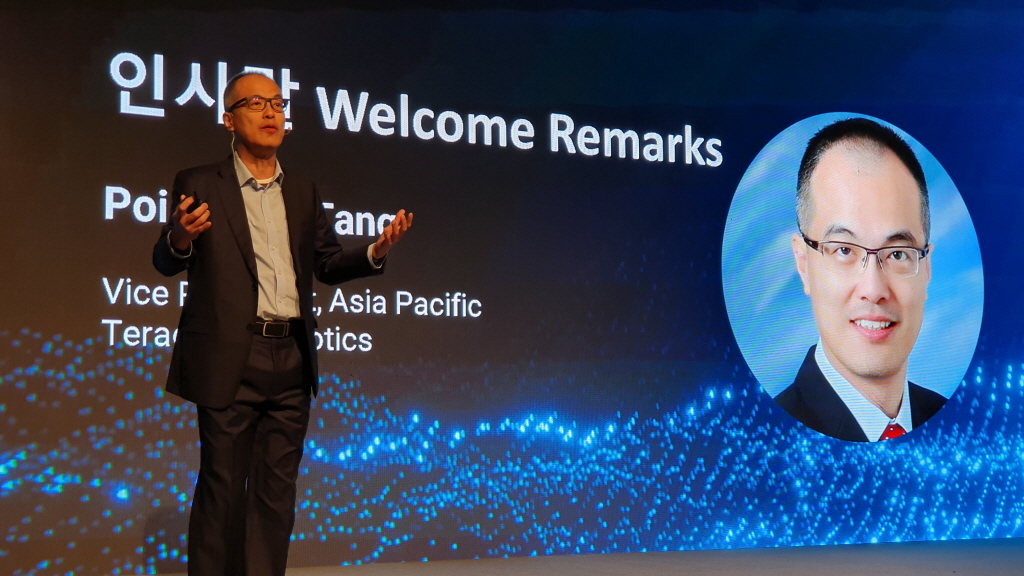
▲푸이통(Poi Toong) 텔레다인 로보틱스 아시아 퍼시픽 세일즈 부사장이 인사말을 하고 있다.
행사 개막 연설에서 푸이통(Poi Toong) 텔레다인 로보틱스 아시아 퍼시픽 세일즈 부사장은 “오늘 이 자리가 단순히 기술을 소개하는 자리가 아니라, 산업의 미래를 함께 모색하는 장”이라며 참석자들에게 영감을 주고 새로운 해결책을 찾는 계기가 되기를 바란다고 강조했다.
주요 발표에서는 △AI 기반 로봇 △차세대 소프트웨어 △맞춤형 생산 시스템 등이 소개됐다.
단순한 생산성 향상을 넘어, 고령화 사회에서 발생하는 인력난과 높은 이직률 문제를 해결하는 데 자동화가 기여할 수 있다는 점이 강조됐다.
또한 소비자 맞춤형 제품 수요가 급증하는 현실 속에서, ‘고혼합·저량 생산’ 체제에 적합한 첨단 로봇 솔루션이 필요하다는 메시지가 전달됐다.
이번 컨퍼런스의 또 다른 핵심은 ‘물리적 AI’였다.
이는 단순한 디지털 AI가 아닌, 실제 생산 현장에서 로봇이 지능적으로 환경을 인식하고 대응하는 기술을 의미한다.
예컨대 물류창고에서의 픽앤플레이스 작업이나 복잡한 제조 공정에서의 변수 대응을 통해 생산 속도와 효율성을 동시에 높일 수 있다는 것이다.
유니버설 로봇 관계자는 “AI와 로봇의 결합은 단순히 기계와 인간의 공존을 넘어, 안전하고 효율적인 협업 환경을 만드는 데 필수적”이라고 설명했다.
행사에서는 데이터 활용과 네트워크 협업의 중요성도 강조됐다. 방대한 산업 데이터를 어떻게 정보로 전환하고, 이를 기반으로 신속하고 정확한 의사결정을 내릴 수 있는지가 미래 경쟁력의 관건이라는 것이다. 이는 단순히 기업 내부의 문제를 넘어, 글로벌 공급망과 산업 생태계 전반에 영향을 미치는 요소로 지목됐다.
참석자들은 이번 행사를 통해 기술적 영감을 얻는 동시에, 업계 간 교류와 협력의 필요성을 다시금 확인했다.
유니버설 로봇 관계자는 “산업의 미래는 혼자가 아닌 함께 만들어가는 것”이라며, 기계와 인간, 기업과 기업 간의 협업이야말로 새로운 시대의 경쟁력이라고 강조했다.
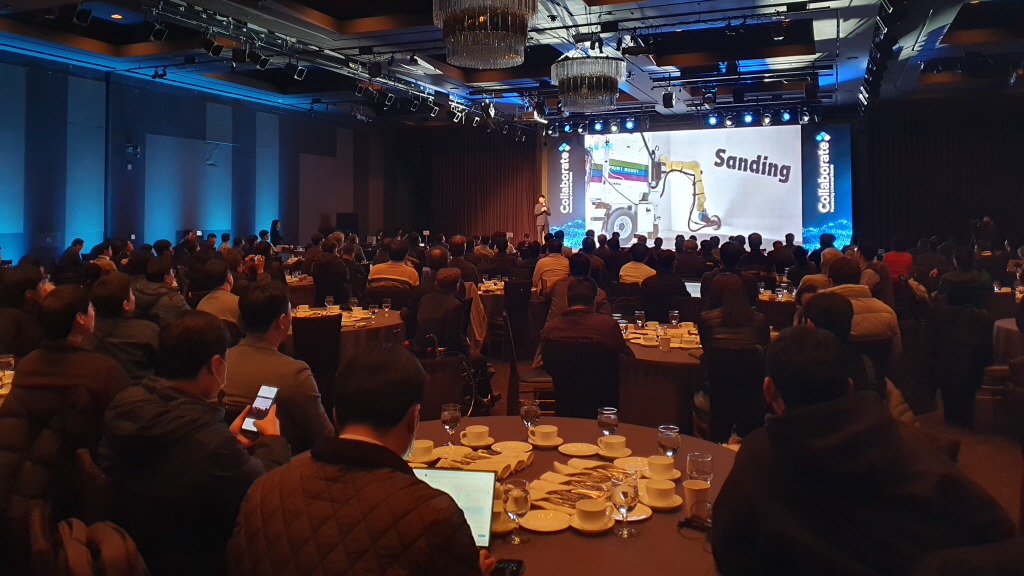
▲유니버설 로봇 20주년 ‘Collaborate Powered by Universial Robots’(Collaborate Korea 2025) 행사 전경

Comments
Related news
[Weekly Awards] Universal Robots / MicroStrategy
[Second week of September 2018 Awards News] Universal Robots received the Manufacturer of the Year award at the 14th Manufacturing Leadership Awards on the 10th. On the same day, MicroStrategy was selected as a Technology Leader for the '2018 Business Intelligence Awards' in the '2018 Business Intelligence Market Research Report' conducted by Dresner Advisory Services.
2018.09.14by 이수민 기자
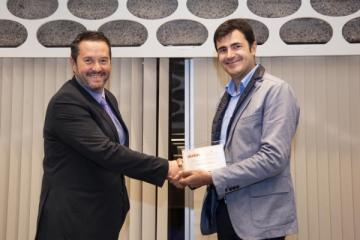
Universal Robots, which improved automobile production processes, wins the 2018 Technology Innovation Award in Spain
Universal Robots received the 2018 AutoRevista Technology Innovation Award from AutoRevista, a leading Spanish automotive industry specialist publication, in recognition of its contributions to the automotive sector. This award is presented annually by AutoRevista to individuals or companies that have made significant contributions to the automation industry. An AutoRevista representative explained the award rationale, noting that Universal Robots' collaborative robots have significantly improved the efficiency of specific production processes within the automotive industry.
2018.12.18by 이수민 기자
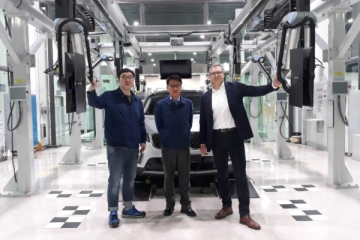
Universal Robots will expand its collaboration with companies ranging from large corporations to small and medium-sized enterprises (SMEs) in 2019.
Jørgen von Hollen, President of Universal Robots, visited Hyundai Motor Company's Uiwang Research Institute during his stay in Korea. Hollen's visit was made to tour Hyundai Motor Company's electrical system concentrated inspection system and hold meetings with relevant personnel. During the meeting that day, both companies agreed to strengthen their close cooperation going forward and jointly develop flexible automation systems. President Hollen visited KCC Jeongkong and stated, "Universal Robots' collaborative robots can be widely utilized not only by large enterprises but also by small and medium-sized enterprises engaged in low-volume, high-mix production."
2019.02.21by 이수민 기자
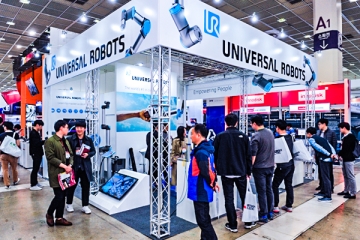
Universal Robots to Participate in Smart Factory + Automation World 2019, Showcasing the e-Series
Universal Robots is participating in Smart Factory + Automation World 2019, the nation's largest industrial automation and smart factory specialized exhibition. Universal Robots will conduct a showcase of its e-Series collaborative robots, which were launched last year. Universal Robots is focusing on strengthening communication with domestic customers this year. Beginning on the 7th of this month in Seoul, the company is conducting a nationwide tour of collaborative robot seminars. Additionally, through participation in this event, which is the company's first major exhibition of 2019, Universal Robots is actively strengthening contact points with industry professionals and buyers while introducing innovative automation technology.
2019.03.23by 이수민 기자
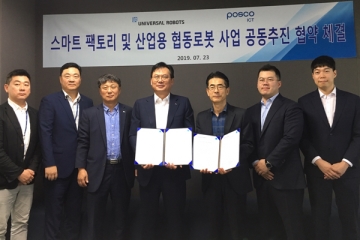
Universal Robots and POSCO ICT Form Joint Front for Industrial Collaborative Robots to "Preempt the Smart Factory Market"
Universal Robots and POSCO ICT have concluded a joint cooperation agreement to advance smart factory and industrial collaborative robot business. POSCO ICT provides IRaaS, a robot-integrated O&M operation solution, while Universal Robots supplies collaborative robots for IRaaS. The two companies agreed to jointly cooperate on marketing and distribution utilizing Universal Robots' domestic distributor network. Universal Robots will work with distributors to support IRaaS solution marketing and sales, as well as supply and deployment of collaborative robots and applications. POSCO ICT will provide consulting and engineering services for collaborative robot business, and development, supply, and deployment of robot-integrated O&M solutions and IT solutions. Universal Robots' collaborative robots are planned to be gradually expanded and applied across POSCO Group companies in the future.
2019.08.08by 이수민 기자











