


The Korea Electrotechnology Research Institute (KERI) is strengthening joint research in the carbon-neutral era.
 Published2025.11.27 11:30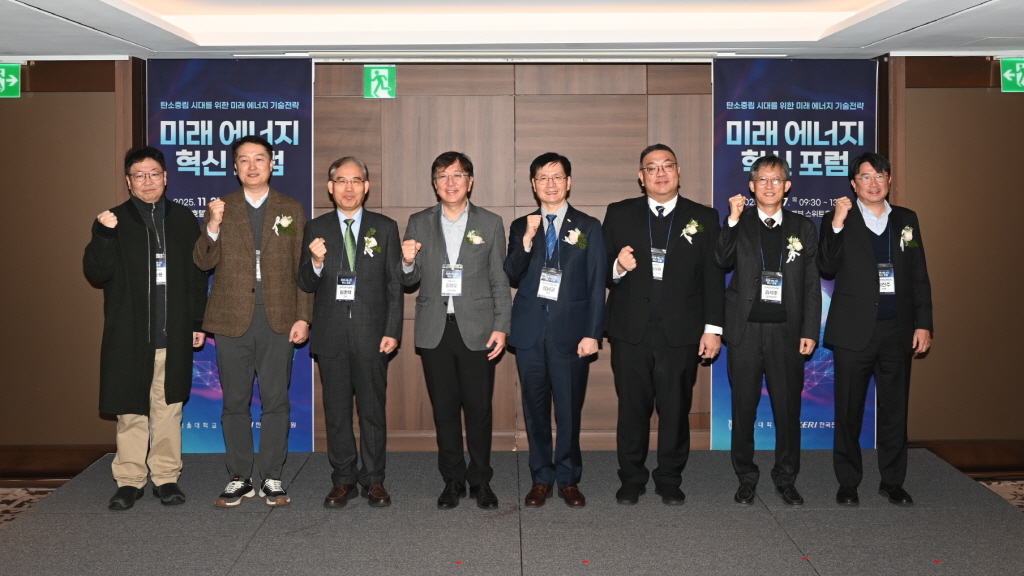
The Korea Electrotechnology Research Institute (KERI) has strengthened its carbon-neutral response strategy and joint research collaboration in the rapidly changing energy environment.
On the 27th, the Korea Electric Power Research Institute held the 'Future Energy Innovation Forum' with Seoul National University at the Lotte Hotel in Sogong-dong, Seoul.
This forum was established as a venue for academic-research cooperation to proactively respond to changes in the national energy environment, such as increased electricity demand due to the spread of AI, expansion of renewable energy, and the transition to carbon neutrality.
Seoul National University launched the "Energy Initiative" to systematically address lifecycle issues ranging from energy production to storage, conversion, and utilization. Through its collaboration with KERI, Seoul National University is pursuing various activities, including joint research, technology exchange, and talent development.
As part of this collaborative effort, this forum aimed to comprehensively examine the entire industry and policy landscape and share core technologies under the theme of "Future Energy Technology Strategy in the Carbon Neutral Era."
The event began with opening remarks and welcome speeches by KERI Director Nam-Kyun Kim and Seoul National University Dean of Engineering Young-Oh Kim.
Next, a keynote lecture was given by Professor Lim Chun-taek of the Gwangju Institute of Science and Technology (GIST).
Professor Lim's topic was 'Carbon Neutrality Era, Future Energy Policy Direction'.He emphasized that “now that the climate crisis has become a reality, a structural transformation of the entire energy system, including expansion of renewable energy, expansion of the power grid, and improvement of energy efficiency, is essential to achieve carbon neutrality.”
At the Seoul National University session, Kim Seong-jae, head of the Energy Initiative Promotion Team, explained the background and key directions of the initiative and presented the university's strategic system to respond to changes in the future energy supply chain.
Next, Professor Seungyong Han of the Department of Electrical and Computer Engineering presented the 'KERI-Seoul National University Energy Initiative Cooperation Plan' and mentioned the need to establish a sustainable cooperation structure that links the capabilities of both institutions, expand joint research, and strengthen talent development.
At the KERI session, Lee Sang-ho, head of the Power Grid Research Center, presented on the topic of ‘Next-generation power technology driving innovation in the future energy industry.’
He emphasized the importance of grid innovation for stable power supply, saying, “In the new grid environment where renewable energy and HVDC-based facilities are rapidly increasing, AI-based grid analysis and control and the establishment of a next-generation power grid operation system are essential.”
In the final panel discussion, various opinions were exchanged on the topic of 'Implementation tasks and response directions for future energy technology strategies in the carbon neutral era.'
KERI Research Director Kim Seok-ju, who chaired the forum, said, “To achieve carbon neutrality, we must go beyond individual technologies and transform policies and industrial structures. To achieve this, cooperation among industry, academia, and research institutions, as well as enhanced implementation capabilities, are essential.”
KERI President Kim Nam-gyun said, “It was a meaningful event where professors and researchers representing the electricity and energy fields gathered to share industry issues and discuss policy and technological directions.” “The forum not only served as an opportunity to advance cooperation between the two organizations to the next level, but also served as a time to confirm the common ground and will to cooperate to lead the future energy sector,” he said.
Comments
Related news
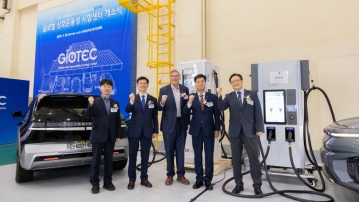
KERI Opens World's First 'GiOTEC', Establishing a Platform to Address Electric Vehicle Charging Errors
The Korea Electrical Research Institute (KERI) has established the world's first Global interOperability Testing Center (GiOTEC), creating a platform to resolve compatibility issues between electric vehicles and chargers in real-time and strengthen the global competitiveness of related industries.
2025.09.26by 배종인 기자
.jpg)
[2025 e4ds Tech Day] "SiC Market to Grow Dozens-Fold by 2034, Requires Stabilization of Supply Chain and Domestic Mass Production Infrastructure."
Kim Hyung-woo, Director of the Next-Generation Semiconductor Research Center at Korea Electrotechnology Research Institute (KERI), presented on "Domestic and International Technology and Market Trends for SiC-Based Power Semiconductors" at the '2025 e4ds Tech Day' event held on September 9th. According to Director Kim Hyung-woo, silicon carbide (SiC) is establishing itself as a key material in the high-voltage, high-temperature, and high-reliability power electronics field due to its wide bandgap and excellent thermal conductivity.
2025.09.26by 배종인 기자
.jpg)
AI detects mild cognitive impairment, a pre-dementia stage, with 85% accuracy.
The research team of Dr. Park Young-jin at the Auditory and Cognitive Brain Function Diagnosis Research Group of the Korea Electrotechnology Research Institute (KERI) has successfully completed demonstration tests targeting the elderly using wearable devices and AI speech and EEG analysis technology, and has filed patent applications both domestically and internationally.
2025.09.29by 배종인 기자
.jpg)
Detecting biometric information through skin contact alone… A new era in early diagnosis of pressure ulcers.
A joint research team from the Korea Electrotechnology Research Institute (KERI), Korea Chemical Research Institute, and Changwon National University has developed a "multifunctional wireless biosensor platform" based on copper sulfide (CuS). The newly developed sensor platform can wirelessly detect various biological gases such as pressure, temperature, and ammonia simply by attaching it to the skin, and is expected to be highly beneficial for early diagnosis of pressure ulcers.
2025.10.13by 명세환 기자
.jpg)
KERI Pledges Future Leap on 49th Anniversary… Proclaims Vision “Making the World a Better Place with Electricity”
The Korea Electrotechnology Research Institute (KERI) has presented a vision of "Benefiting the World through Electricity" as it marks its 49th anniversary.
2025.11.03by 명세환 기자











