


Professor Lee Jun-seok of the Department of Electrical and Electronic Engineering at Dankook University's College of Engineering stated, "Dankook University and ST's industry-academia collaboration opens new horizons for nurturing future electronics engineering talent."
 Published2025.12.08 11:37
Experience using STM series MCUs will help you in your future job search.
[Editor's Note] Dankook University's Department of Electrical and Electronic Engineering fosters talent in diverse industries, including semiconductors, AI, and robotics, through creative and practical education and innovative research. Recently, the department signed an industry-academic cooperation MOU with STMicroelectronics (ST), strengthening collaboration with global companies and providing students with first-hand experience with cutting-edge technologies and industrial applications. In particular, hands-on sessions on SiC and IGBT modules and STM32CubeMX greatly contributed to improving students' practical skills, and the STEM your way program demonstrated differentiated value by incorporating the latest technologies utilized in industrial settings into education. With industry-academia cooperation expected to continue to develop through regular technical training, internships, and the establishment of joint research labs, we interviewed Professor Lee Jun-seok of the Department of Electrical and Electronic Engineering at Dankook University's College of Engineering to learn about the meaning of industry-academia cooperation and his expectations for the future.
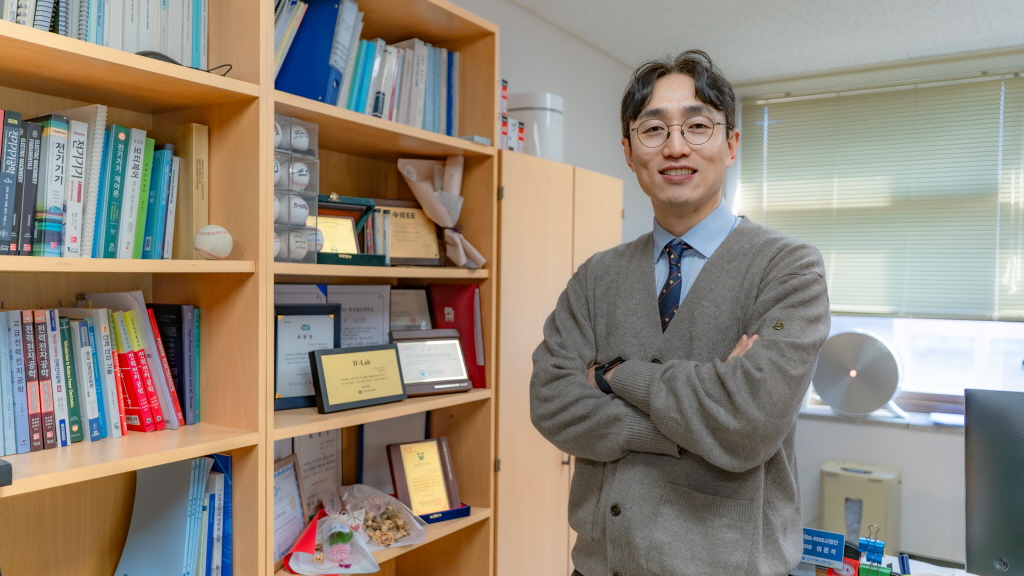
▲Lee Jun-seok, Professor of Electrical and Electronic Engineering, College of Engineering, Dankook University
■ Please introduce the Department of Electronic and Electrical Engineering at Dankook University.
The Department of Electrical and Electronic Engineering at Dankook University aims to cultivate leaders in the field of electrical and electronic engineering through creative and practical education and innovative research.
In the process, talents with specialized knowledge and field adaptability in the field of electrical and electronic engineering are advancing into various industries such as energy, communications, semiconductors, automobiles, artificial intelligence (AI), and robotics.
Our department is comprised of faculty members conducting excellent research in the fields of computers, communications, control, and power.
■ This time, we signed an MOU for industry-academia cooperation with ST. Background and opportunity for signing the MOU
The Gyeonggi Province Regional Innovation Centered University Support System (RISE) project aims to foster global connections between universities.
We introduce students to global companies and technologies, and provide professors with opportunities to conduct world-class research through collaboration with global companies.
ST is a leading global integrated semiconductor company with diverse technologies in a wide range of fields. We decided to pursue the MOU because we believed it was the optimal company for collaboration in the semiconductor and AI fields, which have recently been attracting global attention.
■ ST's field engineers directly participated in AI sessions, graphic sessions, SiC+IGBT & Module sessions, STM32CubeMX hands-on sessions, etc. Among the technical contents, is there any part that you found particularly impressive or that you think is important for students?
I focused the most on the SiC+IGBT & Module session because it covered topics I was curious about.
It now seems that SiC devices have virtually replaced Si devices in the low-voltage field.
As it is being mass-produced, the price will likely drop further in the future, but I wonder to what extent it will be competitive.
From the students' perspective, I think the STM32CubeMX hands-on session that includes practical training is the most important because they need to develop practical skills.
This was probably the most interesting part of my participation, and the experience of using STM series MCUs will be very helpful for my future job search.
■ What is the difference between ST’s STEM your way and other corporate invitation seminars or industry-academia cooperation programs? I'm curious to know what differentiated value you think it provides, especially considering that it covers real-world industrial applications such as Industrial, Consumer, and Automotive, as well as cutting-edge technologies like STM32 and SiC.
In today's world where technological advancements are so rapid, it is very important to know what specific, cutting-edge technologies are being applied in actual industrial settings.
I believe STEM your way has great value in itself, as it provides a solid program for university education within a global company that leads the way in cutting-edge technology.
I hope that STEM your way will continue to expand in the future.
Moreover, I think it will be interesting to see that non-memory semiconductor solutions, including those from ST, are being applied to products that we encounter in our daily lives, such as home appliances and electric vehicles.
■ ST is a global integrated device manufacturer (IDM) with a wide technology portfolio ranging from microcontrollers to power semiconductors. I'm curious about the current status of the ST technologies covered in today's session in the industry, and why they are important to students.
Semiconductors, AI, and graphics, all covered in today's session, are core technologies that are attracting global attention.
Schools teach the principles of a technology in detail, but they are limited in teaching how it is always applied in industry.
I think this was a very meaningful time because it introduced students to the detailed use of technology based on various field cases.
Additionally, I think it will be an interesting point for participating students to be able to see with their own eyes the operation of SiC and IGBT module chips, which they had only learned about in theory, through a demo board prepared by ST.
From your perspective, what specific educational benefits do you anticipate from this "STEM your way" program and your collaboration with ST? What impact do you anticipate this industry-academia collaboration will have on domestic engineering education and the development of STEM talent?
It would be great if this was an opportunity for students to clearly see how the knowledge they learned in college can be applied in the industrial field.
I also hope that through this experience, students will be able to feel more strongly about the need for a university education.
Today's companies want talents with not only basic knowledge of their major but also practical skills.
I believe that educational programs based on the use of cutting-edge technologies, such as STEM your way, have a very positive impact on increasing students' practical experience.
■ Starting with today’s MOU signing, how do you expect your cooperation with ST to develop in the future? If you have any future cooperation plans or requests for ST, such as regular technical training, joint research projects, or internship programs,
I hope that this type of program will become a regular educational program rather than a one-time event.
If excellent students discovered through this program could be linked to an internship program, even more systematic cooperation would be possible.
Furthermore, we hope to cooperate in research by establishing a joint research lab with Dankook University in a related field.

Comments
Related news
.jpg)
ST leads the way in fostering future talent in semiconductor, electrical, and electronics industries.
Global semiconductor company STMicroelectronics (hereinafter ST) has signed a memorandum of understanding with Dankook University for the promotion of the Gyeonggi Province RISE (Regional Innovation System & Ecosystem) project, formally beginning its participation in establishing industry-academia collaboration and research and development systems in the semiconductor field.
2025.12.08by 배종인 기자
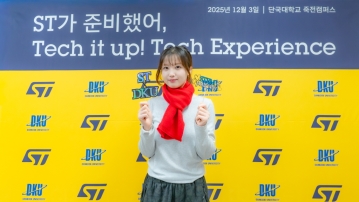
Park So-hee, a student in the Department of Electrical and Electronic Engineering at Dankook University's College of Engineering, said, "'STEM your way' is nurturing my dream as an STM32-based embedded developer."
Global semiconductor company STMicroelectronics (hereinafter ST) conducted the STEM your way program at Dankook University's Jukjeon Campus on the 3rd. The participating students directly examined SiC power semiconductors and IGBT modules, and gained significant outcomes by conducting hands-on training on STM32-based embedded development with field engineers. In particular, they were able to systematically understand the operating principles of MCUs and the hardware sequence configuration process from start to finish, and the engineers' sharing of their experience in actual product development enhanced confidence in the hands-on training. Additionally, the fact that global semiconductor company ST actively supports the development of female engineers had a positive impact on career path selection. Accordingly, we met with Park So-hee, a student from the Department of Electronics and Electrical Engineering at Dankook University's College of Engineering who participated in this event, to hear about her impressions of participating in the STEM your way program.
2025.12.08by 명세환 기자
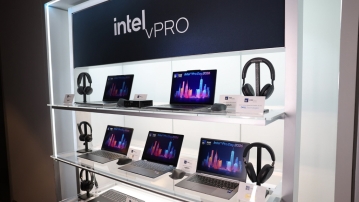
Intel Unveils Next-Generation 'Core Ultra Series 3' and vPro Platform for Enterprise PCs
Intel has officially unveiled the "Intel Core Ultra Series 3" for next-generation enterprise PCs and the latest vPro platform, addressing a wide range of demands from enterprise notebooks to high-performance workstations.
2026.03.26by 배종인 기자
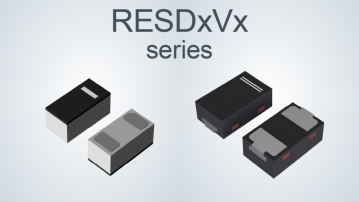
ROHM Launches ESD Protection Diode Compatible with High-Speed Interfaces of 10Gbps or Higher
Semiconductor specialist ROHM has developed the 'RESDxVx series' of ESD (electrostatic discharge) protection diodes capable of responding to next-generation high-speed data communication environments exceeding 10Gbps, simultaneously enhancing both signal quality maintenance required in high-speed interfaces and IC protection performance.
2026.03.26by 배종인 기자
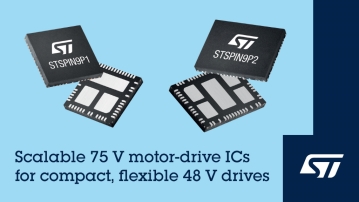
ST Launches 75V Drive IC Targeting 48V Industrial Motor Driving
ST Microelectronics has unveiled the 'STSPIN9P' series of 75V motor drive ICs tailored for 48V-class industrial drive system design. The new product family is characterized by half-bridge and full-bridge configurations that enable design scalability according to motor type and output conditions. Power supply circuits, protection functions, and current sensing circuits are integrated on-chip to simplify system configuration, and the devices are designed to support applications up to 500W maximum. The company plans to provide reference designs and demo boards to support development and evaluation in industrial automation, robotics, pumps, fans, lighting, and textile machinery.
2026.03.26by 배종인 기자











