



This page was machine-translated and may differ from the original. View original
Mouser: "Hydrogen Fuel Cells Hold the Key to Overcoming eVTOL Limitations"
 Published2025.12.17 09:08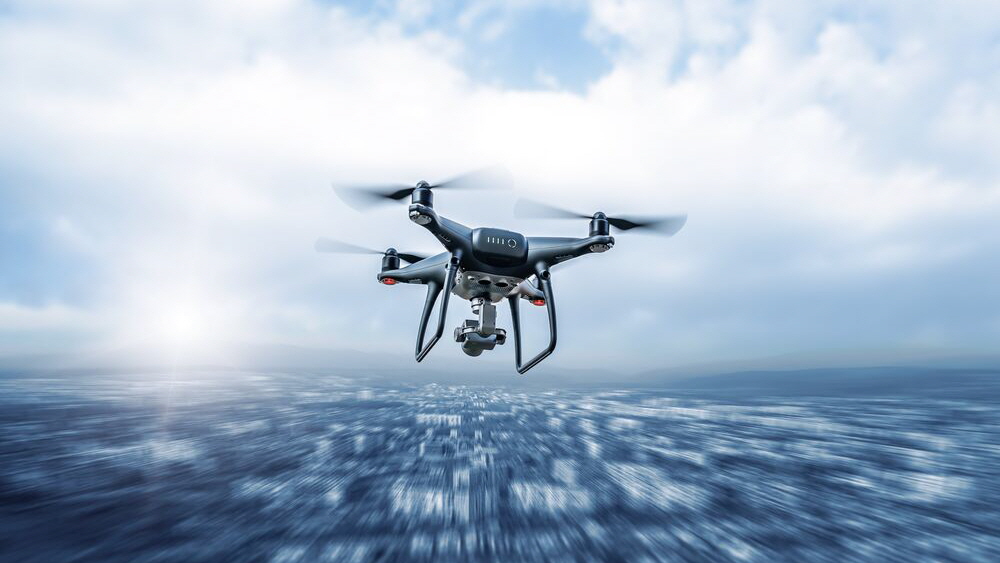
High energy density, fast charging, stability, and zero emissions
Key solutions emerging to realize urban air mobility
Key solutions emerging to realize urban air mobility
Future cities have always featured cutting-edge urban air transport accessible to ordinary citizens.
With small drones already in everyday use, this future is drawing near.
The proliferation of electric vertical takeoff and landing (eVTOL) aircraft raises expectations of easing congestion, shortening commute times, improving accessibility, and increasing sustainability.
But many people wonder why this future has not yet been realized.
Beyond the delivery drone phase, when will the era of air taxis, which carry people for long periods of time between cities and regions, arrive?
Dr. Anita Sengupta, CEO of Hydroplane, which is developing a hydrogen fuel cell-based aircraft power system, says the answer to that question lies in four key challenges:
These include power density limitations, competition with existing aviation technologies, high reliability required for autonomous flight, and sustainability issues associated with the use of internal combustion engines.
■ Task 1: Power Density
Vertical takeoff and landing (VTOL) technology has been around for decades, with helicopters and aircraft like the Bell-Boeing V-22 Osprey.
However, most of these aircraft are powered by internal combustion engines.It has been there.
Power density is the first challenge VTOL manufacturers face as they move toward electric propulsion and battery-based designs to reduce air and noise pollution.
That means eVTOLs face the challenge of needing to power their lightweight batteries sufficiently to enable near-continuous flight between cities and regional airspace.
“In aviation, weight is everything,” Dr. Sengupta emphasizes.
Batteries are heavy and can be used for short-distance flights, but the calculations don't add up when you need a certain level of range and a high rotation rate.
Most current eVTOLs can fly for about 20 to 30 minutes on a single charge, after which they require significant recharging time.
“It might be enough to cover limited distances within a given metropolitan area, but beyond that, it’s difficult,” said Dr. Sengupta. “For urban air mobility, cargo transport and regional flights, every minute and every pound counts. “The ground waiting time due to frequent recharging significantly reduces the number of passengers an air taxi can carry in a given period of time,” he added.
■ Solution
To overcome the power density limitations of electric batteries, the Hydroplane team turned to hydrogen fuel cells.
Hydrogen fuel cells generate electricity through an electrochemical reaction between hydrogen and oxygen, producing water, heat, and electricity in the process.
“Electric propulsion based on hydrogen fuel cells offers much higher energy density,” said Dr. Anita Sengupta. “This will allow us to fly farther and carry more cargo, making regional air mobility and urban air travel a real reality.”
Additionally, the hydroplane's hydrogen fuel cell can be recharged very quickly, unlike the lithium-ion, solid-state, and sodium-ion batteries currently used in eVTOLs.
“For example, in the case of a shuttle service connecting an airport and a city center, hydrogen-electric propulsion could allow an eVTOL to operate a route and then quickly refuel to continue the next flight,” Dr. Sengupta explained.
■ Task 2: Fierce Competition
Next-generation air taxis face fierce competition from a variety of aircraft manufacturers (OEMs) producing fixed-wing aircraft, rotary-wing aircraft, and traditional VTOLs.
Electric urban air mobility (eUAM) aircraft also face the challenge of competing with internal combustion engine aircraft, which have long proven their reliability and performance in aviation.
These aircraft are strong contenders, particularly given their already broad operational capabilities in the specialized functions required in the aviation environment.
■ Solution
Rather than confronting this competitive landscape head-on, Dr. Sengupta is seeking differentiation through a modular strategy.
“We are focused on becoming the ‘engine company’ for the hydrogen electric industry,” she explained. “We are supporting OEMs rather than competing with them, and aiming to be a drop-in replacement solution that can be deployed directly on both existing and new aircraft.”
In particular, the hydrogen fuel cell powertrain of the hydroplane has a design optimized for the aviation field as its strength.
“It integrates a modular architecture, liquid cooling, high-efficiency power electronics and an axial flux motor into a single system, with a fuel cell stack configuration optimized for flight conditions,” said Dr. Sengupta. “The entire system has a high specific power and compact design, and meets aviation standards. He also emphasized, “We have also applied a CAN (Controller Area Network)-based software architecture that can be customized for manned and unmanned aircraft.”
The Hydroplane team is currently testing the powertrain on a Piper Cherokee fixed-wing aircraft and a U.S. Army helicopter.
Based on the actual operational data obtained through this demonstration test, we plan to continuously improve the integration, operability, and reliability of eVTOLs and air taxis.
■ Task 3: Reliability
“As VTOLs transition to autonomous flight, the propulsion system will require extreme reliability,” said Dr. Anita Sengupta. “For example, if you think of an autonomous Airbus service flying the same route all day, you need a propulsion system that allows for minimal downtime and predictable maintenance. “Additionally, in situations where there is no pilot on board, double or triple safety devices are essential to maintain flight even if a problem occurs with the fuel cell during flight,” he explained.
■ Solution
To address this challenge, the Hydroplane team designed a hydrogen fuel cell that offers greater reliability than conventional electric propulsion systems.
“We’ve developed a fuel cell with minimal moving parts and fewer points of failure,” Dr. Sengupta said. “This significantly reduces downtime and maintenance, making eVTOL a more viable and reliable option.”
Dr. Sengupta continued, “Of course, our hydrogen fuel cell has enhanced safety through a redundant structure between modules. Even if one module has a problem, the other module can maintain operation, ensuring flight stability.”
■ Task 4: Sustainability
Many people think of cars as the main culprit of air pollution, but the internal combustion engines of airplanes have caused far more serious pollution.
Helicopters, in particular, are known as representative high-emission aircraft.
For example, a Robinson R44 helicopter, widely used for tourism, is estimated to consume about 60 litres of fuel per hour of flight, resulting in carbon emissions (CO2e) of about 185 kg.
The Bell 206 Jet Ranger is even better, with fuel consumption reaching 100 liters per hour and CO2e emissions exceeding 321 kg.
Given this, deploying large numbers of internal combustion engine VTOLs with similar emissions over urban areas is unsustainable.
■ Solution
eVTOLs have a significant pollution reduction effect because they do not produce direct exhaust gases during flight.
However, if the power supply source is based on fossil fuels such as coal, the problem of indirect pollution still remains.
The Hydroplane team is taking an approach that eliminates the need to draw electricity from the grid altogether, generating energy in a completely emissions-free manner.
“We want to create a future where we can travel without the anxiety and guilt of polluting air travel, while maintaining the convenience of air travel,” said Dr. Sengupta. “We are very proud that we are developing technologies that can dramatically reduce air pollution.”
■ Conclusion
Dr. Anita Sengupta and the Hydroplane team believe that hydrogen fuel cells offer a solution to four key challenges facing eVTOLs: battery power density limitations, competition with existing aviation technologies, the high reliability required for autonomous flight, and the sustainability concerns associated with using internal combustion engines.
Modular fuel cell powertrains specifically designed for aviation offer high energy density, rapid refueling, reduced failure points, and zero emissions during flight.
Hydrogen fuel cells, which have already completed demonstration testing on the Piper Cherokee fixed-wing aircraft and U.S. Army helicopters, are emerging as a viable, long-term and reliable alternative for urban and regional air mobility.
※ About the author
padding-right: 20px;" />Dr. Anita Sengupta is an aerospace engineer, climate technology entrepreneur, commercial pilot, and USC professor. As CEO of Hydroplane Ltd., she is pioneering hydrogen fuel cell power generation systems for aviation and energy storage, shaping the future of space exploration and green transportation through sustainability and innovation.
To request a correction, reply or follow-up report on this article, see how to file a request. Previously published statements are collected in corrections & replies.

Comments
Related news
.jpg)
Bill Schweiber Mouser Electronics, “Linear Motors Are an Attractive Choice for a Variety of Industrial and Specialty Applications”
We spoke with Bill Schweber from Mouser Electronics about linear motors.
2025.03.11by 명세환 기자
Mouser Marcel Conce, “Digital Insulation Plays a Crucial Role in Preventing Electrocution Accidents and EMI”
Marcel Consee from Mouser Electronics talks about digital isolation.
2025.06.17by 명세환 기자
Mouser: “Disposable Plastics Are the Most Practical Solution for Healthcare”
David Pike from Mouser Electronics discusses the necessity of disposable connectors in the medical field.
2025.07.22by 명세환 기자

Mouser: "Container Technology Makes Embedded Software Development More Efficient and Flexible"
We spoke with Adam Taylor of Mouser Electronics about container technology that is transforming embedded software development.
2025.08.14by 배종인 기자
Mouser: "For Efficient Operation of Single-Phase AC Motors, Selection and Management of Starter and Run Capacitors Are Essential"
I spoke with Bill Schweber from Mouser Electronics about the importance of starting and running capacitors in single-phase AC motors.
2025.09.18by 배종인 기자












Sponsored Company