



South Korea ranks fifth globally in quantum technology patents, but the investment gap remains a challenge.
 Published2025.12.18 16:52
.jpg)
▲Quantum Patent Rankings by Country, 2005-2024 (EPO)
EPO/OECD report: Patent share increased by 10% over the past five years...LG included among the top five global companies.
While Korea has rapidly increased its technological competitiveness, jumping to fifth place globally in quantum technology patents over the past five years, its share of global investment remains minimal, highlighting the structural gap between a "patent powerhouse and an investment weaker nation" as a challenge.
According to the "Global Quantum Ecosystem Report" released by the European Patent Office (EPO) and the Organization for Economic Co-operation and Development (OECD) on December 17, Korea ranked fifth globally in quantum technology patents over the past five years. Korea's share is projected to reach 10% from 2020 to 2024, nearly doubling from 5% in the previous period, 2015 to 2019.
From 2005 to 2024, Korea filed a total of 782 international patent families (IPFs). By field, quantum communications accounted for the largest number, with 665, followed by quantum computing with 88. The report analyzed that the number of quantum-related IPFs worldwide has increased fivefold over the past decade, and that quantum computing, in particular, has grown approximately 60-fold since 2005, indicating a high potential for emerging as a core industry sector in the future.
In the corporate rankings, IBM, LG, Toshiba, Intel, and Microsoft rounded out the top five. LG, the only Korean company included, stood out in the global patent race. In the university and research institute sector, American institutions such as MIT and Harvard took the top spots.
However, despite the patent performance, the scale of investment is limited. Looking at the global investment landscape in key quantum companies from 2014 to 2024, Korean companies accounted for a mere 1.4% of total investment, with investment amounting to 0.1% of the total. The report noted that despite the expansion of technological prowess and patent activity, Korean companies remain underrepresented in the global investment market.
Currently, 128 organizations, including companies, startups, and universities, are participating in the domestic quantum ecosystem. The government announced the "Republic of Korea Quantum Science and Technology Strategy" in 2023, proposing a total investment plan of 3 trillion won by 2035. Key objectives include expanding research and development, linking with industrialization, developing talent, and strengthening global cooperation.
The report analyzed that collaboration between public research institutions, startups, and large corporations is emerging as a key driver of quantum technology innovation. At the same time, it identified the concentration of supply chains for key components and the growing reliance on specific countries as key risks. It added that quantum companies face the complex challenge of securing not only highly skilled professionals but also business talent to drive commercialization and market expansion.

Comments
Related news
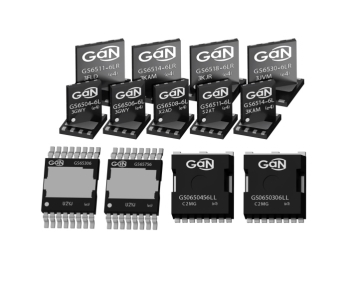
Infineon's InnoScience GaN Patent Lawsuit, Not Just a Litigation, but Future AI and Data Center Markets at Risk
The patent infringement lawsuit between global semiconductor company Infineon Technologies and China's Innoscience is analyzed to become an important turning point beyond simple technical infringement, decisive for securing market leadership in GaN (gallium nitride) power semiconductors for future artificial intelligence (AI) servers and data centers.
2024.08.08by 배종인 기자
LG Innotek, 3,500 patents alone, battle it out in the battlefield market
LG Innotek (CEO Moon Hyuk-soo) has filed approximately 3,500 patents related to automotive components over the past five years, focusing on securing patent competitiveness by leveraging its technological capabilities in future mobility fields such as electric vehicles and autonomous vehicles.
2024.08.28by 배종인 기자
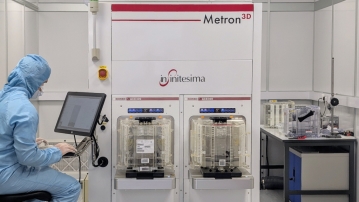
Infinitisima, ASML, and others begin joint development of next-generation wafer metrology over three years
Infinitesima has launched a performance enhancement project for the Metron3D 300mm inline wafer metrology system in collaboration with major partners including ASML. The project is centered on RPM™ (Rapid Probe Microscope), Infinitesima's proprietary technology, and is expected to deliver high-speed image acquisition, interferometer-level precision, and advanced 3D surface analysis capabilities.
2025.07.24by 명세환 기자
.jpg)
DeepX surpasses 400 AI semiconductor patents, securing global competitiveness by inheriting ARM and Qualcomm's strategy.
DeepX, a specialist company in on-device AI semiconductors led by CEO Kim Nok-won, has surpassed 400 patents in AI semiconductors, establishing a comprehensive patent portfolio for technological independence and global leadership.
2025.09.26by 배종인 기자
.jpg)
AI detects mild cognitive impairment, a pre-dementia stage, with 85% accuracy.
The research team of Dr. Park Young-jin at the Auditory and Cognitive Brain Function Diagnosis Research Group of the Korea Electrotechnology Research Institute (KERI) has successfully completed demonstration tests targeting the elderly using wearable devices and AI speech and EEG analysis technology, and has filed patent applications both domestically and internationally.
2025.09.29by 배종인 기자











