



Korea Mechanical Engineering & Research Institute: "Food Poisoning Diagnosis Within an Hour with a Single Push of a Button"
 Published2025.12.24 10:50
.jpg)
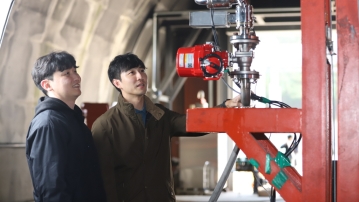
▲Research team at the Diagnostic Sensor Laboratory of the Korea Institute of Machinery and Materials (from right: Director Dong-gyu Lee, Senior Researcher Chan-yong Park, and Postdoctoral Researcher Chang-ha Woo)
A system capable of diagnosing food poisoning within an hour with the push of a button has been developed, raising expectations that it will be able to prevent food poisoning accidents in various fields, including school cafeterias and food manufacturing sites.
The Korea Institute of Machinery and Materials (KIMM) announced on the 24th that it has developed Korea's first fully automatic integrated diagnostic system that can automatically detect 16 types of food poisoning bacteria within one hour.
Compared to existing food poisoning testing methods, it is gaining attention as a next-generation food safety management technology that can be immediately applied in the field, such as at schools, food service facilities, and local government inspection centers, with a dramatic improvement in speed and convenience.
The research team of the Diagnostic Sensor Laboratory of the Daegyeong Area Convergence Research Center of the Korea Institute of Machinery and Materials (Senior Researcher Chan-Yong Park, Principal Researcher Dong-Kyu Lee, and Postdoctoral Researcher Chang-Ha Woo) developed a 'field-type, high-speed, fully automated integrated system for food poisoning diagnosis' that integrates food decontamination, nucleic acid preprocessing, and molecular diagnosis into a single device.
This equipment automatically performs the entire process of isolating, purifying, amplifying, and detecting food poisoning bacteria in food, allowing even non-experts to conduct food poisoning tests with the push of a button.
The existing standard method for food poisoning testing involved culturing bacteria in food, which took at least two days and up to a week.
Although some molecular diagnostic technologies have been introduced, their field application has been limited due to the need for specialized equipment and skilled personnel.
On the other hand, the machine learning system automates all steps of desorption → preprocessing → nucleic acid amplification → reading in a single module, enabling results to be confirmed within an hour.
This system utilizes the hydrodynamic forces generated by high-speed propeller rotation to selectively isolate only food-borne pathogens without damaging the food.
Afterwards, impurities are removed using a multi-membrane-based vacuum filtration technology, and large samples of 200 mL or more can be quickly processed.
Purified nucleic acids undergo 40 cycles of thermal cycling amplification within 15 minutes using high-speed control-based molecular diagnostic technology.
In addition, by applying a dedicated reagent that detects two or more fluorescences simultaneously in one well and a low-cost CMOS-based multi-fluorescence sensor, it is possible to simultaneously and highly sensitively diagnose 16 types of food poisoning bacteria notified by the Ministry of Food and Drug Safety.
All processes are operated by automated software, and are convenient and reliable enough for even non-experts to use in the field.
The system is currently being tested across a variety of food groups at two demonstration sites, with field applicability and analytical accuracy being demonstrated throughout the demonstration process.
It is evaluated that the possibility of practical application is very high as time efficiency has been greatly improved compared to existing methods.
Senior Researcher Park Chan-yong said, “The biggest advantage of this system is that it can quickly and accurately detect food poisoning bacteria in the field and is easy to use even for non-experts,” adding, “It will play a big role in preventing food poisoning accidents in various fields such as school cafeterias, food manufacturing sites, and local government inspection centers.”
Research Fellow Lee Dong-gyu said, “ The technology that automates all processes from food decontamination to nucleic acid purification and molecular diagnosis in a single device is an achievement that presents a new paradigm for the domestic food safety management system,” he emphasized.
This study was conducted as part of the 2023 National Demand-Tailored Life Safety Research and Development Project (Phase 2) hosted by the Ministry of the Interior and Safety.

Comments
Related news
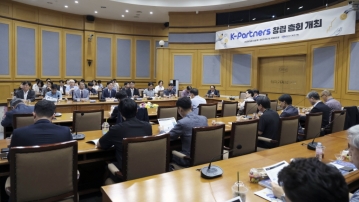
Korea Mechanical Engineering and Machinery Research Institute Launches Corporate Collaboration Platform ‘K-Partners’… Establishing a Sustainable Industrial Collaboration Ecosystem
Korea Institute of Machinery and Materials (President Ryu Seok-hyun, hereinafter referred to as KIMM) has launched a new platform 'K-Partners' to promote inter-company collaboration, and is pioneering a new path for industrial technology advancement through the establishment of a sustainable industrial cooperation ecosystem.
2025.06.13by 명세환 기자
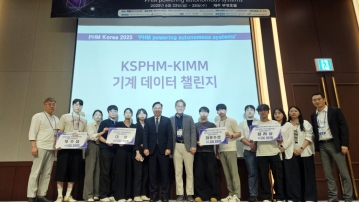
AI-based machine diagnostic technology talent search
The Korea Institute of Machinery and Materials (KIMM, President Ryu Seok-hyun) successfully concluded the 'KSPHM-KIMM Machine Data Challenge,' jointly hosted with the Korean Society for Prognostics and Health Management to develop AI-based machine diagnosis technology. The grand prize was awarded to the SSbearing team from Korea Aerospace University (led by Baek Hyun-jin), followed by teams from Korea Engineering University, Ajou University, and Hongik University among the award-winning teams.
2025.06.30by 배종인 기자
“Digital farms armed with ICT and AI to grow rapidly to $28.5 billion by 2028”
The Korea Institute of Machinery and Materials (President Ryu Seok-hyun, hereinafter KIMM) under the National Research Council of Science and Technology (Chairman Kim Young-sik) has published Mechanical Technology Policy No. 119 titled "Research Trends and Implications in Future Smart Agriculture," which analyzes global trends related to future smart agriculture and presents proposed technologies to lead South Korea's smart agriculture sector. The institute forecasts that sustained R&D investment and business attraction at the national level will be necessary for fostering smart agriculture.
2025.06.30by 배종인 기자
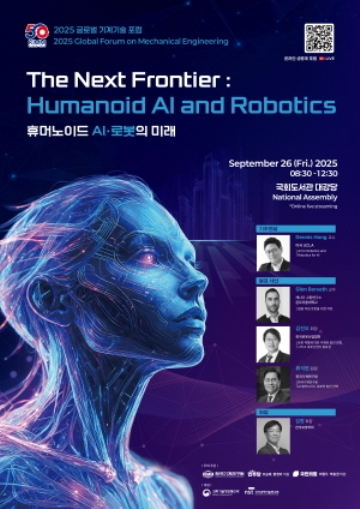
The future of AI and robotics convergence will be illuminated at the 2025 Global Machinery Technology Forum, held at the National Assembly on September 26th.
The Korea Institute of Machinery and Materials will hold the '2025 Global Machinery Technology Forum' at the National Assembly Library Grand Hall on September 26. This forum, marking its 12th edition this year, centers on the theme of 'The Future of Humanoid AI and Robots,' bringing together world-renowned scholars and industry leaders to engage in in-depth discussions on technological challenges and global strategies.
2025.08.25by 명세환 기자
AI-based Autonomous Firefighting System Presents a New Paradigm for Ship Fuel Fire Suppression
A research team led by Senior Researcher Lee Hyuk at the AX Convergence Research Center of the Korea Institute of Machinery and Materials (KIMM) has developed an autonomous rapid-suppression fire extinguishing system specialized for naval vessel oil fires as part of the 'Civilian-Military Practical Application Linkage Project,' successfully completed sea trials on an actual naval vessel, and presented a new paradigm for suppressing naval vessel oil fires.
2025.11.06by 배종인 기자











