



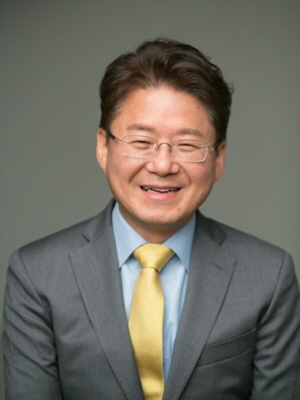
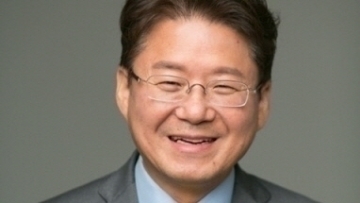
[Contribution] Professor Kim Pil-su of Daerim University: "The auto repair industry urgently needs to attract foreign talent."
 Published2026.01.05 11:12
The future of large-scale industry collapse is reaching its limit.
 The domestic maintenance industry has long been a red ocean.
In the case of internal combustion engine vehicles, durability has improved significantly, and manufacturers are increasing the number of cases where they provide free A/S and even free replacement of consumables.
As the number of parts has decreased by about half and electric vehicles formed as modules have become widely popular, the workload has decreased even further, and it is not easy to even secure the ability to maintain electric and hybrid vehicles, which have become more specialized.
In reality, there are almost no maintenance companies that can service hybrid and electric vehicles, except for designated maintenance companies.
Of course, the government, local governments, and even manufacturers should provide related specialized training to general maintenance workers, but it is difficult for manufacturers to secure their own training infrastructure, and there are not even instructors who can teach maintenance workers.
Even for the professors at the national flagship universities who are conducting this, training as mechanics is a pipe dream in a situation where there is almost no specialized training in electric vehicles and the like.
During the previous Yoon administration, the relevant policy was implemented under the pretext of the president's efficient reduction of research expenses, and despite the emergency situation during the COVID-19 pandemic, the author prepared for more than 6 years and finally launched it. It is said that only one program was affected by this.
The only related program run nationwide by the Ministry of Trade, Industry and Energy was also abolished at this time, causing serious side effects.
At this time, the 3rd year program, which was well established with participation from national universities and automobile research institutes, suddenly disappeared, leaving everyone in an absurd situation.
The president's flawed instructions are still irreparable, and even now the program has disappeared and the related data is no longer available.
I would like to emphasize once again the importance of policy and its continued consistency.
In particular, I would like to point out that the policy at the time was a major mistake, as adjustments to research and development expenses are a factor that determines national competitiveness.
Currently, there are approximately 45,000 maintenance businesses in Korea.
There are approximately 4,500 large-scale maintenance businesses, including comprehensive maintenance businesses and small-scale maintenance businesses, which we call automobile factories.
The remaining 40,000 or so refer to the light maintenance work that we do at car centers.
The National Automobile Inspection and Maintenance Association oversees the general maintenance industry and the small maintenance industry, while the National Automobile Specialist Maintenance Association primarily oversees the light maintenance industry.
Of course, there are other associations that share roles.
The problem is that the automotive aftermarket is no exception in this rapidly changing industry with great uncertainty about the future.
Among these, the automobile maintenance industry is in an even more difficult situation.
It has already become a red ocean and has fallen into a declining industry, and although it is barely surviving, the difficulties are growing.
In my view, the maintenance industry will disappear by about 70% in the future, with about 40,000 jobs lost.
these Tens of thousands of jobs will be lost.
Of course, I am involved in various fields such as tuning and used car diagnosis and maintenance, but it is limited as a mid- to long-term measure and is considered a life extension concept.
The problem is that opening the door to the maintenance industry is like a drop in the bucket.
There is currently a shortage of young, professional workers in the domestic market, and industries such as 3D have long been dominated by foreign workers.
Not only agriculture, but also the food service industry has a significant number of foreign workers.
It is said that a significant number of foreign workers have entered the service industry, but the maintenance industry is an exception.
The reason is that they did not open it because they thought it would take away domestic jobs, but the reality is completely different.
As mentioned earlier, the maintenance industry has long been considered a profession that young people avoid, and the wages are poor, making it even more difficult to recruit people.
These frontline complaints have been around for a long time, and the government has not been able to resolve them.
Of course, this responsibility can be attributed to the fact that the central point, the federation, was not properly fulfilling its role.
Until the 1970s, the automobile maintenance industry was classified as a manufacturing industry and was open to the public, but after it was classified as a service industry, employment of foreign workers became impossible.
In the case of general and small maintenance businesses, only some fields such as sheet metal and painting are classified as manufacturing, which makes it even more regrettable that some foreign workers can be hired.
Now that the reality is so different, let's open the door wide.
The industry has been reduced from a job target to an undesirable one, and all young people in the country are turning away from it, so the CEO is having a hard time running it while also taking on the role of an employee, and the future situation is heading towards an extreme as it is a declining industry..
As with other service industries, the maintenance industry must now open its doors immediately.
In domestic universities, there are a significant number of international students in the automotive field.
In the case of local vocational colleges, the rate is even higher, and there are no jobs available after graduation, so they return to their home countries. However, the number of cases of students becoming illegal residents in order to find work in Korea is also increasing significantly.
Overseas workers naturally want to gain experience by working at domestic repair shops and other places after studying at domestic universities, earning degrees in automotive engineering, and obtaining certifications.
After accumulating this work experience, he dreams of returning to his home country and opening and operating an automobile repair business, along with obtaining a domestic qualification that is highly recognized overseas.
In developing countries such as Southeast Asia and middle-income countries, the automobile maintenance industry is the industry that is most prioritized for introduction and activation for industrial development, and it can be said to be the best job in the country for earning a living.
We also went through this activation process in the 1970s and 1980s, and that is why we exist today.
If we open the door now, after graduating from college, they will naturally obtain a visa and legally work, gain legal experience, and use their salaries to establish a domestic maintenance business. This will not only raise positive awareness of Korea but also increase opportunities for successful businesses in their home country, maximizing the positive impact on our country.
It is expected that the universities involved will be able to achieve a triple benefit of taking full measures to manage international students while also significantly reducing the number of illegal immigrants.
This is an area that the government must open up immediately.
The federation should also take the initiative to explain the situation and persuade relevant government departments such as the Ministry of SMEs and Startups, the Ministry of Employment and Labor, the Ministry of Education, and the Ministry of Land, Infrastructure and Transport, and quickly begin legislative activities through the National Assembly. I will say so.
I would like to ask everyone why these good examples are still kept as off-limits areas.
I have been mentioning the need for this for a long time, but it still remains the same.
Everyone is still just staring.
Unfortunately, only frontline companies are left to fiddle around with this situation. I hope you will act quickly to resolve this issue.

Comments
Related news
.jpg)
[Contribution] Professor Kim Pil-su of Daerim University, “Apartment slow charger charging control is essential”
We spoke with Professor Kim Pil-soo from Daelim University College about replacing existing slow chargers in apartment basement parking lots with "controlled charging chargers."
2025.06.17by 명세환 기자
[Contribution] Professor Kim Pil-soo of Daerim University: "We must find a solution that benefits all of GM Korea."
We heard from Professor Kim Pil-soo of Daelim University about strategies for domestic survival amid reports of General Motors Korea's withdrawal.
2025.06.23by 명세환 기자
[Contribution] Professor Kim Pil-su of Daerim University, “Trump Tariffs Require Genuine Persuasion”
As the Trump tariff negotiations deadline approaches, we heard from Professor Kim Pil-soo of Daelim University College on the stance our country should take.
2025.07.28by 명세환 기자
[Contribution] Professor Kim Pil-su of Daerim University: "Replacement of Offshore Diesel Vessels with Eco-Friendly Ships Is Essential"
We listened to the story of Professor Kim Pil-soo from Daelim University about the transition of coastal diesel ships to eco-friendly vessels.
2025.08.04by 명세환 기자
[Contribution] Professor Kim Pil-su of Daerim University: "'ISG Promotion' Kills Two Birds: Reducing Carbon and Easing Government Fiscal Pressures"
We heard from Professor Kim Pil-soo of Daelim University regarding the dissemination of idle-stop systems (ISG) in relation to carbon reduction for commercial internal combustion engine vehicles.
2025.08.08by 명세환 기자











