


CES 2026: Beyond 'On-Screen AI' to the Real World… The Edge and Physical AI Era Begins in Full Swing
 Published2026.01.20 15:06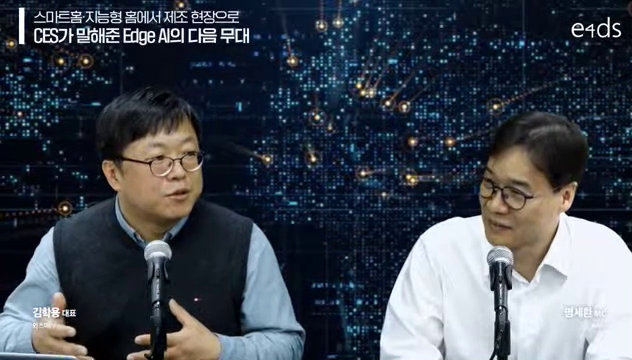
▲(From left) Kim Hak-yong, CEO of Watts Matter, and Myung Se-hwan, CEO of Channel 5 Korea, are hosting a webinar titled 'The Next Stage of Edge AI as Told by CES.'
Accelerating the use of AI in manufacturing, autonomous driving, and smart cities.
“CES 2026, the world’s largest IT and home appliance exhibition, is no longer a stage to showcase the ‘possibilities of future technology.’ Artificial intelligence (AI) has evolved beyond concepts and demonstrations into a technology that operates in real-world industrial settings, with edge AI and physical AI at its core.
On the 20th, e4ds News invited Kim Hak-yong, CEO of Wattsmatter, to a webinar titled, “The Next Stage of Edge AI as Told by CES - From Smart Homes and Intelligent Homes to Manufacturing Sites.”
Kim Hak-yong, CEO of Wattsmatter, who participated as a keynote speaker in the webinar, summarized the key word that permeated CES 2026 as 'AI localization.'
According to CEO Kim Hak-yong, CES 2026 was an exhibition where 'AI Everywhere' was fully realized.
While generative AI has remained a competition of possibilities and performance for several years since it first became popular, this year's CES highlighted AI's integration into real products and solutions.
From smart homes and appliances to cars, robots, and manufacturing equipment, AI is no longer an option; it is a fundamental element.
Areas that have received particular attention are physical AI and robotics.
Beyond the stage where AI could only make judgments on a screen, technologies that directly recognize, move, and perform tasks in physical space have emerged in earnest.
Boston Dynamics' humanoid robot 'Atlas' is a symbolic example of CES 2026.
Unlike existing robots, it presents new possibilities for use in industrial settings based on a degree of freedom that surpasses the human joint structure.
CEO Kim emphasized, “Beyond technological excellence, what’s important is that we’ve reached a point where robots can be deployed in real-world work environments.”
Behind these changes is the spread of edge AI.
For physical AI to make decisions and move in real time, on-device AI that minimizes dependence on the cloud is essential.
At CES 2026, semiconductor companies and solution providers showcased various technologies that implement AI in edge environments.
This is expected to accelerate the use of AI in industries where latency is critical, such as manufacturing, autonomous driving, and smart cities.
Changes were also evident in the exhibition's composition. AI and robotics were separated into separate main exhibition areas, focusing visitors' attention.
The robot exhibition hall, which was once centered around small startups, has emerged as a key space at CES with the participation of large corporations and global players.
On the other hand, the once-popular metaverse has been redefined as a more realistic concept called 'spatial computing.'
Technology that recognizes and processes spatial information in real time is being combined with physical AI to become a core infrastructure in industrial settings.
Energy and manufacturing innovations were also key topics. To address the rapidly increasing demand for electricity due to the spread of AI, energy transition technologies were emphasized, and manufacturing and industrial innovation were adopted as official keywords for CES.
This demonstrates that AI has become a core technology that influences productivity and efficiency across industries, beyond the consumer sector.
CEO Kim Hak-yong predicted the future direction of the IT industry, saying, “AI will no longer be an independent technology, but will become a fundamental infrastructure that permeates all industries.”
Intelligent technologies that originated in smart homes are spreading to manufacturing, logistics, energy, and healthcare, and are likely to reshape the industrial structure itself.
In particular, the combination of edge AI and physical AI is expected to take automation and autonomy to the next level.
CEO Kim Hak-yong said, "CES 2026 sent a clear message: the next stage for AI is no longer on screen. It's about technologies that make decisions, move, and create value in real space. Edge AI and physical AI are at the center of this. The IT industry is now transitioning from 'technology for show' to 'technology that works.'"

Comments
Related news
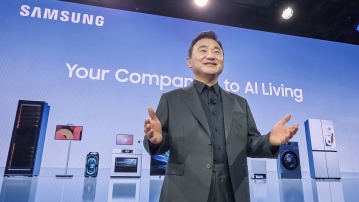
Samsung Electronics Unveils Vision for "AI as Your Daily Companion" at CES 2026
Samsung Electronics held the CES 2026 'The First Look' press conference in Las Vegas, USA on the 4th and unveiled a new AI vision titled 'Your Companion to AI Living.' Through CES 2026, Samsung Electronics presents experiences that expand AI innovation across all areas of entertainment, home, and care.
2026.01.05by 배종인 기자
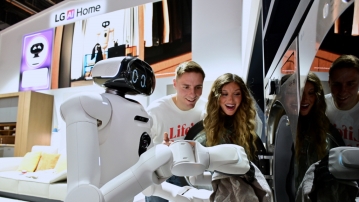
LG Electronics to Unveil 'Empathetic AI' at CES 2026
LG Electronics unveiled a wide range of innovative products based on Affectionate Intelligence that understands customers' living patterns and acts autonomously at CES 2026, realizing a 'Zero Labor Home' where robots prepare for the morning and even handle laundry.
2026.01.05by 명세환 기자
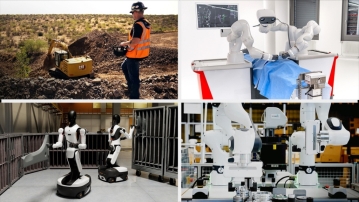
NVIDIA Unveils Next-Generation Physical AI Models and Robots at CES 2026… Full-Scale Expansion of Global Robotics Ecosystem
NVIDIA is accelerating innovation in the global robotics industry by unveiling new open models ushering in the era of Physical AI, advanced robotics frameworks, and next-generation AI computing platforms at CES 2026.
2026.01.06by 명세환 기자
SK Hynix Unleashes Innovations, Including HBM4, LPDDR6, and 321-Layer QLC
SK Hynix showcased its position as a leading provider of differentiated memory solutions tailored to AI-era demands at CES 2026, unveiling AI-optimized memory including HBM4 16-layer 48GB, LPDDR6, and 321-layer QLC eSSD.
2026.01.06by 명세환 기자
AMD Unveils "Huge AI Strategy" at CES 2026, Covering AI, Data Centers, and Embedded Systems
AMD CEO Dr. Lisa Su unveiled a new lineup of products across the client, graphics, embedded, and commercial segments during the opening keynote address at CES 2026 on the 5th, officially launching the 'Full-Scale AI Expansion' strategy.
2026.01.06by 명세환 기자











