


UNIST Implements First 100V Self-Powering Technology
 Published2026.01.21 08:40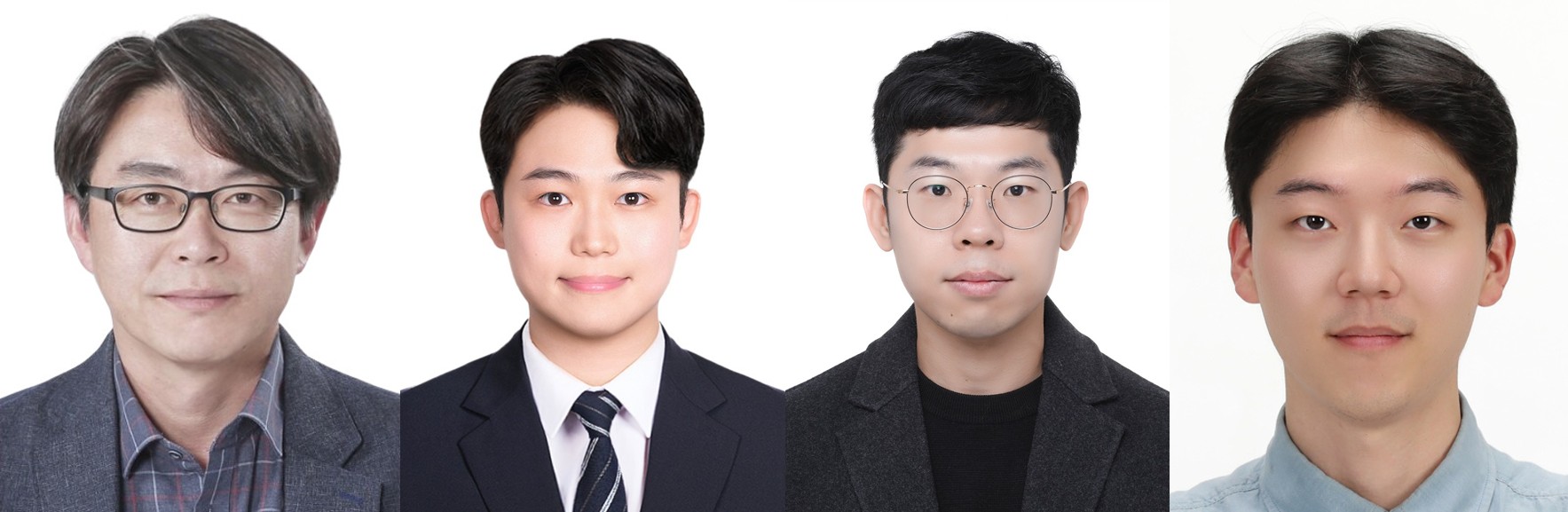
▲(From left) Professor Koh Hyun-hyeop, Researcher Lee Seung-jae, Dr. Lee Young-oh, and Researcher Park Cheol-hong
A UNIST research team has developed a new electric cell technology that produces high voltage without external stimulation by mimicking the biological structure of an electric ray. This technology is attracting attention as a key foundation technology for next-generation energy harvesting fields such as wearable power devices and self-powered sensors.
Professor Koh Hyun-hyeop's team from the Department of Energy and Chemical Engineering at UNIST announced on the 21st that they had developed an ultra-thin electric cell just 0.2 mm thick and successfully produced a high voltage of up to 100 V by stacking them.
The research results were published online in Advanced Energy Materials, a world-renowned academic journal in the field of energy materials.
Electric rays produce a low voltage of about 0.1 V per electrocyte, but by stacking thousands of cells, they produce a high voltage of 100 to 200 V.
The research team imitated this principle and created a 'heterojunction electric cell' by placing a positively charged polymer thin film and a negatively charged polymer thin film together.
It is a structure in which an electric field formed at the interface where two thin films come into contact attracts ions and creates a voltage similar to the 'membrane potential' of a biological cell membrane.
The single electric cell developed by the research team recorded a voltage of 0.71 V.
This represents a 30-fold improvement over conventional homojunction structures. The research team stacked these electric cells like those of an electric ray, achieving high voltages exceeding 100 V. Using these, they successfully powered small electronic devices such as 6-watt LED bulbs, electronic calculators, and digital wristwatches.
Durability was also excellent. Even after repeated stretching and resizing of a single electric cell over 3,000 times, there was no voltage loss, and performance was maintained even when stretched up to 1.5 times its original length.
Even when multiple layers were stacked, it responded stably to external deformations such as bending and stretching. The output shows almost no change in various conditions, from dry environments to high humidity environments of 90%, increasing the possibility of application to wearable devices.
Professor Koh Hyun-hyeop explained, “This technology is a source technology that generates high voltage only through the movement of ions within the material without an external energy source,” and “It can overcome the limitations of existing energy harvesting technologies that depend on external stimuli such as wind, sun, and pressure, and significantly reduce the maintenance burden of wearable power devices.”
The research team designed the electrocell based on the phenomenon of "membrane potential," where ions selectively move across biological cell membranes to generate voltage. Professor Koh's team stated, "By mimicking the electrocyte structure of the electric ray and applying a layered method, we were able to stably produce high voltage."
This research was supported by the Ministry of Science and ICT and the National Research Foundation of Korea's Individual Basic Research Program and Nano and Materials Technology Development Program. The research team plans to expand the technology into diverse applications, including wearable power supplies, self-powered sensors, and medical patches.

Comments
Related news
AI can perform 1,000 chemistry experiments a day without any problems.
Ulsan National Institute of Science and Technology (UNIST) announced on the 25th that a research team led by Professor Bartosz Grzybowski of the Department of Chemistry has developed an 'AI and robot-based automated experimentation platform' capable of automatically performing over 1,000 chemical experiments per day using artificial intelligence (AI) and robotics. This technology is expected to provide a breakthrough turning point in new drug development and novel material discovery by precisely mapping complex chemical reaction networks and rapidly generating new chemical compounds.
2025.09.25by 명세환 기자
UNIST and Pyo Research Institute Use AI to Predict Nuclear Power Plant Earthquakes
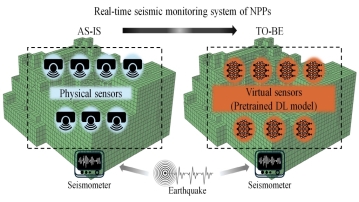
UNIST (Ulsan National Institute of Science and Technology) and KRISS (Korea Research Institute of Standards and Science) have jointly developed an AI-based virtual sensor technology that implements a model capable of predicting seismic damage at 139 points within a nuclear power plant using only a single sensor. Real-time monitoring is now possible without establishing a conventional sensor network, which is expected to significantly improve inspection efficiency and safety.
2025.10.01by 명세환 기자
UNIST enhances autonomous driving with camera-based vanishing point technology.
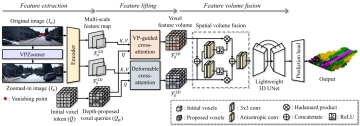
A research team at UNIST's Graduate School of Artificial Intelligence has developed an AI model called 'VPOcc' that applies the Renaissance painters' concept of 'vanishing points' to artificial intelligence, compensating for perspective distortion in camera images. This research was conducted with support from the Ministry of Science and ICT and the National Research Foundation of Korea, and the results have been accepted for presentation at IROS 2025, an international conference in the field of intelligent robotics.
2025.10.15by 명세환 기자
UNIST: AI Improves Wireless Image Transmission Efficiency by 45 Times
A research team led by Professor Yun Sung-hwan from the Graduate School of Artificial Intelligence at Ulsan National Institute of Science and Technology (UNIST) has developed AI technology that dramatically improves the efficiency of wireless image transmission. The 'Task-Adaptive Semantic Communication' technology developed by the research team differs from the conventional method of compressing and transmitting entire images, instead selectively transmitting only the semantic information essential for task execution.
2025.11.06by 배종인 기자
UNIST Accelerates Industrial AI Transition
UNIST (President Park Jong-rae) held the '2025 Korea Industrial AI Joint Forum' on the 24th at the POSCO Center in Seoul together with six industry-academia-research institutions, sharing AI utilization outcomes in manufacturing fields and corporate talent innovation cases.
2025.11.25by 배종인 기자











