


Schneider Recognizes AI-Based Workforce Management Innovation
 Published2026.01.27 16:18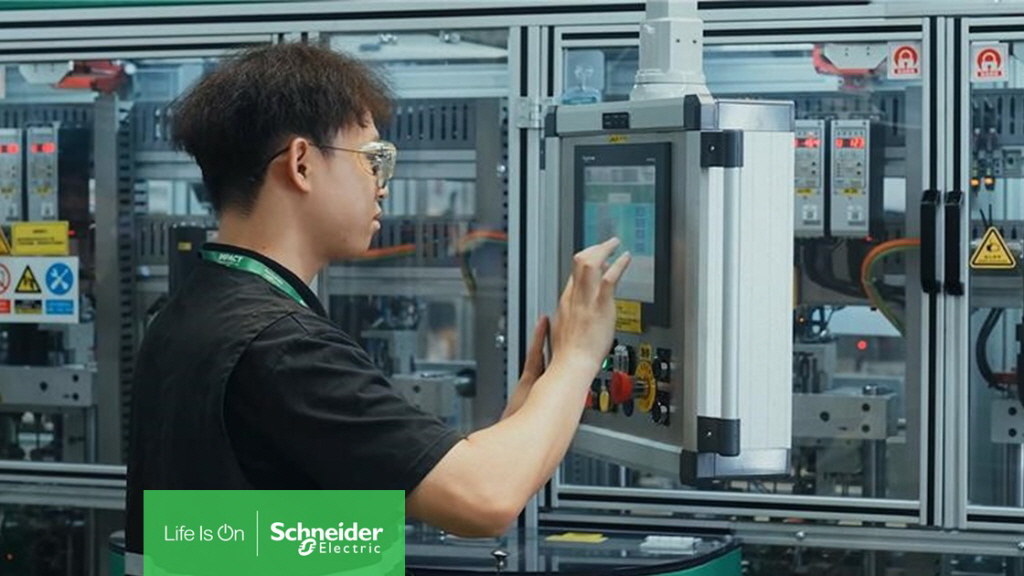
Schneider Electric, a global energy management and automation company, has been recognized for its AI-based workforce management innovation.
Schneider announced on the 27th that it had received the 'Talent Lighthouse' certification from the World Economic Forum (WEF) through its Wuhan, China factory.
This selection marks one of only three companies globally to be recognized in the newly introduced Talent Innovation category, bringing Schneider Electric's total number of lighthouse factories to nine.
In particular, the company has further solidified its position as a global manufacturing innovation company by being recognized in the field of talent innovation following its five sustainability lighthouse factories.
The Global Lighthouse Network, jointly operated by the World Economic Forum and McKinsey & Company, selects manufacturing facilities that have achieved outstanding results in productivity, supply chain resilience, customer centricity, sustainability, and talent innovation by utilizing Fourth Industrial Revolution technologies.
Currently, 189 production facilities around the world have been designated as lighthouse factories, and they are considered representative examples that set the standard for industrial innovation.
The Wuhan factory was praised for establishing a "people-centered workforce model" to address the workforce challenges caused by rapid automation and an expanding product portfolio.
<br /> Schneider Electric has partnered with 11 vocational schools to create a sustainable pipeline of future technology talent through digital apprenticeship programs, AI labs, and scholarships.
Additionally, an AI-based human resources management system was introduced across the entire factory operation to identify skill gaps in real time and provide personalized training.
By linking compensation to competency levels, the company significantly improved employee skill levels. Indeed, the employee competency level increased from 20% to 76%.
In the maintenance field, the introduction of a generative AI-based smart guide system has resulted in shortened repair times and a significant reduction in technician turnover from 48% to 6%.
By automating repetitive tasks and applying optimization technologies, engineers were able to focus on high-value-added tasks, and new product launch cycles were shortened by approximately 66%.
The lead time for new product launches was also reduced from 36 months to 12 months, significantly improving production efficiency.
“The Wuhan factory case demonstrates how companies can build a resilient and future-oriented workforce when AI and human capabilities are combined,” said Mourad Tamoud, Chief Supply Chain Officer at Schneider Electric. “We will continue to actively utilize cutting-edge technologies to provide greater value to our customers.”
Kiva Allgood, Managing Director of the World Economic Forum, also said, “Today’s corporate competitiveness depends on more than just efficiency; it depends on the ability to adapt and respond quickly.” He added, “This year’s selected companies have demonstrated how to place resilience and sustainability at the center of industrial operations through intelligence-driven operations.”

Comments
Related news
Schneider, NVIDIA to Accelerate Next-Generation AI Factory
Global energy management and automation specialist Schneider Electric is accelerating infrastructure development for next-generation large-scale AI factory construction through strategic collaboration with AI technology leader NVIDIA.
2025.07.08by 배종인 기자
Nozomi Networks Revolutionizes Industrial Automation Security with the Launch of the World's First RTU-Embedded Security Sensor
Nozomi Networks Inc., a leading company in OT, IoT and CPS security, announced the world's first embedded security sensor in a Remote Terminal Unit (RTU) in collaboration with Schneider Electric. Arc Embedded, launched through this partnership, is directly embedded in Schneider's SCADAPack 47xi smart RTU, dramatically improving the security level of industrial automation equipment from the design phase.
2025.08.18by 배종인 기자
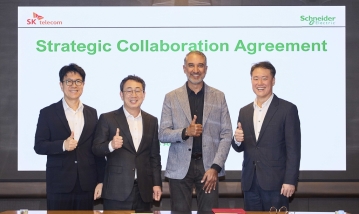
SKT and Schneider to Collaborate on Building SK AI Data Center Ulsan, Combining Global MEP Technologies
SK Telecom is joining forces with Schneider Electric, a global MEP (Mechanical, Electrical, and Plumbing) solutions company, to accelerate the construction of 'SK AI Data Center Ulsan,' South Korea's largest AI-dedicated data center.
2025.09.01by 명세환 기자
.jpg)
Schneider Enters the Liquid Cooling Market
Schneider Electric, a global energy management and automation specialist (Korea branch representative Kwon Ji-woong), is moving to expand its presence in the next-generation AI data center market by supplying liquid cooling solutions optimized for high-performance computing (HPC) and AI workloads, directly targeting the data center cooling market.
2025.09.30by 명세환 기자
.jpg)
Schneider Improves Shipbuilding and Marine Equipment Operational Efficiency and Stability
Schneider Electric has unveiled 'TeSys Tera,' a real-time motor management solution for the shipbuilding and marine industries. This solution monitors key data such as temperature, current, and harmonics in real-time, and enhances fault prevention and maintenance efficiency through precision protection and event logging capabilities. This technology, optimized for the Industry 4.0 environment, is scheduled to be showcased at KORMARINE 2025.
2025.10.16by 명세환 기자











