



AMD Sets New Standard for Mid-Range FPGA Market
 Published2026.02.05 16:42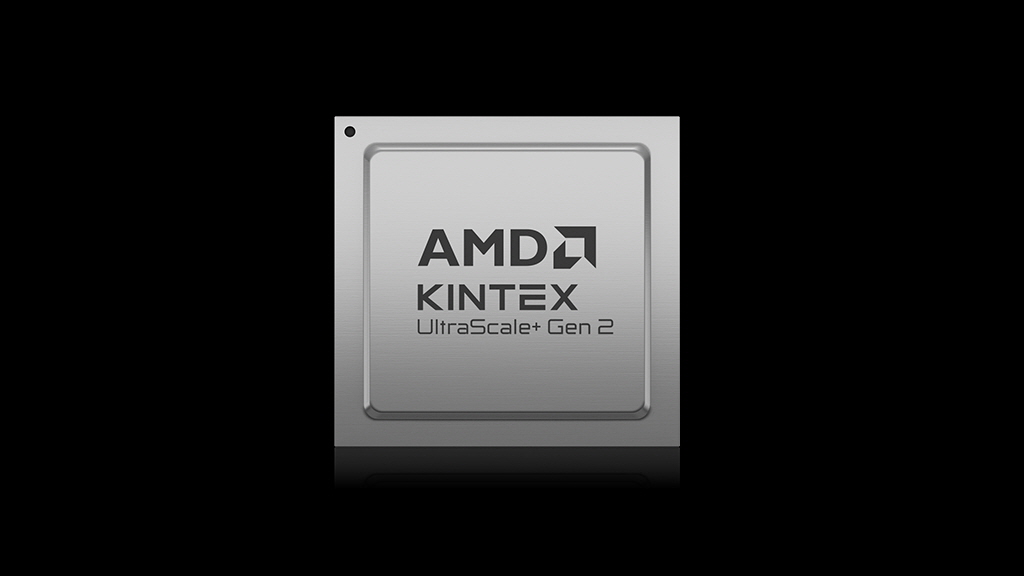
AMD further strengthens its technological position in markets that demand both high performance and reliability with mid-range FPGAs that deliver high bandwidth, real-time performance, and long-term reliability.
AMD unveiled its second-generation 'Kintex UltraScale+ Gen 2' FPGA product line, a new mid-range FPGA product aimed at intelligent, high-performance systems, on the 5th.
This product provides a next-level design experience focused on data-intensive and real-time processing-demanding fields such as broadcasting, medical, industrial automation, and test and measurement.
The second-generation Kintex UltraScale+ FPGAs build on the proven architecture of the existing Kintex portfolio by modernizing the memory, I/O, and security structures.
It supports high-density media workflows such as 4K/8K AV-over-IP, multi-streaming capture, and frame-by-frame transmission through high-speed transceivers and PCIe Gen4, and its improved memory bandwidth enables high throughput and precise timing control even in semiconductor test and measurement environments.
In particular, the integrated LPDDR4X/5/5X memory controller can respond to increasing data transmission demands while strictly managing latency and power efficiency.
Up to 5 times more fragrance than previous generationIncreased memory bandwidth and increased channel density per PCIe interface set new performance standards in the mid-range FPGA market.
Security and long-term availability have also been enhanced.
It has built-in advanced security features such as bitstream encryption, hardware anti-cloning, secure key management, and CNSA 2.0 encryption, and guarantees product availability until 2045, making it suitable for long-term operation systems such as industrial, medical, and broadcasting.
The development environment also maintains design continuity by utilizing proven tools such as AMD Vivado and Vitis.
AMD plans to begin providing development tool simulation support in Q3 2026, sampling and evaluation kits in Q4 2026, and mass production in the first half of 2027.

Comments
Related news

Supermicro Announces Air-Cooled AI Server with AMD MI355X GPUs
Supermicro has announced a 10U air-cooled server equipped with AMD's latest Instinct MI355X GPU. The product delivers 288GB of HBM3e memory per GPU and 8TB/s bandwidth, achieving up to 4x improvement in AI compute performance and up to 35x improvement in inference performance compared to the previous generation. With a scalable architecture compatible with both air-cooled and liquid-cooled infrastructure, it is optimized for large-scale AI/HPC workloads in cloud and enterprise environments.
2025.11.24by 명세환 기자
.jpg)
AMD, Cisco, and Humain Establish World-Class AI Infrastructure Joint Venture
AMD, Cisco, and Huemain are establishing a joint venture to build world-class AI infrastructure. They plan to combine the Instinct MI450 GPU with state-of-the-art data centers and core infrastructure solutions to provide scalable AI solutions to global customers.
2025.11.24by 명세환 기자

AMD Supports Zyfra's Frontier AI Model Training
Global semiconductor company AMD has successfully collaborated with innovative AI startup Zyphra to train ZAYA1, the first large-scale Mixture-of-Experts (MoE) foundation model. This achievement was accomplished based on the AMD Instinct MI300X GPU, AMD Pensando networking, and the ROCm open-source software stack, and is evaluated as a case demonstrating AMD's technical excellence in the field of large-scale AI model training.
2025.11.25by 배종인 기자
AMD Launches Spartan UltraScale+ FPGA SCU35 Evaluation Kit
AMD has officially launched the Spartan UltraScale+ FPGA SCU35 evaluation kit, enabling developers to verify the characteristics of high-performance FPGAs without having to fabricate separate custom boards.
2025.11.27by 명세환 기자
AMD Targets Industrial Fields with Ultra-Low-Power Edge Performance
AMD launches the EPYC Embedded 2005 series processors, targeting the next-generation embedded infrastructure market through ultra-low-power edge solutions.
2025.12.12by 명세환 기자











