


AI-based rotor imbalance measurement technology breaks through the 0.1㎛ limit.
 Published2026.02.05 16:52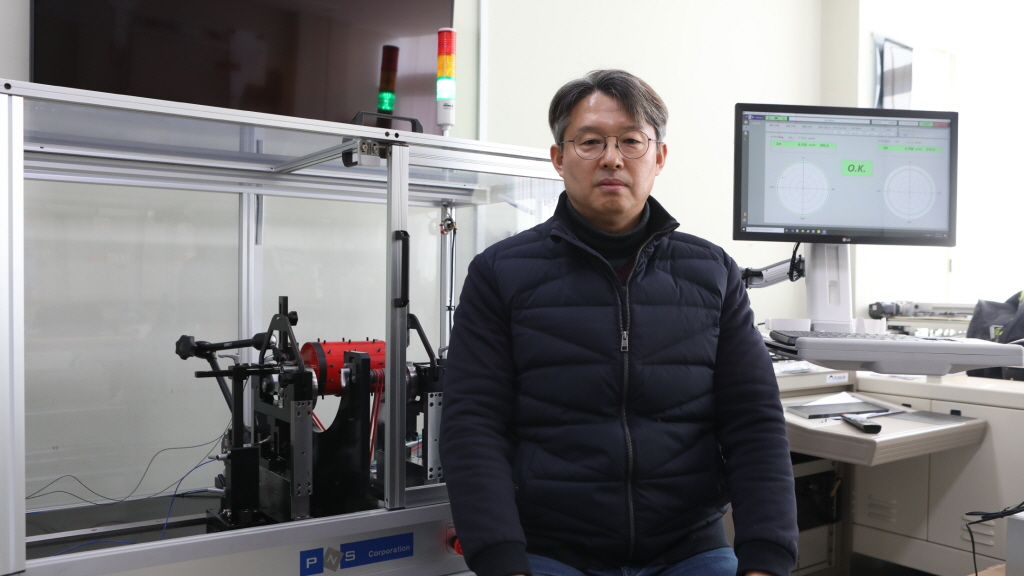
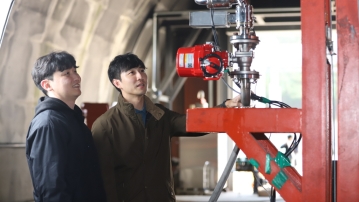
▲Kim Byeong-ok, Senior Researcher, AX Convergence Research Center, Virtual Engineering Platform Research Division, Korea Institute of Machinery and Materials (KIMM)
A domestic research team has developed and successfully commercialized a top-performance automated balancing machine capable of automatically and precisely measuring and correcting micro-mass imbalances in rotating bodies. It has great industrial significance in that it has achieved self-sufficiency in domestic manufacturing equipment that is key enough to be classified as strategic materials subject to Japanese export controls.
The Korea Institute of Machinery and Materials (KIMM), under the National Research Council of Science and Technology, announced on the 5th that the research team led by Principal Researcher Kim Byeong-ok of the AX Convergence Research Center of the Virtual Engineering Platform Research Headquarters and PNS Co., Ltd. jointly secured the core technology for a high-precision automated balancing machine.
This achievement is the result of the 'Development of a High-Precision Balancing Machine Automation System' and 'Verification of a Data-Based Intelligent Balancing Machine System' projects, which were carried out with support from the Ministry of Trade, Industry and Energy.
A balancing machine is a device that measures the mass imbalance of a rotating body and corrects it to within the tolerance range specified in the international standard ISO 21940-11.
Existing overseas equipment relied on manual and semi-automatic methods, which had limitations in ensuring repeatability and equipment reliability.
On the other hand, the equipment developed this time implemented detection of residual imbalance of 0.1 micrometers (㎛) level by applying high-sensitivity measurement technology based on vibration sensors, high-speed signal processing, and AI-based data purification algorithms.
Additionally, the closed-loop correction algorithm that integrates cutting speed, depth, and position automatically calculates optimal correction conditions that match the rotating body shape, material, and rotation conditions.
Equipped with an autonomous calibration function that maintains the equipment's accuracy on its own and real-time status diagnosis logic, it has practicality that can be immediately applied to production lines.
The technology was successfully commercialized in July 2025, when the first supply contract was signed with an eco-friendly automobile parts manufacturer.
By replacing automated balancing machines, which were previously entirely dependent on imports, with domestically produced equipment, supply chain stability is expected to be enhanced, along with the quality competitiveness of strategic industries such as automobiles, energy, aviation, and defense.
<br /> Senior Researcher Kim Byeong-ok stated, “We have achieved self-sufficiency in core equipment for precision manufacturing processes using domestic technology and have proven its performance in industrial settings,” and added, “We will continue to advance follow-up technologies and expand the scope of application.”

Comments
Related news
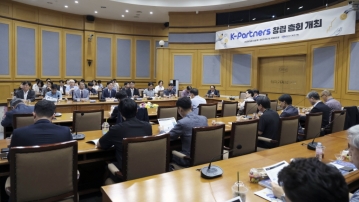
Korea Mechanical Engineering and Machinery Research Institute Launches Corporate Collaboration Platform ‘K-Partners’… Establishing a Sustainable Industrial Collaboration Ecosystem
Korea Institute of Machinery and Materials (President Ryu Seok-hyun, hereinafter referred to as KIMM) has launched a new platform 'K-Partners' to promote inter-company collaboration, and is pioneering a new path for industrial technology advancement through the establishment of a sustainable industrial cooperation ecosystem.
2025.06.13by 명세환 기자
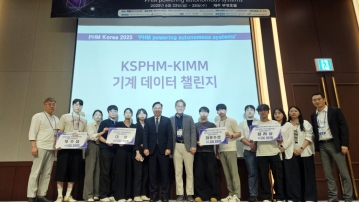
AI-based machine diagnostic technology talent search
The Korea Institute of Machinery and Materials (KIMM, President Ryu Seok-hyun) successfully concluded the 'KSPHM-KIMM Machine Data Challenge,' jointly hosted with the Korean Society for Prognostics and Health Management to develop AI-based machine diagnosis technology. The grand prize was awarded to the SSbearing team from Korea Aerospace University (led by Baek Hyun-jin), followed by teams from Korea Engineering University, Ajou University, and Hongik University among the award-winning teams.
2025.06.30by 배종인 기자
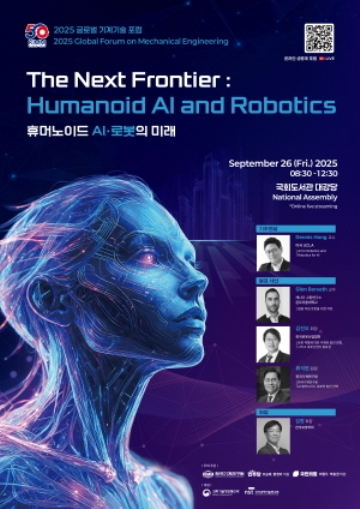
The future of AI and robotics convergence will be illuminated at the 2025 Global Machinery Technology Forum, held at the National Assembly on September 26th.
The Korea Institute of Machinery and Materials will hold the '2025 Global Machinery Technology Forum' at the National Assembly Library Grand Hall on September 26. This forum, marking its 12th edition this year, centers on the theme of 'The Future of Humanoid AI and Robots,' bringing together world-renowned scholars and industry leaders to engage in in-depth discussions on technological challenges and global strategies.
2025.08.25by 명세환 기자
AI-based Autonomous Firefighting System Presents a New Paradigm for Ship Fuel Fire Suppression
A research team led by Senior Researcher Lee Hyuk at the AX Convergence Research Center of the Korea Institute of Machinery and Materials (KIMM) has developed an autonomous rapid-suppression fire extinguishing system specialized for naval vessel oil fires as part of the 'Civilian-Military Practical Application Linkage Project,' successfully completed sea trials on an actual naval vessel, and presented a new paradigm for suppressing naval vessel oil fires.
2025.11.06by 배종인 기자
.jpg)
Manufacturing AI Competition Heats Up, Machine Technology is the Next Big Thing
According to the report "Beyond Manufacturing AI Competition, Preparing with Mechanical Technology" (Mechanical Technology Policy No. 120) recently published by the Korea Institute of Machinery and Materials (KERI, President Ryu Seok-hyun) under the National Research Council of Science and Technology, amid the global trend of AI transformation in manufacturing, the intrinsic performance of mechanical equipment is expected to become a key factor determining future manufacturing competitiveness.
2025.11.27by 배종인 기자











