



ST Strengthens Competitiveness in Space Semiconductors
 Published2026.02.10 12:16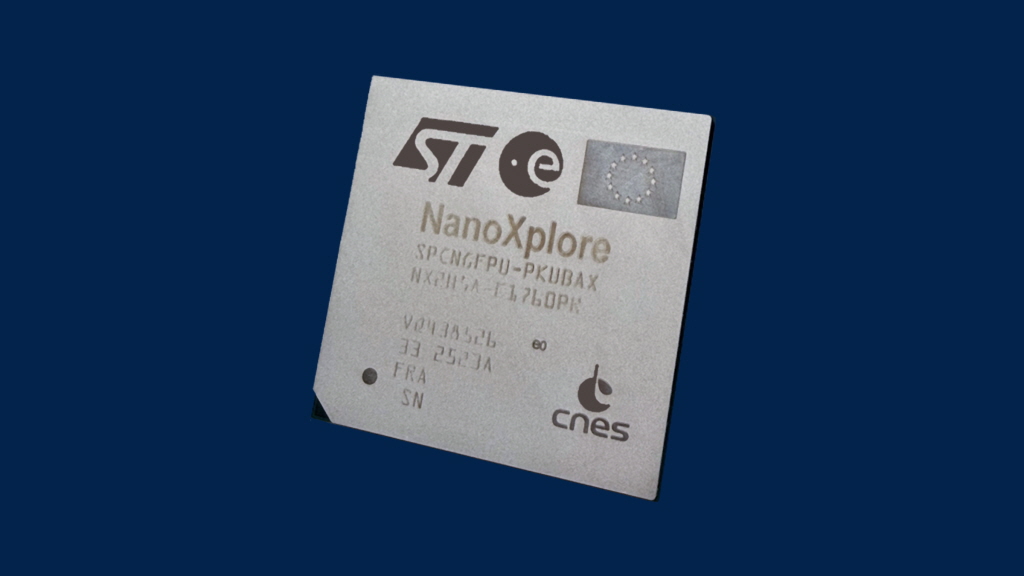
STMicroelectronics (ST) has strengthened its competitiveness in space semiconductors.
ST announced on the 10th that it has introduced 'NG-ULTRA', a radiation-tolerant SoC FPGA targeting space applications, together with European semiconductor company NanoXplore.
The product is the first FPGA to receive certification under the European space standard ESCC 9030, and is considered a milestone symbolizing the technological independence and enhanced competitiveness of the European New Space industry.
NG-ULTRA is designed for a variety of space missions, including low Earth orbit (LEO) and medium Earth orbit (MEO) satellite constellations.
It is expected to be applied to major European space programs such as Galileo, Copernicus and the future IRIS² project.
It simultaneously secures high-performance digital processing and radiation resistance, supporting the implementation of core functions such as satellite onboard computing, data management, image and video processing, and software-defined radio (SDR).
In particular, NG-ULTRA has obtained certification under the new European standard ESCC 9030, which targets high-performance microcircuits using flip-chip structures based on organic substrates or plastic packages.
This is a conventional heavy and expensive ceramic package.It can replace existing solutions, providing cost-effectiveness and scalability suitable for large satellite constellations and commercial space missions.
Another key aspect of this collaboration is that the entire process is built on the European Union (EU) supply chain.
ST has secured a stable supply chain sovereignty by leveraging its European infrastructure for design, manufacturing, packaging, and testing.
This is supported by R&D centers located in France and Italy, a 300mm fab, and dedicated space packaging and reliability evaluation facilities.
NanoExplorer and ST's strategy with NG-ULTRA is to help European customers develop satellites and space systems with higher performance and competitiveness.
It is expected to simultaneously meet the high performance, low power, and reasonable cost structure required by the European new space industry, and also contribute to the implementation of edge computing that reduces data transmission bottlenecks between space and the ground.
Comments
Related news
ST targets industrial and IoT markets with cost-effectiveness and low power consumption.
STMicroelectronics, a global semiconductor company, has officially unveiled the STM32MP21 microprocessor (MPU) targeting diverse edge applications including smart factories, smart homes, and smart cities. The new product emphasizes cost efficiency, low power consumption, and flexibility as core values, strengthening its competitiveness in the industrial and IoT markets.
2026.01.13by 배종인 기자
ST Named "Best Workplace in the World" for Two Consecutive Years
Global semiconductor company STMicroelectronics (hereinafter ST) has secured the '2026 Top Employer Global' certification from the Top Employers Institute for the second consecutive year, demonstrating the results of its efforts in talent-centric management and creating a competitive working environment.
2026.01.21by 배종인 기자
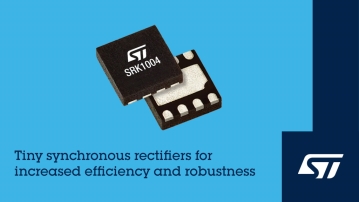
STMicroelectronics Launches Ultra-Compact, High-Efficiency Synchronous Rectifier Controller, the SRK1004
Global semiconductor company STMicroelectronics (hereinafter ST) has launched the 'SRK1004,' an ultra-compact synchronous rectifier controller optimized for charger, power adapter, and switched-mode power supply (SMPS) design, strengthening its position in the mobile charger, home appliance, and industrial power markets where demand for high-efficiency and ultra-compact power solutions is rapidly increasing.
2026.01.22by 명세환 기자
ST Selected as a Global Top 100 Innovator by 2026
Global semiconductor company STMicroelectronics (hereinafter ST) has been selected for the "Top 100 Global Innovators 2026" announced by Clarivate, a global innovation evaluation organization, further reinforcing its position as a semiconductor technology innovation company.
2026.01.26by 명세환 기자
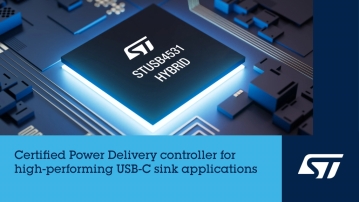
ST Simplifies USB-C Power Design
STMicroelectronics (ST) has launched a new USB Power Delivery sink controller, the STUSB4531, significantly simplifying the development of USB-C based power supply and charging applications.
2026.02.02by 명세환 기자











