


The machinery industry is facing a trade deficit for the first time in 15 years, with exports projected to decline in 2026.
 Published2026.02.23 16:41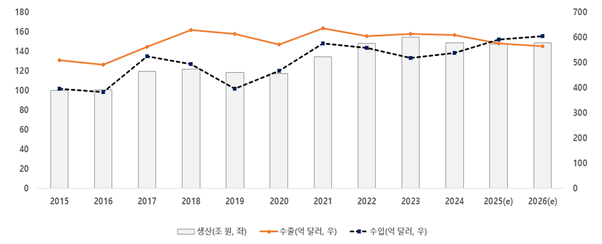
US tariffs and China's slowdown are impacting plant and construction equipment, creating opportunities.
The domestic machinery industry is projected to experience a trade deficit in 2025 and a continued decline in exports in 2026. The surge in semiconductor manufacturing equipment imports, coupled with a decline in exports to the US, has resulted in a trade deficit for the first time in 15 years since 2010.
According to the 121st issue of "Machine Technology Policy" published by the Korea Institute of Machinery and Materials on the 23rd, "Machine Industry Performance in 2025 and Outlook for 2026," the machinery industry in 2026 is expected to show a flat or slight decline due to uncertainties in the trade environment and the slowdown in China's economic growth.
The machinery industry is directly impacted by global supply chain restructuring and changes in major countries' trade policies. The recent US tariff policy stance and China's economic slowdown are placing a strain on the domestic machinery industry, which relies heavily on exports.
Production in 2025 is estimated to reach 148 trillion won, a 1.0% decrease from the previous year. Exports decreased by 5.4% to $57.6 billion, while imports increased by 10.2% to $59.3 billion. In particular, the trade balance showed a deficit of $1.7 billion, driven by a significant increase in imports of core semiconductor manufacturing equipment.
Orders for desalination and power plants are expected to continue in 2026, but the impact of US tariff risks and slowing global demand is expected to be greater. Production is expected to remain flat, while exports are expected to decline compared to 2025.
By industry, machine tool exports are expected to increase by 7.4% in 2025, but production and exports are projected to decline by 3-5% in 2026. Plant orders are expected to increase by 26.2% in 2025, driven by the Dukovany nuclear power plant project in the Czech Republic. However, the absence of major projects in 2026 is expected to result in orders remaining at the 2024 level.
Construction equipment exports are expected to increase by 3-4% in 2026, driven by demand from emerging European countries and the Middle East. Display equipment is also expected to continue its modest growth driven by recovering demand in upstream industries. Conversely, secondary battery equipment is projected to decline by 10-15% due to the global electric vehicle market correction.
The research team concluded that it's difficult to conclude that the trade deficit shift is a structural recession. Gil Hyeong-bae, a senior researcher at the Korea Institute of Machinery and Materials, stated, "The trade deficit shift is likely a short-term phenomenon, and there is potential for increased exports of key items driven by growth in demand industries like IT and semiconductors."
Experts believe that diversifying export markets and expanding demand through demand-driven industries are key to recovery. Along with the publication of its policy paper, the Korea Institute of Machinery and Materials (KIMM) is accepting manuscripts for its academic journal, "Machine Industry Research," until April 17th, with publication scheduled for June 30th.

Comments
Related news
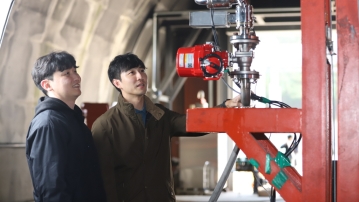
AI-based Autonomous Firefighting System Presents a New Paradigm for Ship Fuel Fire Suppression
A research team led by Senior Researcher Lee Hyuk at the AX Convergence Research Center of the Korea Institute of Machinery and Materials (KIMM) has developed an autonomous rapid-suppression fire extinguishing system specialized for naval vessel oil fires as part of the 'Civilian-Military Practical Application Linkage Project,' successfully completed sea trials on an actual naval vessel, and presented a new paradigm for suppressing naval vessel oil fires.
2025.11.06by 배종인 기자
.jpg)
Manufacturing AI Competition Heats Up, Machine Technology is the Next Big Thing
According to the report "Beyond Manufacturing AI Competition, Preparing with Mechanical Technology" (Mechanical Technology Policy No. 120) recently published by the Korea Institute of Machinery and Materials (KERI, President Ryu Seok-hyun) under the National Research Council of Science and Technology, amid the global trend of AI transformation in manufacturing, the intrinsic performance of mechanical equipment is expected to become a key factor determining future manufacturing competitiveness.
2025.11.27by 배종인 기자
.jpg)
The Korea Institute of Machinery and Materials (KIMM) won the 2025 Best Research Award for its "Autonomous Manufacturing Technology Based on Multi-AI Agent Digital Twins."
The Korea Institute of Machinery and Materials (KIMM), under the National Research Council of Science and Technology, selected Lee Taek-min, principal research engineer at the Secondary Battery Equipment Research Laboratory of the Nano Convergence Research Division, as the recipient of this year's best research award at the 49th anniversary commemoration ceremony.
2025.12.17by 명세환 기자
.jpg)
Korea Mechanical Engineering & Research Institute: "Food Poisoning Diagnosis Within an Hour with a Single Push of a Button"
The Korea Institute of Machinery and Materials has developed the nation's first fully automated integrated diagnostic system that automatically detects 16 types of foodborne pathogenic bacteria within one hour, raising expectations that it can prevent foodborne illness incidents in various fields such as school cafeterias and food manufacturing facilities.
2025.12.24by 배종인 기자
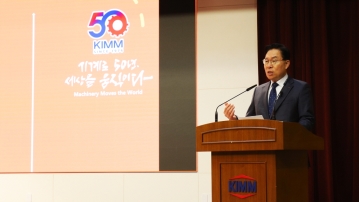
KIMM President Ryu Seok-hyun announces "KIMM-NEXT 50" to mark the 50th anniversary of the institute's founding.
Korea Institute of Machinery and Materials (KIMM, Director Ryu Suk-hyun), a leading research institution under the National Research Council of Science and Technology, held its New Year ceremony on the 2nd and announced its future research direction and core strategies, presenting the vision of "Moving the world with machinery for 50 years."
2026.01.05by 배종인 기자











