



Motor circuits that must be erased to be completed… Astrocytes selectively remove synapses based on dopamine signals
 Published2026.02.24 14:58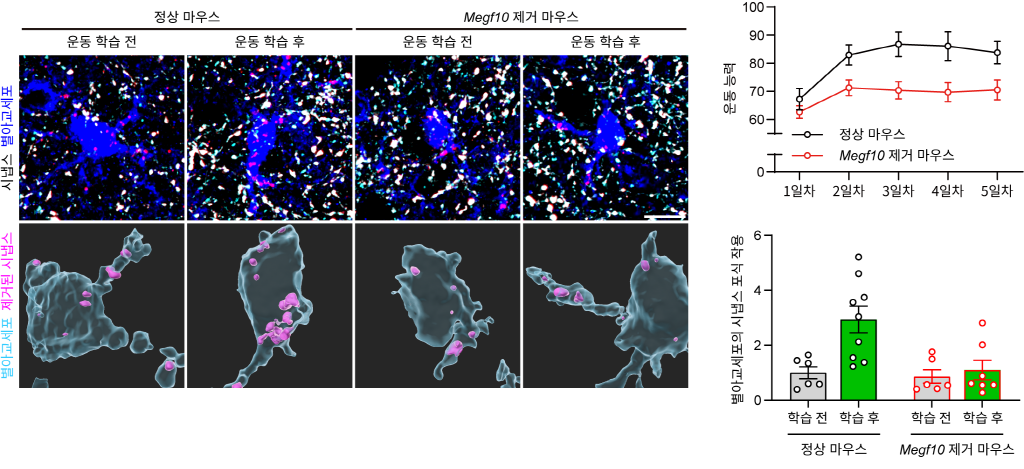
Elucidation of MEGF10-mediated synaptic remodeling mechanism in motor learning process
Research has revealed that astrocytes play a leading role in eliminating unnecessary neural connections during the process of acquiring motor skills. The study suggests that astrocytes read dopamine signals to selectively organize synapses, and that this process is directly linked to actual motor learning ability.
The research team led by Deputy Director Won-Seok Jung of the Center for Vascular Research at the Institute for Basic Science (IBS) announced that the results were published online in the international academic journal 'Nature Communications' on February 23. Researchers from KAIST and UNIST participated in the joint study.
The creation and elimination of synapses have previously been explained primarily through neurons. Although it has recently been revealed that astrocytes and microglia are involved in synapse regulation, the specific operating principles in actual motor learning have not been clearly elucidated.
The research team tracked the repetitive motor learning process in mice and observed synaptic changes using high-resolution imaging. As a result, phagocytosis by astrocytes increased as learning progressed, and this was mediated by the phagocytic receptor MEGF10. Other glial cells were hardly involved in synaptic clearance during motor learning.
In addition, increasing neural activity in the cerebral motor cortex also increased synaptic removal in astrocytes. When dopamine signals were regulated, opposing responses were observed in medium spiny neurons of the striatum. In D1 receptor cells, synaptic removal decreased, strengthening connections, while in D2 receptor cells, removal increased, reorganizing circuits. This demonstrates that astrocytes are involved in selective remodeling in response to dopamine signals.
Deputy Research Director Won-seok Jeong explained that learning involves the process of creating new synapses as well as the process of rewiring to remove unnecessary connections, stating that this study has identified the central mechanism. The research team explained that these results provide foundational data for understanding dopamine-related diseases such as Parkinson's disease.

Comments
Related news

IBS Supercomputer No. 2 'Olaf', Listed as World's 10th Ultra-low-power Supercomputer
The Institute for Basic Science (IBS, Director No Do-young) has registered its second supercomputer, 'Olaf,' as the world's 10th most energy-efficient supercomputer.
2023.11.27by 배종인 기자
IBS Implements Brain-Computer Interface with Tattoo-Thin Electronic Circuits
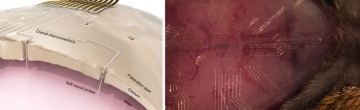
The Nanomedicine Research Unit at the Institute for Basic Science (IBS, Director Noh Do-young), led by Principal Investigator Cheon Jin-woo (Distinguished Professor at Yonsei University) and Professor Park Jang-ung (Professor of Materials Science and Engineering at Yonsei University), in collaboration with the research team of Professor Jeong Hyun-ho and Professor Jang Jin-woo from the Department of Neurosurgery at Severance Hospital, has successfully implanted a soft artificial neural electrode resembling brain tissue into the brain of a rat and printed electronic circuits on the skull surface using a 3D printer to achieve long-term transmission and reception of brain waves (neural signals).
2024.03.12by 배종인 기자
IBS Ultra-low Temperature Electron Microscope Ranks 1st in User Preference for 3 Consecutive Years
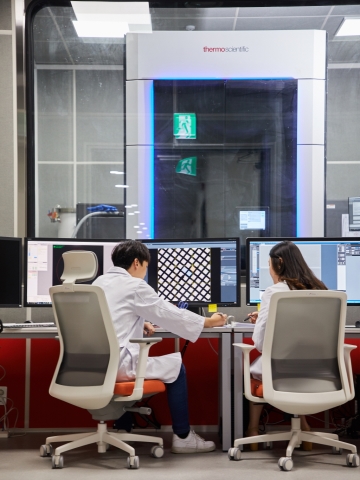
The ultra-low temperature electron microscope (Cryo-EM) at the Institute for Basic Science (IBS, Director No Do-young) has been evaluated as the most preferred equipment by researchers in the field, observing living cells like taking a 'snapshot'.
2024.05.17by 배종인 기자
A camera that moves as fast as an eagle's eye has been released
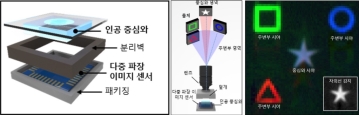
The Institute for Basic Science (IBS, Director Roh Do-young), the Nanoparticle Research Center led by Associate Director Kim Dae-hyung (Professor, Department of Chemical and Biological Engineering, Seoul National University), and Professor Song Young-min's team at Gwangju Institute of Science and Technology (GIST) have jointly developed an object detection specialized camera that mimics the structure and function of a snow eye. The technology is expected to see increased application in unmanned robots, autonomous vehicles, and drones that require object detection capabilities.
2024.05.30by 배종인 기자
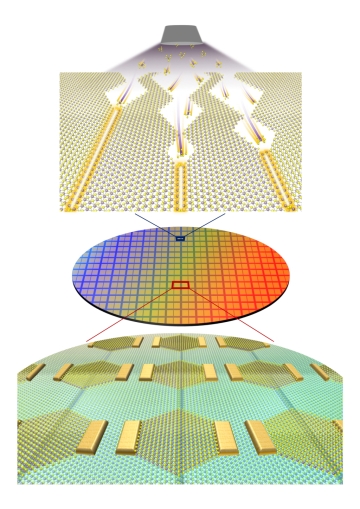
Implementation of ultra-small semiconductor devices with 0.4 nm gate electrodes
The research team at the Institute for Basic Science (IBS, Director Noh Do-young), led by Cho Moon-ho, head of the Van der Waals Quantum Materials Research Unit (professor at POSTECH Department of Materials Science and Engineering), has implemented an ultra-miniaturized semiconductor device of a new structure by applying one-dimensional metallic material with atomic-scale width to two-dimensional semiconductor technology. Inspired by the mirror twin boundary of molybdenum disulfide (MoS2), a two-dimensional semiconductor, which is one-dimensional metal with a width of only 0.4 nm, the IBS research team utilized it as a gate electrode for semiconductor devices.
2024.07.04by 배종인 기자











