


Hyundai Motor Group's Physical AI-Based Unmanned Firefighting Robot Opens a New Disaster Response Paradigm
 Published2026.02.25 14:37
.jpg)
Hyundai Motor Group's unmanned firefighting robots are being deployed in full force at firefighting sites, rapidly shifting disaster response methods to a technology-centered approach.
On the 24th, Hyundai Motor Group held a ceremony to donate an unmanned firefighting robot at the Metropolitan Area 119 Special Rescue Team in Namyangju, Gyeonggi Province.
The equipment unveiled this time is a robot built based on Hyundai Rotem's electrified platform 'HR-Sherpa', and is a representative example of physical AI technology designed to perform tasks on behalf of humans in high-risk fire sites that are difficult to access directly.
The robot is remotely controlled and has various protective devices to enable it to operate in high temperatures.
The spray system, which forms a water film on the outside of the equipment, is designed to withstand extreme temperatures, enabling stable operation even in environments reaching hundreds of degrees Celsius.
Additionally, infrared-based cameras help secure visibility even through smoke and fire, and play a crucial role in identifying fire sources and rescue targets.
These capabilities go beyond simple mechanical devices and clearly demonstrate the characteristics of physical AI, which combines human judgment with the physical execution capabilities of a robot.
Hyundai Motor Group recently delivered a total of four unmanned firefighting robots to the National Fire Agency, and some have already been deployed to rescue teams in the metropolitan area and Yeongnam region and are being used in actual combat.
The remaining equipment is scheduled to be deployed soon in southern Gyeonggi Province and South Chungcheong Province. The National Fire Agency expects this robot to significantly enhance initial response capabilities at sites at risk of large-scale fires or structural collapse, and reduce firefighters' exposure to risk.
In particular, because it is based on electrification, it is evaluated to be advantageous over existing internal combustion engine equipment even in underground fire scenes where oxygen is insufficient.
Hyundai Motor Group is also providing training and distributing manuals to firefighters to ensure stable operation of equipment.
We believe that for equipment to be properly utilized in actual field situations, not only the technology but also the operator's skill is crucial. We plan to continue working with the National Fire Agency to improve equipment and provide operational support.
Meanwhile, Hyundai Motor Group has steadily expanded its support activities for firefighters. In 2023, it distributed nationwide "Firefighter Recovery Support Vehicles" to help firefighters rest and recover at disaster sites. In 2024, it developed and donated a large number of "EV Drill Lances," penetrating firefighting equipment designed to respond to electric vehicle fires.
We also plan to provide rehabilitation equipment and vehicles to the National Fire Hospital, which is scheduled to open in June of this year, and continue to play a role in helping injured firefighters recover.
These activities promoted by Hyundai Motor Group are also in line with the company's mission of "technology for a safe society."
In particular, unmanned firefighting robots are a symbolic example of how physical AI can contribute to solving real-world social problems, and are becoming a crucial turning point that suggests the future direction of disaster response technology.

Comments
Related news
Hyundai Motor to invest 24 trillion won in electric vehicles
Hyundai Motor Group unveiled its mid-to-long term strategy to achieve top 3 status globally in electric vehicles by 2030, announcing plans to strengthen competitiveness across the entire electric vehicle ecosystem including domestic R&D, production, and infrastructure.
2023.04.12by 성유창 기자
.jpg)
Electric Vehicles Are the Future vs. Internal Combustion Engines Can Be Carbon Neutral
Corporations including Hyundai Motor Group have invested trillions of won in electric vehicle development and put internal combustion engine vehicles on the back burner, but BMW has advocated for the coexistence of electric vehicles and internal combustion engines, going against EU environmental policies.
2023.04.14by 성유창 기자
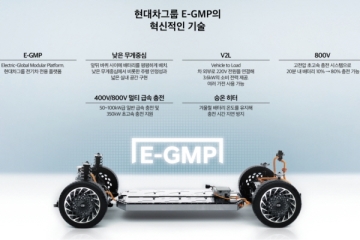
[Electric Vehicle Platform ①] Active Development of Electric Vehicle Platforms… Skateboard vs. CTB
Platform development continues to serve as the foundation for electric vehicles, including skateboard-type platforms from Hyundai Motor Group and Volkswagen Group, as well as platforms incorporating CTB (Cell-to-Body) technology that utilizes batteries from Tesla and BYD as the vehicle body structure.
2023.05.08by 성유창 기자
[EV Platform ②] 2025, Domestic Automakers Clash Over EV Platforms
Hyundai Motor Group's globally recognized E-GMP and the next-generation platform to follow it will clash in 2025 with KG Mobility's ambitious electric vehicle-exclusive platform. #HyundaiMotor #KGMobility #EGMP #eM #eS
2023.05.22by 성유창 기자
Start the electric car at home, turn on the TV in the car… Samsung SmartThings linkage range expands to cars
Samsung Electronics is expanding the connectivity range of its 'SmartThings' platform to connected vehicles through collaboration with Hyundai Motor Group.
2024.01.04by 성유창 기자











