


AMD Expands Ryzen AI Embedded P100, Accelerating Its Conquest of Industrial and Edge AI Markets
 Published2026.03.10 14:42
.jpg)
80 TOPS AI acceleration performance, low latency, and power efficiency
As AI technology rapidly spreads across industrial settings, including factory automation and autonomous robots, demand is growing for edge computing platforms that simultaneously satisfy real-time processing and stability.
AMD announced on the 10th that it is expanding its Ryzen AI Embedded P100 series processor lineup and is targeting the industrial and AI edge markets.
The newly added P100 series maintains the same compact BGA package as existing products, while doubling the number of CPU cores and improving GPU computing performance by up to eight times.
The overall AI computational performance of the system has also been improved by approximately 36%, designed to handle complex edge AI workloads more efficiently.
This processor integrates 8 to 12 Zen 5 CPU cores, RDNA 3.5-based graphics, and XDNA 2 architecture NPU into a single chip.
This provides AI acceleration performance of up to 80 TOPS, while simultaneously securing low latency and power efficiency.
It is optimized for industrial environments with an industrial temperature range, 24-hour continuous operation, and a long-term supply policy of up to 10 years.
Especially the AMD ROCm software ecosystem With this added support, developers can easily deploy AI models to edge environments by leveraging existing open-source AI frameworks.
The HIP-based architecture, which enhances the portability of GPU programming, reduces vendor lock-in and enables scalable system design.
The P100 series is expected to be utilized in various fields, such as machine vision in industrial PCs, spatial recognition and path planning in autonomous mobile robots, and 3D image processing in medical imaging equipment.
Compared to the previous generation, multi-threaded performance is improved by up to 39%, and the overall AI processing performance of the system is more than doubled, providing stable performance even in large-scale language models and virtualized environments.
AMD also provides a virtualization reference stack based on the Zen hypervisor, enabling independent operation of Linux, Windows, and RTOS on a single platform.
This enables predictable real-time performance even in industrial mixed-criticality applications.
Currently, global ODM companies such as Advantech, Congatec, and Kontron are introducing commercial solutions based on P100, and samples of 8-12 core products are being supplied.
Mass production is scheduled to begin sequentially in the second half of 2026.

Comments
Related news

AMD simplifies local AI development on Windows.
AMD has unveiled a new optional installation package called 'AMD Software: Adrenalin Edition AI Bundle' that dramatically simplifies the Windows-based local AI development environment, and is expected to provide substantial productivity improvements to developers and creators seeking to easily configure GPU-accelerated AI workloads.
2026.01.22by 명세환 기자

AMD's next-generation gaming CPU, the Ryzen 7 9850X3D, will be released on January 29th, priced at $499.
AMD has officially announced the pricing and release schedule for the next-generation desktop processor 'Ryzen 7 9850X3D'.
2026.01.23by 명세환 기자
AMD Sets New Standard for Mid-Range FPGA Market
AMD has unveiled its new mid-range FPGA product family, the second-generation 'Kintex UltraScale+ Gen 2' FPGA, targeting intelligent high-performance systems.
2026.02.05by 배종인 기자
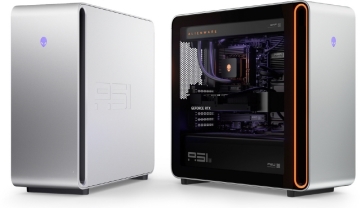
Dell Technologies Launches the Alienware Area-51 with AMD Ryzen 7 9850X3D
Dell Technologies has launched the 2026 'Alienware Area-51' gaming desktop equipped with the AMD Ryzen 7 9850X3D. It supports up to NVIDIA GeForce RTX 5090 and PCIe Gen5, targeting high-end gaming and AI-based work environments through a CPU power design exceeding 200W and up to 600W-class graphics power headroom. Thermal management has been enhanced with a positive pressure airflow structure and 360mm liquid cooling system, and the product also provides storage and graphics card expandability along with latest connectivity features including Wi-Fi 7. The product has been available for purchase on Dell's official website since early February.
2026.02.12by 명세환 기자
ASRock Releases Beta BIOS 4.07.AS01 for AM5 Motherboards, Fixing Boot Failures
ASRock has released beta BIOS '4.07.AS01' for AMD AM5 motherboards. The update applies AMD AGESA ComboAM5 PI 1.3.0.0a to optimize memory compatibility and aims to improve boot failures and no-boot issues that were occurring on some CPUs. The company recommends updating in case of boot abnormalities, and an official BIOS will be rolled out sequentially.
2026.02.12by 명세환 기자











